

· AFX Research
What's Actually in an SBA Title Search? The Report, Explained
A plain-English walkthrough of every section of an SBA-compliant title report: ownership verification, liens, tax and judgment search, legal description, and the 30-year historical search.
Table of Contents
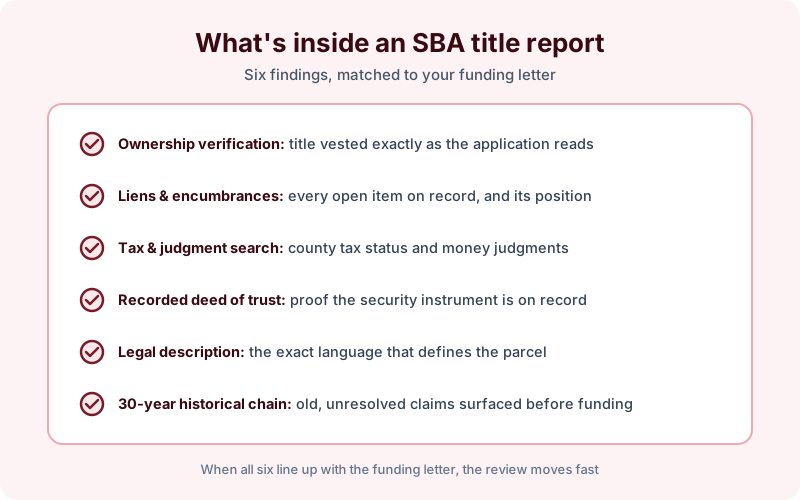
If you’re applying for an SBA loan, or underwriting one, the funding letter will ask for a title report. Not a full title insurance commitment, and not a simple owner lookup: a specific set of findings that lets the SBA confirm who owns the collateral and what claims stand against it.
Here’s what a compliant report actually contains, and why each piece is there.
Ownership verification
The report confirms that title is vested in the borrower’s name, exactly as it appears in the loan application. This sounds trivial, but it’s the single most common source of delays. Property held in a family trust, an LLC that was later dissolved, or a name that changed after marriage will all trip the SBA’s review if the vesting on record doesn’t match the application.
What to check before you order: pull your most recent deed and make sure the name on it matches the borrower name on your funding paperwork. If it doesn’t, resolve that first.
Liens and encumbrances
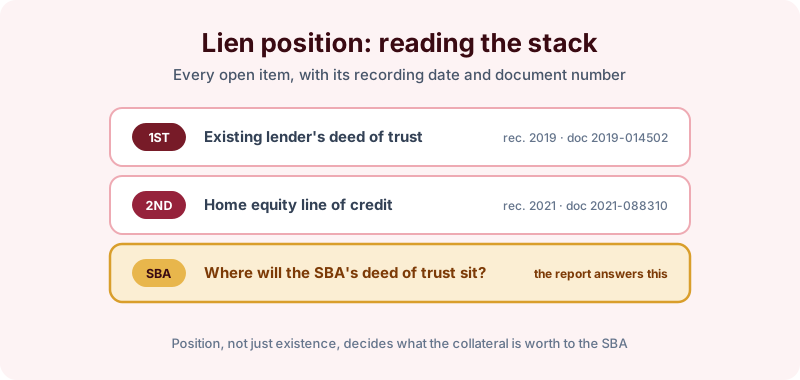
This is the heart of the report: a search of the county records for anything recorded against the property, including mortgages and deeds of trust, home equity lines, mechanic’s liens, HOA liens, and judgment liens that have attached to the real estate. For the SBA’s purposes, the question is lien position: where will the SBA’s security interest sit relative to everything already on record?
An ownership and encumbrance report lists each open item with its recording date and document number, so the lender can see the full stack at a glance.
Tax and judgment search
Unpaid property taxes and money judgments follow the property and the borrower. The report checks both the county tax status and the judgment indexes, because either one can affect approval or require a payoff at closing.
Recorded mortgage / deed of trust
For disaster loans and many 7(a) transactions, the SBA requires evidence that its deed of trust has actually been recorded with the county recorder. A signed document sitting in a file doesn’t count; the report verifies the recording itself.
This is worth repeating, because it’s the note we add to more orders than any other: make sure the deed of trust is recorded before you order the title search. If it isn’t on record yet, the report can’t verify it.
Legal description
The report includes the property’s full legal description, the metes-and-bounds or lot-and-tract language that defines the parcel rather than just the street address. The SBA requires it because street addresses are ambiguous; legal descriptions aren’t. A report with a wrong or truncated legal description will be kicked back, so we verify it against the recorded deed.
The historical (30-year) search
For disaster assistance loans, the search goes back at least 30 years through the chain of title. The point is to surface old, unresolved claims (a decades-old deed of trust that was paid off but never reconveyed, an easement dispute, a break in the chain) before they surface at funding time.
What about collateral release?
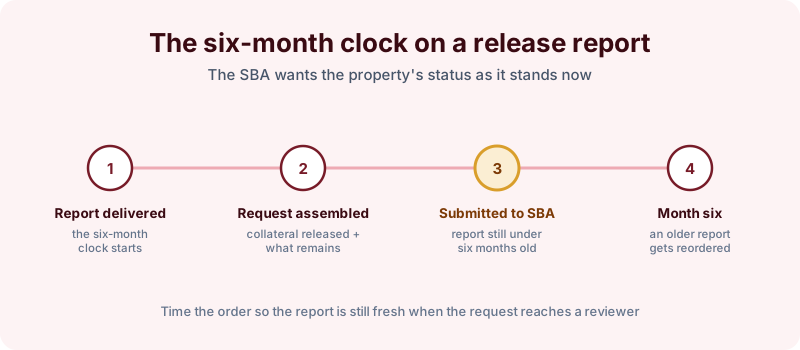
A release of collateral request uses the same building blocks with one extra rule: the report must be current, generally no more than six months old. The SBA wants to see the property’s status as it stands now, listing the collateral being released and whatever remains securing the loan.
The takeaway
An SBA title report isn’t one search. It’s a bundle: vesting, encumbrances, taxes and judgments, the recorded security instrument, the legal description, and the historical chain. When all six line up with your funding letter, the review moves fast.
Ready to start? Order your SBA title search online or contact us if your funding letter has requirements you’re not sure how to scope.