

· AFX Research
What Cell Tower and Rooftop Leases Mean for SBA Collateral
A tower lease covers almost no ground and can bind the parcel for fifty years. What the recorded memorandum shows, who holds it now, and what a lender inherits.
Table of Contents
A borrower pledges a commercial building with a carrier’s antennas on the roof, or an acre of yard with a monopole in the back corner. The rent shows up in the file as steady income and nobody reads much past it. The structure covers very little ground, but the agreement behind it can run half a century, survive a foreclosure, and quietly govern what gets built on the rest of the parcel. It behaves much like the recorded leases on SBA collateral you already review, with a longer horizon and one clause that catches people out.
A small footprint with a long reach
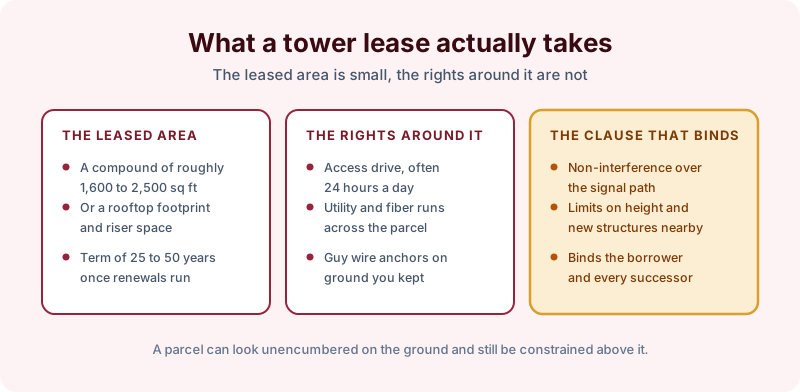
The leased area is modest. A ground compound usually runs somewhere between 1,600 and 2,500 square feet, and a rooftop installation is smaller still, a set of antenna mounts plus riser and equipment room space. The term is the part that matters. Most of these begin as a five year lease carrying four or five automatic renewal options, which is how a document signed in 2004 is still running in 2044.
The rights that travel with the lease reach considerably further than the structure. Access to the compound at any hour, utility and fiber runs across the parcel, and on guyed towers, anchor points on ground the borrower still thinks of as open yard.
The clause to find is non-interference. Carrier leases commonly bar the owner from putting up anything that blocks the signal path, which can mean a height limit on new construction, a restriction on where a building may sit, and occasionally a say over tree growth or competing rooftop equipment. A borrower financing an addition through an SBA business expansion loan may discover that this clause, not the zoning code, decides where the addition can go. It binds every successor in title, so it is a limit on the collateral rather than a term of a side deal.
The holder changes, the burden does not
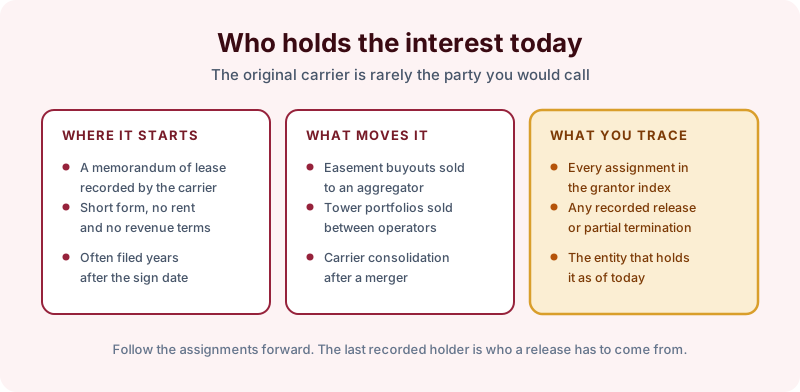
What reaches the county is normally a memorandum of lease, a short form naming the parties and the term while leaving out the rent. It is often recorded well after the lease was signed, so the date stamped on the instrument is not the date the burden was created.
From there the interest moves. Aggregators buy easements and lease streams from property owners, tower companies buy portfolios from one another, and carrier mergers push assignments through the record in batches. The entity that signed the original site lease is rarely the party who would sign a release today.
That matters at two moments in an SBA file. At closing you need to know whether the memorandum predates the mortgage, because a prior recorded interest generally survives a foreclosure that a junior one would not. At liquidation a buyer inherits whatever is left of it, which is the same dynamic described in purchase options and first refusal on SBA collateral.
What to pull before closing
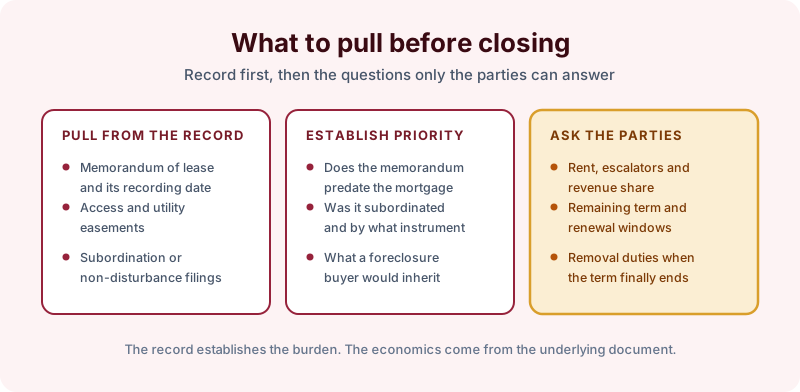
Pull the memorandum and its recording date, any access or utility easement recorded alongside it, and any subordination or non-disturbance agreement. Then trace the assignments forward through the grantor index until you reach the current holder, and check for a recorded release or partial termination that would narrow the burden.
While you are in the chain, read what the arrangement implies about the parcel generally. An easement for access across the front of a lot, or a recorded right over the airspace, has already spent part of what a future buyer would want to use. If the plan is ever to split the tower parcel off on its own, that is a collateral release question and the legal description has to stand up by itself. Recording and indexing practice varies by county, so where these instruments sit is a local fact, and our report names the indexes actually reviewed.
Then ask the borrower for what the record withholds. The rent and any escalator, how many renewal options remain and what notice would stop one, whether the operator may assign or add carriers, and who is responsible for removing the equipment and restoring the site at the end. None of that is recorded, and all of it moves the underwriting.
The takeaway
Treat a tower or rooftop lease as a long encumbrance that happens to pay rent. Pull the memorandum and the easements, establish whether it sits ahead of or behind the mortgage, trace the assignments to whoever holds it now, and get the underlying agreement from the borrower before anyone assumes the antennas can come down or the lot can be built on. Start the order online, or send us the address and the funding letter and we will tell you what a search of that scope would and would not cover before anything is ordered.