

· AFX Research
Recorded Leases on SBA Collateral: What the Search Shows
Tenants on the collateral affect value, occupancy, and what a lender can do on default. What the land record shows about leases, and what it never will.
Table of Contents
Plenty of SBA collateral has tenants on it. A borrower who buys a building larger than the business needs leases out the extra suites, a mixed use property has apartments over the shop, or an acquisition comes with an existing tenant in half the space. Those leases affect cash flow, occupancy requirements, and what happens on default, and only some of them are visible in the county record. Knowing which part of the question the search answers keeps the rest of it from going unasked. This sits alongside assignment of rents as the other half of the leased collateral picture.
Three ways a lease shows up
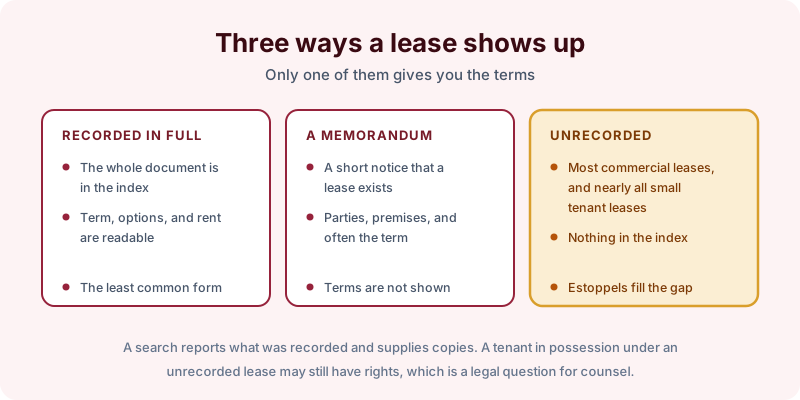
Recorded in full is the least common form, and the most useful when it happens, because the term, options, and rent are all readable in the instrument.
A memorandum of lease is more typical on larger deals. It discloses that a lease exists and identifies the parties, the premises, and often the term, while deliberately leaving the commercial terms out. That is useful for priority and notice purposes and close to useless for underwriting cash flow.
Unrecorded is where most leases sit, particularly the small tenant leases common on SBA collateral. Nothing appears in the index. A tenant in possession under an unrecorded lease may still have enforceable rights, and whether they do is a legal question for counsel rather than an abstractor’s conclusion.
Ordering the lease and the loan
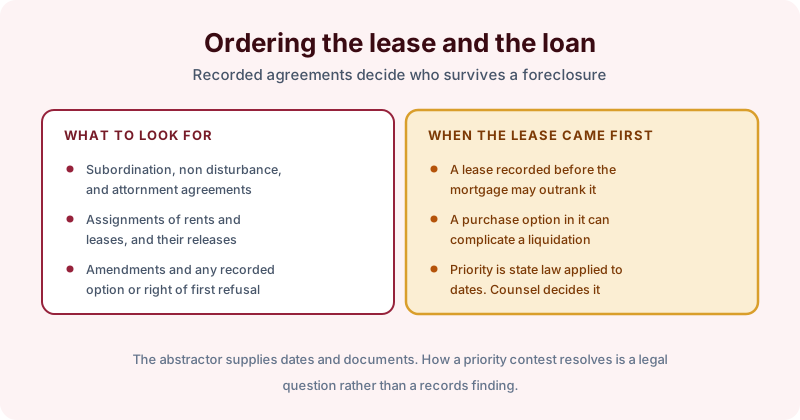
The recorded documents that matter most are the ones that establish sequence. Subordination, non disturbance, and attornment agreements, assignments of rents and leases with their releases, and any recorded amendment, purchase option, or right of first refusal.
Options deserve a specific mention. A recorded purchase option or right of first refusal held by a tenant can complicate a sale or a liquidation years later, which is the concern our note on SBA loan liquidation describes. A lease recorded before the mortgage raises a priority question, and how it resolves is state law applied to specific dates, so the useful contribution from the search is the dates and the documents rather than an opinion.
One more record item belongs here. Where the borrower is the tenant rather than the landlord, the analysis flips entirely, and our note on leasehold collateral covers that case.
There is an SBA specific reason to care about all of this beyond ordinary underwriting. Owner occupancy requirements limit how much of the property the borrower may lease out, and the answer depends on the actual leases rather than on the borrower’s description of them. A rent roll that shows more space leased than the program allows is a problem worth identifying while the loan is being structured, not after funding.
Scoping a tenanted property
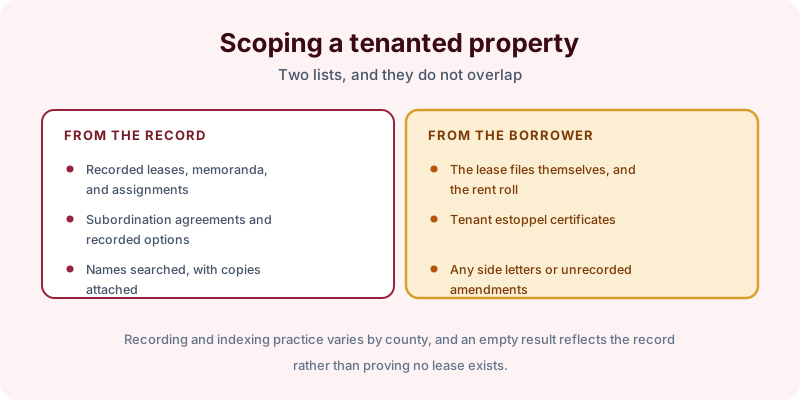
Two lists, and they do not overlap. From the record: recorded leases, memoranda, assignments, subordination agreements, and recorded options, searched against the parcel and against the borrower and tenant names, with copies attached. Send the tenant names if you have them, because a memorandum may be indexed under a tenant entity nobody thought to search.
From the borrower: the lease files themselves, the rent roll, tenant estoppel certificates, and any side letters or unrecorded amendments. Estoppels run on a parallel track to the search for exactly this reason, and the two together are what let occupancy be verified against what the file claims.
What the search reports is what was recorded and indexed for that parcel and those names over the term searched, as of its date. Recording and indexing practice varies by county, an empty result reflects the record rather than proving no lease exists, and priority and enforceability are legal questions.
One further item that a search can surface: a recorded lease or memorandum whose stated term expired years ago, with nothing recorded since. That is not evidence the tenant left. It usually means the parties continued informally, and it is a question for the borrower and an estoppel rather than a conclusion from the index.
The takeaway
Treat leases as a two source question. Pull every recorded lease instrument so the priority and options picture rests on documents, and get the rest from the borrower and the tenants, because the record was never going to supply it. Start the order online, or send us the funding letter if you want the scope matched to the requirement before anything is ordered.