

· AFX Research
Owner Search, O&E, or Full Chain: Choosing the Right SBA Title Search
The three title search scopes, the question each one answers, what happens when you order too small or too big, and what to have ready before you order.
Table of Contents
Every title order starts with the same decision: how deep should the search go? Order too small and the report bounces at review. Order too big and you’ve paid for history nobody asked about, and waited longer to get it. The right answer is almost never a guess, because the funding letter already made the decision for you.
Three scopes, three questions
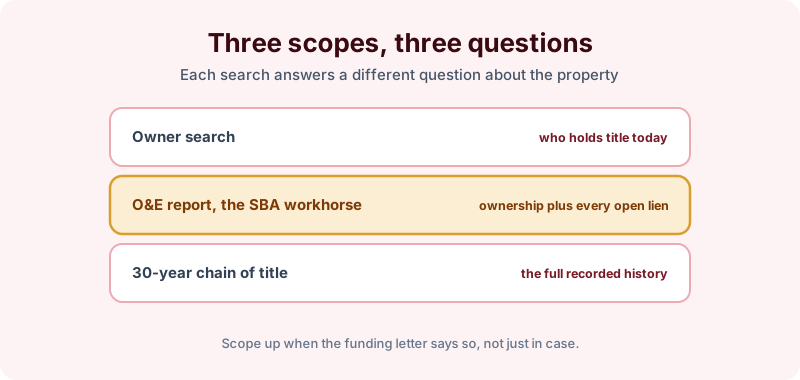
An owner search answers one question: who holds title today, and how it’s vested. It’s the fastest product on the menu (most come back in under a day) and it fits early-stage work: confirming a seller, checking a borrower’s vesting before the application goes in, scoping a portfolio.
An ownership and encumbrance report is the SBA workhorse. It confirms ownership and lists every open lien with recording dates and document numbers, checks the tax status, and verifies the recorded deed of trust when the letter requires it. Most 7(a) and business expansion files live here, and so do collateral release requests, with their six-month freshness rule.
A 30-year chain of title walks the full recorded history looking for unresolved breaks: the unreleased deed of trust from 1998, the estate transfer that never recorded. It’s the standard scope for disaster assistance files, where the SBA explicitly asks for the historical search.
The letter picks the scope, not the budget
If the funding letter says “evidence of ownership,” an owner search does it. If it asks for lien position or a recorded deed of trust, that’s the O&E. If it cites a 30-year or historical search, that’s the chain. (The phrase-by-phrase translation guide is here.) What the letter says is what the reviewer will check the report against, in both directions:
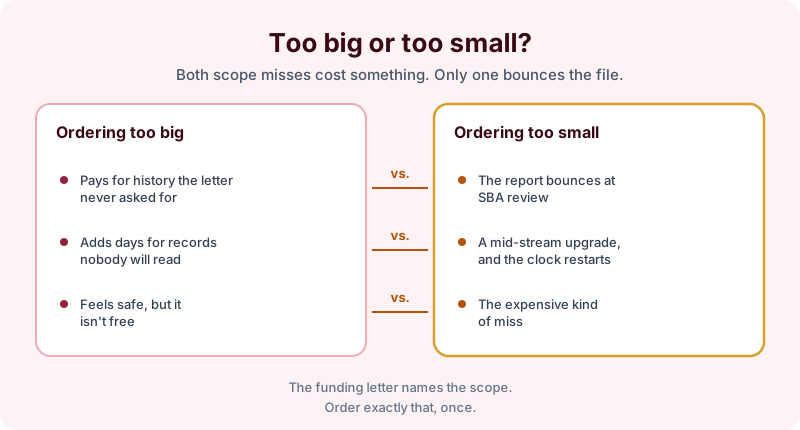
Over-ordering feels safe, but it buys days and dollars of research the file doesn’t need. Under-ordering is worse: the report bounces, the search gets upgraded mid-stream, and the turnaround clock starts over while the closing date doesn’t move. When the letter’s wording genuinely doesn’t fit any bucket, that’s not a reason to guess bigger; it’s a reason to ask.
Have these ready, whatever you order
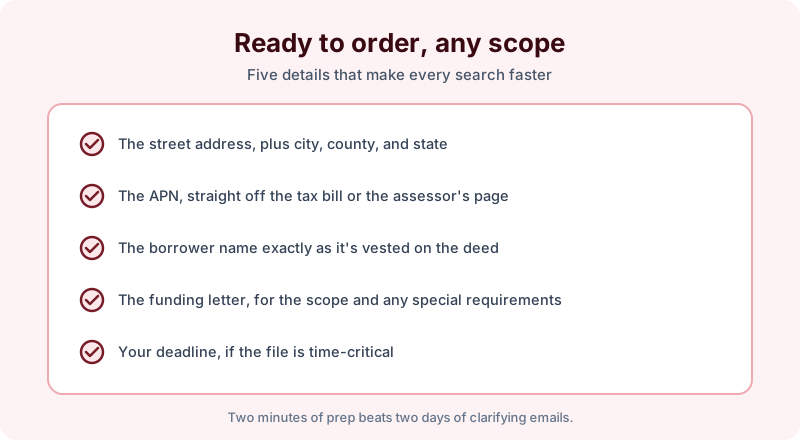
The scope changes what we search; these five things change how fast we can start: the full address with county and state, the APN from the tax bill or assessor’s page, the borrower name exactly as vested on the deed, the funding letter itself, and your deadline if there is one. Five minutes of gathering beats a day of clarifying emails.
The takeaway
Read the letter, match the scope, order once. If the requirement is plain, the order form takes a few minutes. If it isn’t, send us the funding letter and we’ll scope it against the actual wording, so the first report is also the last one.