

· AFX Research
Title Report or Title Insurance: What Does an SBA Loan Actually Need?
The difference between a title report and a title policy, what SBA funding letters actually ask for, and when the report alone does the job.
Table of Contents
It’s the scoping question we field more than any other. The funding letter mentions title, somebody hears “title insurance,” and suddenly a request that needed a three-day report is waiting on a full insurance transaction. The two products answer different questions, and knowing which one your file needs saves real time and real money.
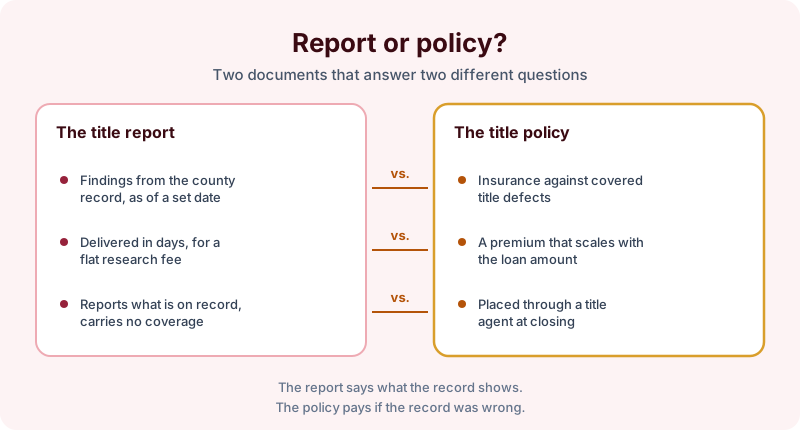
Two documents, two different jobs
A title report is research. An examiner searches the county record and reports the findings as of a specific date: who holds title, how it’s vested, what liens and encumbrances are open, and where the taxes stand. (Here’s everything a compliant report contains.) It’s delivered in days for a flat research fee, and it makes no promises about the future. It tells you what the record shows.
A title insurance policy is protection. An underwriter issues a policy that pays if a covered defect surfaces later: a forged deed in the chain, an unknown heir, a recording error. A lender’s policy protects the lender up to the loan amount, the premium scales with the coverage, and the policy is placed through a title insurance agent, usually at closing.
One reports. The other insures. SBA files call for each in different situations, and the funding letter tells you which.
Read the letter, not the folklore
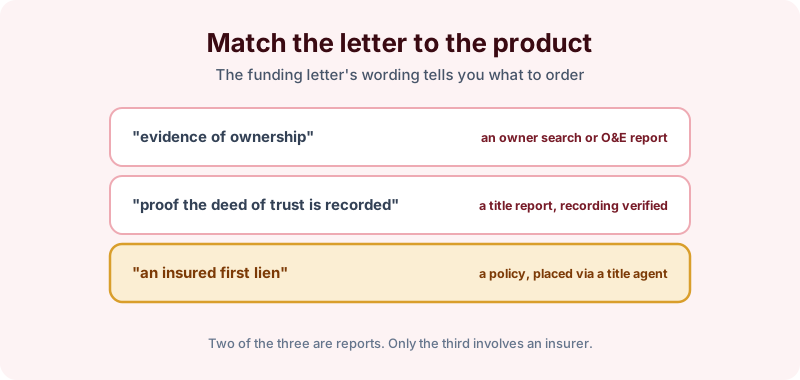
- If the letter asks for evidence of ownership, that’s a report: an owner search or an ownership and encumbrance report confirming exactly how title is vested.
- If it asks for proof the deed of trust is recorded, that’s also a report. The examiner verifies the security instrument on record, with its recording date and document number.
- If it requires an insured first lien or names a loan policy, that’s title insurance, and it’s placed through a title agent or underwriter, not a research firm.
Most SBA disaster assistance files and collateral release requests fall in the first two buckets: proof of ownership, verification of the recorded lien, and a current picture of the record. Neither is asking for an insurance policy.
Where policies do show up: real estate purchases funded with 7(a) money, where the lender’s own credit policy calls for an insured lien on the property. That requirement comes from the lender’s loan authorization, and it runs through a title company alongside the closing.
Why the difference matters in practice
Speed. A report is research, so it moves at research speed: most orders land in 3-5 business days, faster in digitized counties. A policy rides the closing calendar.
Cost. A report is a flat fee. A premium is priced against the loan amount, which on a large file is a very different number.
Recency. Reports can be updated or reordered cheaply, which is exactly what the SBA’s six-month freshness rule on release requests demands.
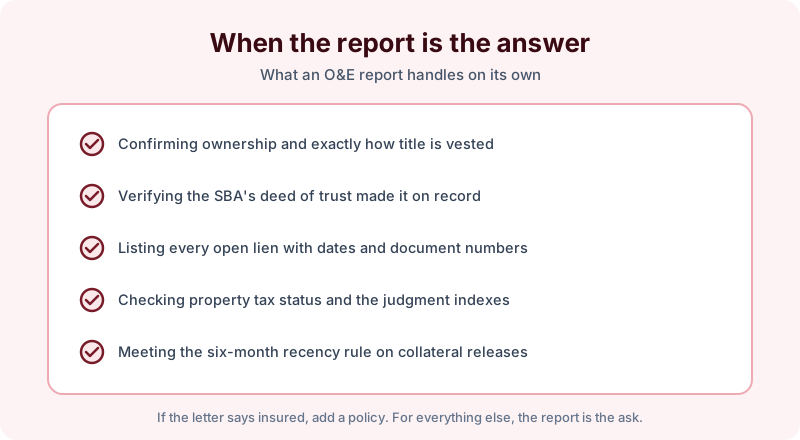
The takeaway
Pull out the funding letter and find the operative words. “Evidence of ownership” and “recorded deed of trust” mean a title report, and you can order one online in a few minutes. “Insured lien” means a policy through a title agent. And if your letter’s wording doesn’t fit either bucket cleanly, send it to us and we’ll scope the search against the actual requirement, before you pay for more than the file needs.