

· AFX Research
Special Assessment Districts on SBA Collateral, and Where They Rank
What a municipal utility or improvement district is, how its assessment is collected, where it can sit against your mortgage, and what the county record will not tell you.
Table of Contents
A borrower buys a building in a newer commercial park, the tax bill arrives, and there is a line on it nobody budgeted for. It is not a tax. It is an assessment levied by a district that was formed years ago to pay for the roads, water lines and drainage that made the parcel buildable in the first place. The developer is long gone. The obligation is not, and on a business expansion loan it can be the difference between a parcel that underwrites and one that does not.
These go by different names in different states. Municipal utility district, public improvement district, community development district, special improvement district. The mechanics are close enough that one framework covers them, and the part that matters to a lender is the same everywhere. The obligation runs with the land, and in a number of states it starts ahead of you.
How one comes to exist
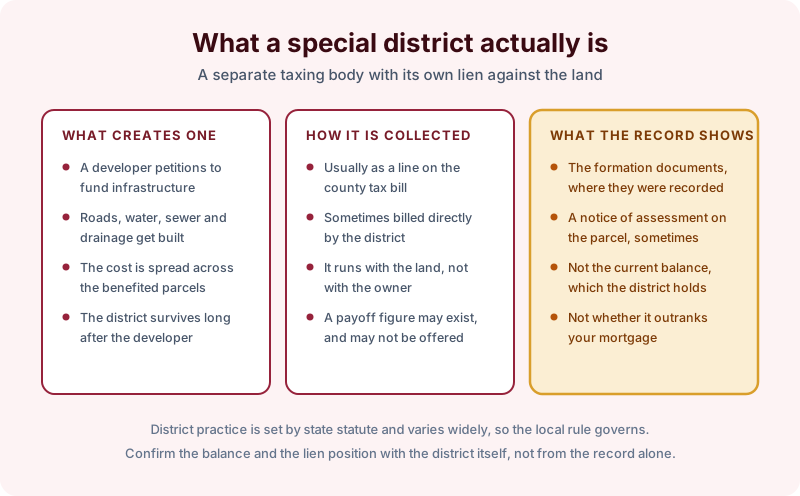
A developer wants to build, and the infrastructure has to be paid for before any lot sells. Rather than carry that cost, the developer petitions to form a district with the power to issue debt and to levy against the parcels that benefit. The debt funds the work. The levy repays the debt, usually over twenty or thirty years.
That timeline is the thing to hold onto. A district formed in 2008 can still be collecting in 2036, and your borrower is buying into the middle of an amortization schedule somebody else agreed to.
How the money is collected
Most commonly the assessment appears as a separate line on the county tax bill, collected by the same office that collects ad valorem taxes and enforced the same way, which is why delinquent property taxes on SBA collateral and district levies tend to surface together. Some districts bill directly. A few do both, with a base levy on the tax bill and a supplemental charge sent separately.
The collection method matters because it drives what happens on default. Where the levy rides on the tax bill, an unpaid installment can feed into the same tax sale machinery that threatens any mortgage, and it gets there on the county’s timetable rather than on yours.
Where it sits against your lien
This is the question worth answering early, and it does not have one national answer.
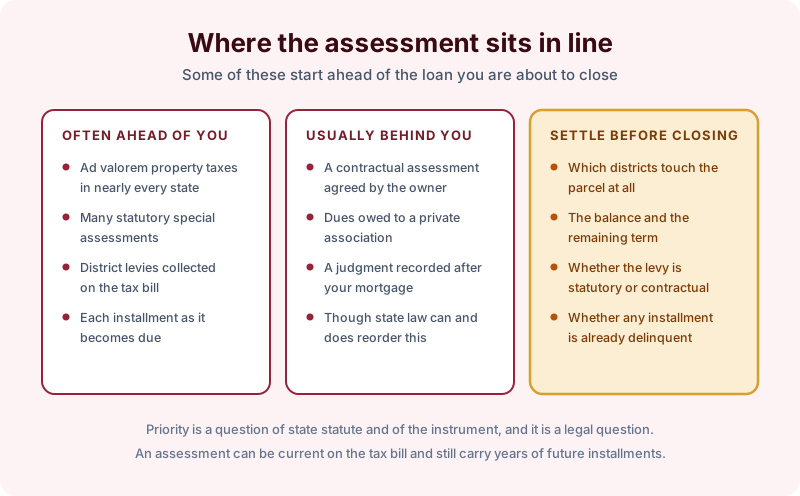
Statutory assessments frequently prime a mortgage. Where a legislature has given a district the power to levy and has said that levy has the status of a tax, it can sit ahead of a previously recorded first mortgage in the same way property taxes do. That is common but it is not universal, and the statute is what decides it.
Contractual assessments usually do not. Where the obligation arises from an agreement the owner signed, or from covenants recorded against the tract, it generally takes its place by recording date like any other consensual lien.
The trouble is that the two can look identical on a tax bill. Reading the authorizing statute is the only way to tell them apart, and that reading belongs to counsel rather than to the abstractor. It is the same analysis that governs PACE assessments on SBA collateral, and for the same reason.
Scoping the search
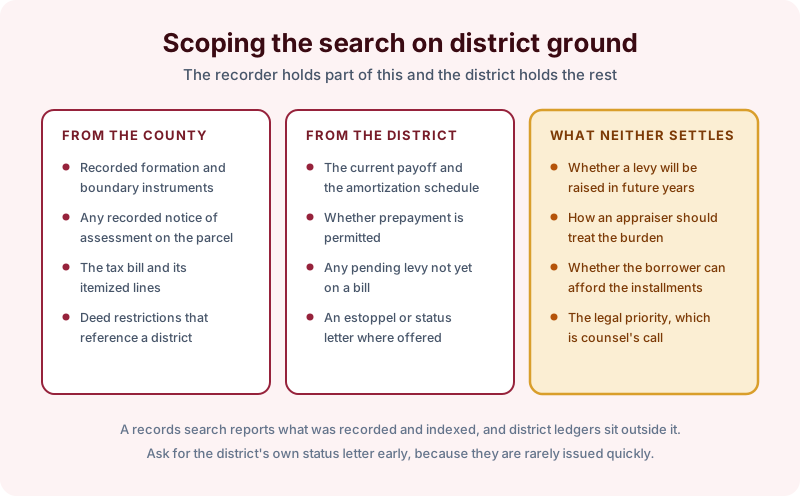
The county holds the recorded side. Formation instruments, boundary descriptions, any recorded notice of assessment against the parcel, and the tax bill with its lines itemized. A search will surface those where they were recorded and indexed.
The district holds everything else, and everything else is where the numbers live. The current payoff, the remaining term, whether prepayment is allowed and at what cost, and whether a levy has been approved that has not yet reached a bill. Many districts will issue a status or estoppel letter. Few issue one quickly, which is why this belongs in week one rather than in the week of closing.
Neither source tells you whether future rates will rise, and neither settles priority. The search tells you which districts touch the parcel. The balance comes from the body that holds it.
The takeaway
A parcel can carry a clean chain, a current tax bill and an obligation that outlives the loan you are about to make. The search finds the district. The district tells you what it is owed. Counsel tells you where it stands against your lien, and doing those three things in that order is what keeps the surprise off the funding memo.
Start the order online, or send us the address and the funding letter if you want the scope matched to the requirement before anything is ordered.