

· AFX Research
Assignment of Rents on SBA Collateral: What Gets Recorded
How an assignment of rents differs from the mortgage it travels with, which parts of a tenanted deal never reach the county index, and why an earlier assignment can outrank yours.
Table of Contents
When SBA collateral produces rent, the loan file grows a second question. The mortgage secures the building. The rent is a separate stream, pledged by a separate mechanism, and whether you can actually reach it depends on documents that are partly in the county index and partly in a drawer at the borrower’s office. Underwriters who treat the recorded picture as the whole picture tend to find that out during a default rather than during diligence. Our note on leasehold collateral covers the case where the borrower is the tenant; this is the case where the borrower is the landlord.
Three documents, one property
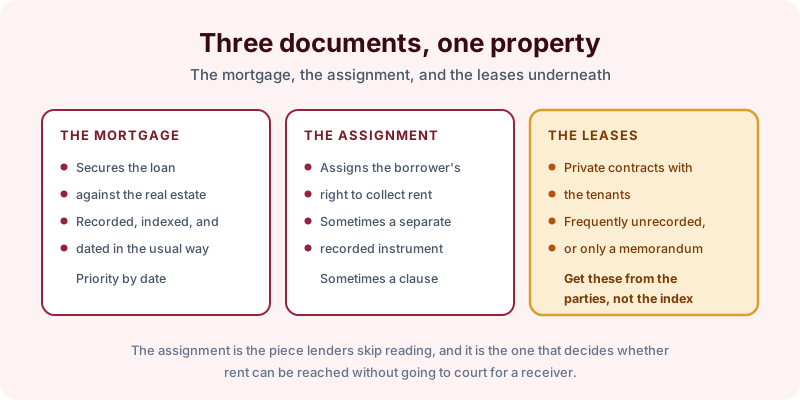
The mortgage secures the loan against the real estate and takes priority from its recording date, like any other lien.
The assignment of rents and leases does something different. It transfers the borrower’s right to collect rent to the lender, so that on a default the lender can look to the income rather than only to the dirt. Sometimes it is a separate recorded instrument. Sometimes it is a clause inside the mortgage. Both approaches are common, and the wording differs enormously between them.
The leases are private contracts with the tenants. They set the rent, the term, the renewal options, and any offsets, and they are frequently not recorded at all.
That last point is the one worth holding onto. The assignment is the part lenders skip reading, and it is the part that decides whether rent can be reached without going to court.
What the index will show you
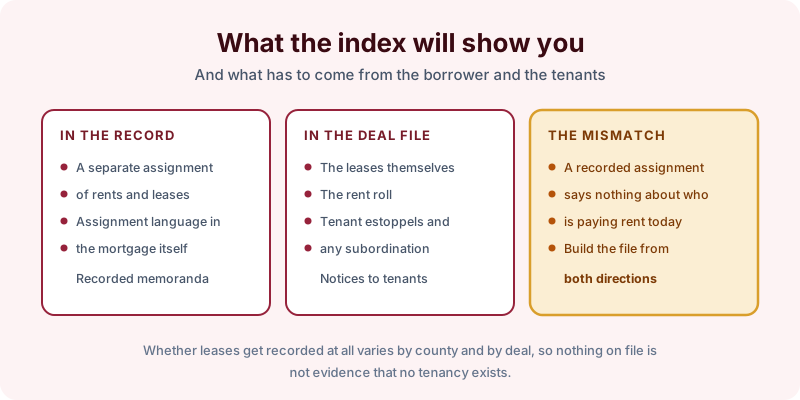
A search covers the recorded half, and that half is genuinely useful. It surfaces any separate assignment of rents, assignment language recorded as part of the mortgage, recorded memoranda of lease naming tenants and terms, and any releases.
What it cannot supply is the operating reality. The leases themselves, the rent roll, tenant estoppel certificates, and any subordination arrangements come from the parties. A recorded assignment tells you a right was pledged; it says nothing about who is paying rent this month, at what rate, or whether a tenant has an offset claim.
Whether leases get recorded at all varies by county and by deal, so nothing on file is not evidence that no tenancy exists. Build the file from both directions.
Two recorded items are worth asking for by name while you are there. A memorandum of lease filed by a major tenant tells you a tenancy exists and roughly how long it runs, without disclosing the rent. A recorded subordination, non disturbance and attornment agreement tells you a prior lender and a tenant already negotiated what happens on a foreclosure, which is information you would otherwise have to reconstruct from scratch.
Why an earlier assignment matters
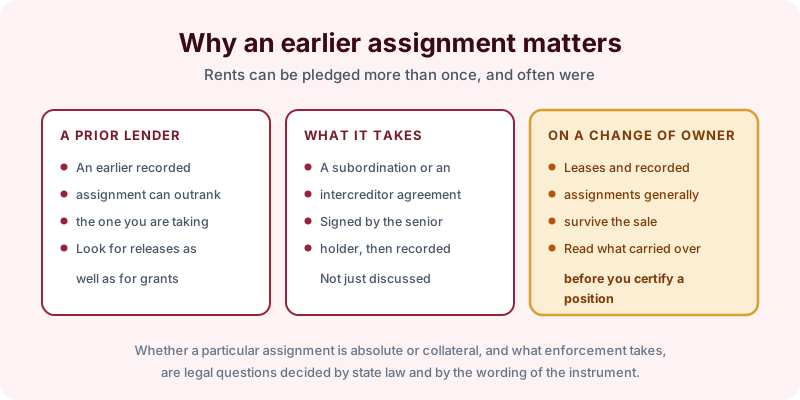
Rents can be pledged more than once, and on a property that has been refinanced a few times they usually have been. An earlier recorded assignment held by a prior lender can sit ahead of the one you are taking, so look for releases as carefully as you look for grants. An unreleased assignment from a lender that was paid off in 2014 is a live line item until something is filed.
Where a senior holder remains in place, a subordination or intercreditor agreement may be needed, signed and then recorded rather than merely discussed. Our guide to subordination agreements covers how those look in the record.
On an acquisition, remember that leases and recorded assignments generally survive a change of ownership unless something released them, so read what carried over before certifying a position. Whether a given assignment is absolute or collateral, and what enforcement requires, are legal questions governed by state law and by the wording.
The takeaway
Treat the assignment as its own instrument rather than boilerplate attached to the mortgage, search for prior assignments and their releases, and get the leases and estoppels from the parties because the index will not have them. Start the order online, or send us the funding letter and the rent roll if you want the scope matched to the requirement before anything is ordered.