

· AFX Research
SBA Subordination Requests: What the Title Report Must Show
Why lien position follows the recording date, who has to sign a subordination, what the recorded agreement changes, and which documents the underwriter needs in the file.
Table of Contents
Lien position is the requirement most likely to stall an SBA closing, and subordination is the tool lenders reach for when the position comes back wrong. It works. It just does not work quietly, and it does not work on your schedule. A subordination is a negotiated agreement with a party who has no obligation to help, and until it is recorded it changes nothing a searcher can see. Our guide to lien position on SBA loans covers how the stack forms in the first place; this one covers what happens when you try to rearrange it.
Position normally follows the recording date
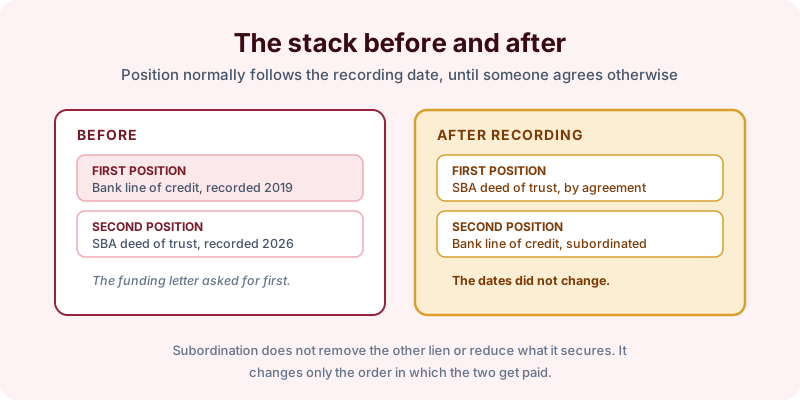
The default rule in most jurisdictions is chronological. The instrument recorded first is generally ahead of the one recorded second, which is why a working capital line a business opened in 2019 sits in front of a deed of trust recorded for a new loan today. There are statutory exceptions, property tax liens being the common one, and priority rules are state law rather than a national standard.
A subordination agreement is consent to depart from that order. The senior lienholder agrees, in a recorded document, that its lien will sit behind one that came later. Nothing about the recording dates changes. Only the payment order does.
Someone else has to agree
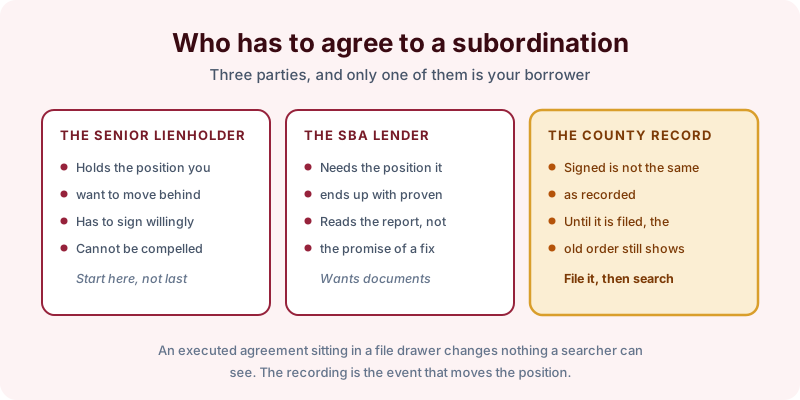
This is the part that surprises borrowers. The holder of the senior lien signs voluntarily or not at all. A bank asked to move behind a new loan is being asked to accept a worse recovery position on its own credit, and it is entitled to say no, to take weeks deciding, or to ask for something in return.
So the sequence matters. Order the search early, find out what is actually of record, and open the subordination conversation while there is still calendar left. Discovering an unexpected line of credit ten days before funding turns a routine request into a scramble, and the senior lender has no reason to match your urgency.
What the agreement does not do
A subordination does not remove the other lien. It does not reduce what that lien secures, it does not release any collateral, and it does not stop the junior holder from enforcing its rights. If the goal is to get a lien off the property entirely, that is a payoff and a recorded release, or a release of collateral, which is a different transaction with different paperwork.
Partial subordinations exist as well, limited to a stated dollar amount or to a specific parcel out of several. Those are useful and easy to misread, so the underwriter needs the document itself rather than a description of it.
It is also worth checking whether the lien needs subordinating at all. A payoff recorded years ago and never released will show on a report as a live lien, and the fix there is locating the release rather than negotiating with a lender who considers the matter closed. Reading the report before reaching for a subordination saves a conversation nobody needs to have.
What the file has to prove
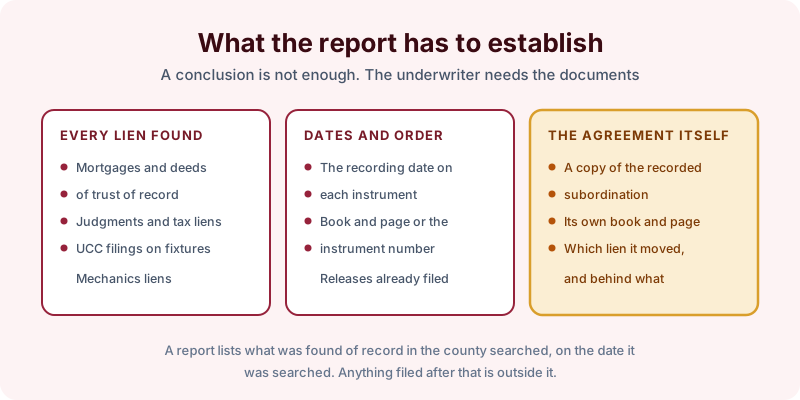
An underwriter reviewing a subordinated position needs three things: every lien found of record against the parcel, the recording date and instrument number for each, and a copy of the recorded subordination showing which lien moved and behind what. A statement that the position “has been subordinated” is not evidence of anything.
Timing is the last trap. A report reflects what was found of record in that county on the date it was searched, so a search run before the agreement was filed will correctly show the old order. Many closings need an updated search afterward to document the final position, and our search requirements guide covers how to match the scope to what the funding letter asks for.
The takeaway
Search first, negotiate early, record the agreement, then search again to prove the result. Subordination reorders payment priority and nothing else, and the only version that counts is the one on file at the county. Start the order online, or send us the funding letter if you want the scope matched to the requirement before anything is ordered.