

· AFX Research
Escrow Holdbacks and Title Exceptions on an SBA Closing
When a holdback is the right answer to an unresolved title matter, what the escrow agreement has to say, and which exceptions should stop a closing instead.
Table of Contents
A closing date is fixed, the title report has an item on it that nobody has cleared, and the choice is to delay or to hold money back. Escrow holdbacks exist for exactly that moment, and they are a sound tool used narrowly and a source of long-running trouble used loosely.
The distinction is simple. A holdback buys time to finish clearing something everybody can describe. It is not a way to fund past a problem nobody has identified.
What legitimately produces one
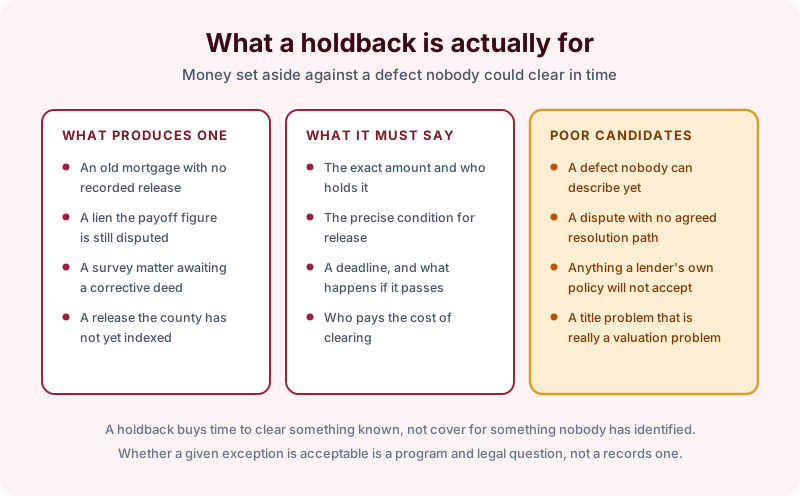
An old mortgage paid off years ago with no release on record, where the payoff lender has been located and is preparing the satisfaction. A lien where the amount is agreed and only the mechanics of payment remain. A survey matter with a corrective deed already drafted. A release that has been recorded but not yet indexed, which is a timing problem rather than a title problem.
In each of those the defect is known, the cure is identified, and somebody is executing it. The money sits against a defined risk, and the amount can be set with some confidence because the size of the problem is understood.
The holdback figure itself is usually a multiple of the expected cost rather than the cost alone, on the reasoning that the party holding the money should have an interest in seeing the matter finished. How large that multiple should be is a negotiation rather than a rule.
What the agreement has to say
Four things, and vagueness in any of them is what turns a holdback into a decade-old escrow account nobody can close.
The exact amount and who holds it. The precise condition for release, written so that a third party reading it later can tell whether it has been met. A deadline, with a stated consequence if it passes. And who pays the cost of the clearing work, which is small but is the item most often left unsaid.
Exceptions that should stop the deal instead
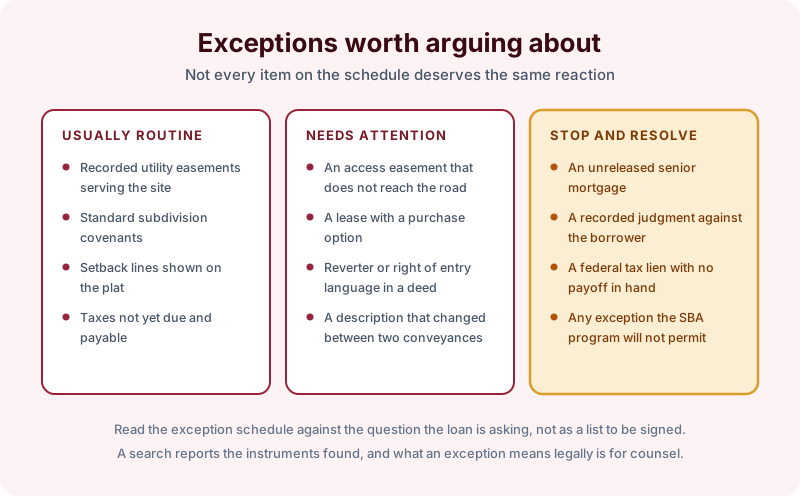
Not every item on an exception schedule deserves the same reaction. Recorded utility easements serving the site, standard subdivision covenants, plat setback lines, and taxes not yet due are ordinary, and treating them as problems wastes everyone’s week.
Others need attention before funding. An access easement that does not actually reach a public road. A lease carrying a purchase option or right of first refusal, which is the territory of purchase options and first refusal on SBA collateral. Reverter or right of entry language, covered in reverter clauses and deed restrictions. A legal description that changed between two conveyances.
Reading the schedule against the question the loan is asking, rather than as a list to be initialled, is the part that takes judgment. An easement that is unremarkable on a retail building can be decisive on a site whose value depends on where the trucks turn.
And some should stop the closing. An unreleased senior mortgage with no payoff in hand. A recorded judgment against the borrower. A federal tax lien nobody has quantified. Any exception the SBA program will not permit, which is a program question rather than a records one.
Somebody has to own the follow up
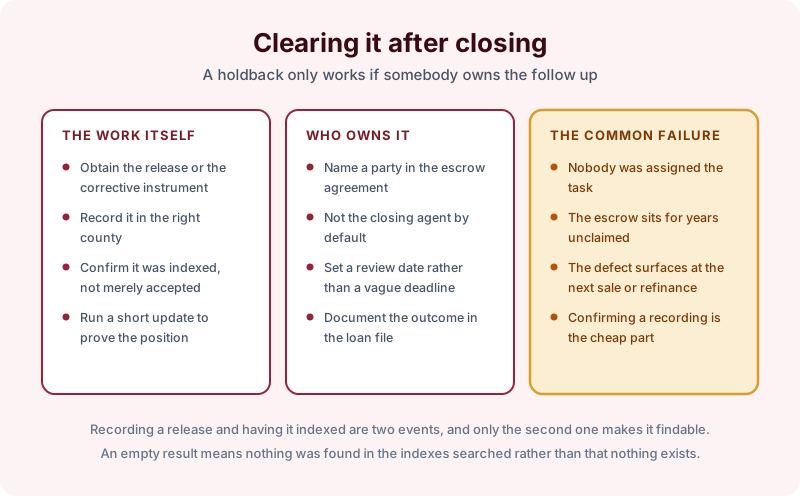
This is where holdbacks actually fail, and it is an administrative failure rather than a legal one. The release gets obtained and recorded, and nobody confirms it was indexed, which is the step that makes it findable by the next searcher. Or nobody was named as responsible at all, the escrow sits for years, and the defect resurfaces at the next sale or refinance.
Name a party in the escrow agreement rather than assuming the closing agent will chase it. Set a review date. Run a short update afterwards to prove the position rather than trusting the receipt, which is the same discipline as the pre-closing title update.
The takeaway
Hold back against a defect you can name, with a cure somebody is already executing and a person responsible for finishing it. Everything else is either routine and should be accepted, or serious and should be resolved before funding. Recording practice varies by county, and a clean result means nothing was found in the indexes searched. Start the order online, or send us the address and the exception schedule and we will tell you what a search of that scope would and would not cover before anything is ordered.