

· AFX Research
The Pre-Closing Title Update: Why the SBA File Needs a Second Look
What a title report is actually accurate as of, the gap between the search date and funding, what tends to post inside it, and when to run the update.
Table of Contents
Every title report carries a date, and that date does more work than most files give it credit for. The report is accurate as of the moment the abstractor read the index, and it makes no claim at all about the day after. On a file that takes three weeks to underwrite, that leaves a stretch of time during which the collateral can pick up something nobody in the file knows about. The fix is small, cheap, and routinely skipped. How long the original search takes is a separate question from how long its answer stays current.
What the report is accurate as of
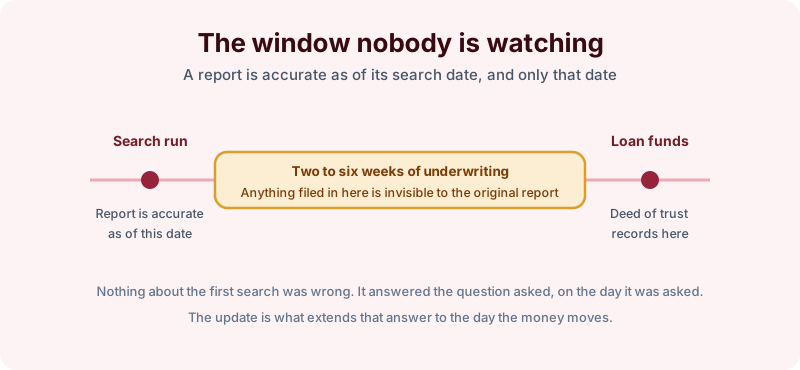
Nothing about the original search is wrong when something posts later. It answered the question it was asked, on the day it was asked, and it will keep being a correct answer to that question forever. What it cannot do is speak for the two to six weeks that follow, and a report presented at closing as though it does is being asked to carry weight it was never built for.
This matters more on SBA files than on a straightforward purchase, because SBA underwriting takes longer. A conventional deal that closes in ten days has a small window. A 7(a) file working through eligibility, appraisal, and a funding letter can easily leave a month between the search and the wire.
What tends to post in the gap
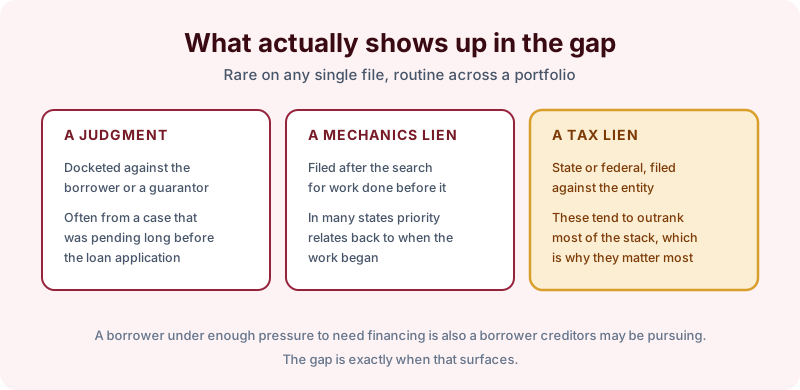
A judgment. Docketed against the borrower or a guarantor, frequently from a case that was already pending when the application went in. Nothing about it was hidden; it simply had not been reduced to a docketed judgment yet.
A mechanics lien. Filed after the search, for work performed before it. In many states the priority of such a lien relates back to when the work began rather than when the claim was recorded, which means a lien filed next week can outrank a deed of trust recorded today. Borrowers improving a property in anticipation of a loan are the ordinary case here, not the exotic one.
A tax lien. State or federal, filed against the entity. These matter most because they tend to sit high in the stack regardless of when they arrive, which can undo the lien position the funding letter required.
On any single file, all three are unlikely. Across a portfolio they are routine, and the reason is not coincidence: a borrower under enough pressure to need financing is often a borrower whose creditors are also acting.
Timing the update
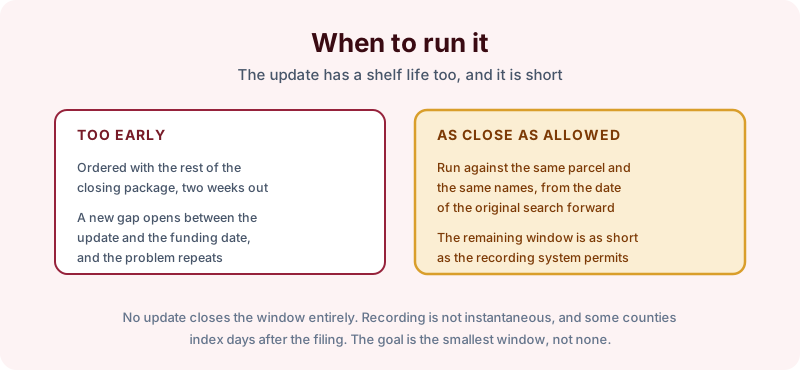
An update runs against the same parcel and the same names, covering the period from the original search date forward. It is a narrower piece of work than the original search, which is why it is fast and inexpensive.
The mistake is ordering it too early, with the rest of the closing package. An update run two weeks before funding opens a fresh gap of its own and reproduces the problem it was meant to solve. Run it as close to closing as the county’s turnaround allows.
No update closes the window completely. Recording is not instantaneous, some counties index days after a filing is submitted, and there is always a residual period that no search can reach. The goal is the smallest practical window, not the elimination of one, and being honest about that distinction with a lender is better than implying a guarantee the records system cannot support.
Where it earns its keep twice
On a refinance the update does a second job: it confirms the new deed of trust recorded, and recorded in the position the file promised. That is the only step that turns an expected outcome into a documented one, and it applies equally to a release of collateral, where the point is confirming the release actually reached the record rather than a file drawer.
On multi-parcel files, the update runs per parcel, same as the original search. A parcel that was quiet at the time of the first search is not exempt.
The takeaway
Read the date on the report, treat everything after it as unknown, and close the gap with an update timed as near to funding as the county allows. Start the order online, or send us the original report and the expected closing date and we will scope the update to the window that actually needs covering.