

· AFX Research
Historic Preservation Easements on SBA Collateral, What to Check
A facade easement granted decades ago for a tax deduction still binds the building, survives foreclosure, and rarely announces itself in the index under that name.
Table of Contents
A borrower buys a handsome brick building downtown, plans to open up the storefront, and the deal underwrites cleanly. Then the chain turns up a deed of easement recorded in 1997 in favor of a preservation trust nobody at the closing table has heard of. The building cannot be altered without that trust’s written consent, and the restriction did not end when the grantor sold. This is the same category of problem as reverter clauses and deed restrictions on SBA collateral, and it is worth knowing before the appraisal is ordered rather than after.
What a preservation easement does
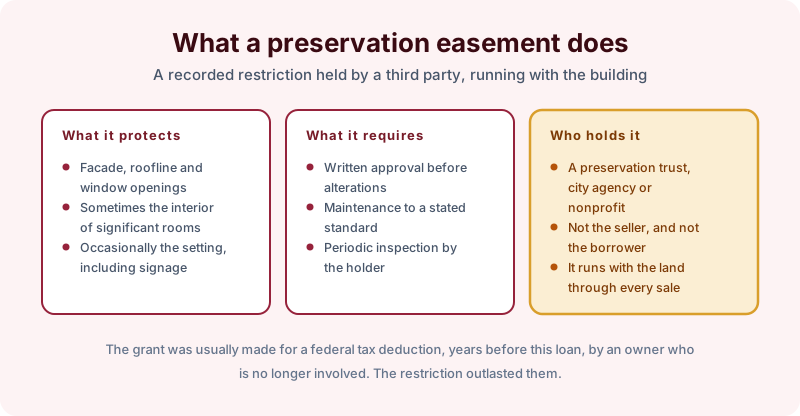
A historic preservation easement is a recorded restriction held by somebody other than the owner. Typically a preservation trust, a nonprofit or a city agency holds it, and the grant gives that holder a permanent right to approve or refuse changes to the protected features of the building.
Most protect the exterior, which is why they are commonly called facade easements. The roofline, the window openings, the storefront and the masonry are the usual subjects. Some reach interior spaces of architectural significance, and a few extend to signage and the immediate setting.
The obligations run both directions. The owner must maintain the building to a stated standard, must obtain written approval before altering it, and must let the holder inspect periodically. Those duties pass to each successive owner, which is the whole design. The original grant was usually made to claim a federal charitable deduction, often decades ago, by somebody with no remaining connection to the property.
Finding it in the record
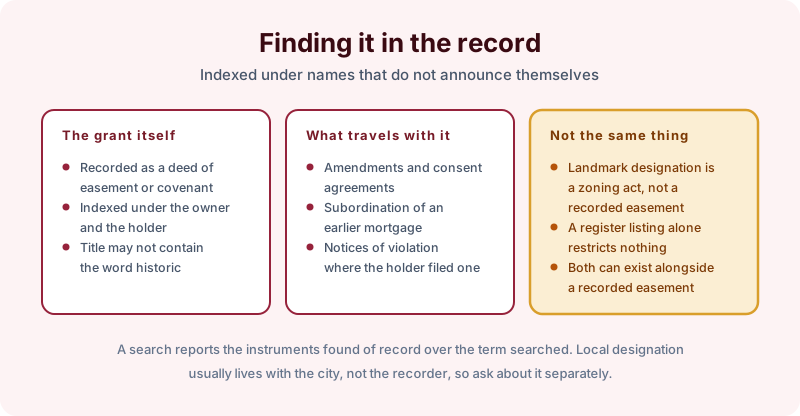
The grant is recorded, so a search over an adequate term will reach it, but it does not always identify itself helpfully. It may be captioned as a deed of easement, a conservation easement, a preservation restriction or a declaration of covenants, and the word historic may appear nowhere in the title. It is indexed under the owner who granted it and the organization that received it.
Several other things travel with it and matter as much. Amendments and consent agreements change the scope. A subordination agreement may show that an earlier lender agreed to take a position behind the easement. A notice of violation, if the holder ever filed one, is a live problem rather than a historical note.
Worth separating from all of this is designation. A local landmark ordinance or a National Register listing is a regulatory status, not a recorded property interest, and it lives with the city or the state office rather than the recorder. A building can carry both, or either alone, and a records search will only report what was recorded and indexed in the county over the term searched.
What it means for the collateral
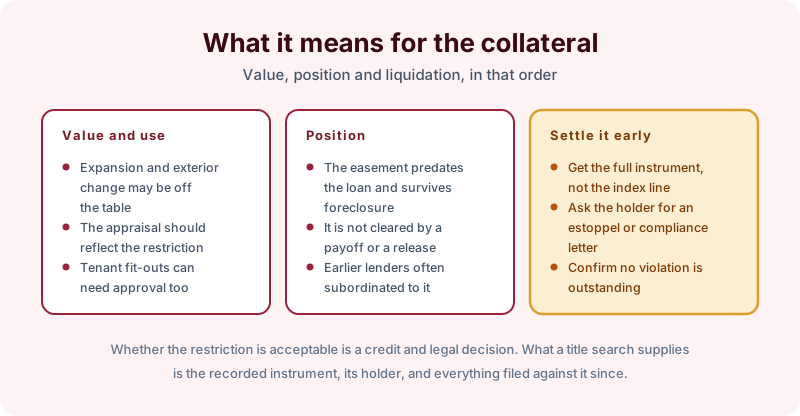
Value comes first. If the plan behind a business expansion loan depends on an addition, a new entrance or a changed storefront, the restriction may put that plan out of reach, and the appraisal needs to be written against the building as restricted rather than the building as imagined. Even tenant improvements can require approval where the easement reaches the interior.
Position comes second, and it is the part that surprises people. The easement predates the loan, it runs with the land, and it survives a foreclosure of the lien recorded after it. Paying off the loan does not release it and neither does a trustee’s sale. Whoever ends up owning the building owns it subject to the restriction, which is a different outcome from the ordinary lien position analysis that drives most collateral review.
Third comes housekeeping that is genuinely worth doing early. Pull the complete instrument rather than working from an index line, because the scope of these grants varies widely. Ask the holder for a compliance or estoppel letter confirming the building is in good standing and no violation is outstanding. Where an earlier lender subordinated, read that agreement, because it tells you what the holder was willing to accept from a lender before.
The takeaway
Whether a preservation easement is acceptable collateral is a credit and legal decision, and it usually is acceptable once everybody understands it. What breaks deals is finding it at the appraisal stage, or not finding it at all until the borrower applies for a permit. Order a term long enough to reach the grant, read the whole instrument, and ask the holder directly about compliance. Start the order online, or send us the address and the funding letter and we will tell you what a search of that scope would and would not cover before anything is ordered.