

· AFX Research
Buying a Business With an SBA Loan: The Real Estate Side
Whether the building is in the deal, why the parcel and the entity are searched separately, and the four details that keep an acquisition title order from stalling.
Table of Contents
Business acquisition files spend most of their energy on the business: revenue quality, seller financing, the transition plan, the valuation. The real estate tends to arrive as an afterthought, usually as a line in the purchase agreement. That is where avoidable delays come from, because the title scope on an acquisition depends entirely on a question nobody asks early enough.
First question: where is the real estate?
Three versions of the same deal need three different amounts of title work.
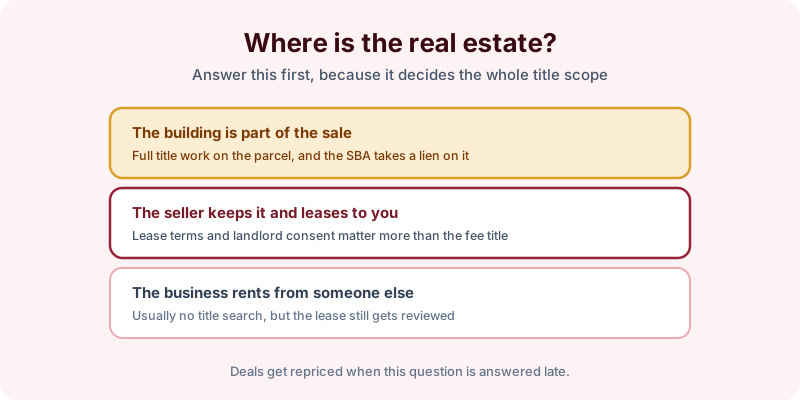
If the seller owns the building and it is part of the sale, the property gets full title work and the SBA takes a lien on it. If the seller owns it but keeps it and leases to the buyer, the lease terms and any landlord consent matter more than the fee title does. If the business rents from an unrelated landlord, there is often no search at all, though the lease still gets reviewed because the loan depends on the buyer being able to stay in the space.
Settle this before anything is ordered. Deals get repriced when it is answered late, and a search ordered against the wrong assumption is a search paid for twice.
The parcel and the entity are encumbered separately
Acquisitions carry a second complication that pure real estate loans do not. Two different things can be encumbered, and they are searched in different places.
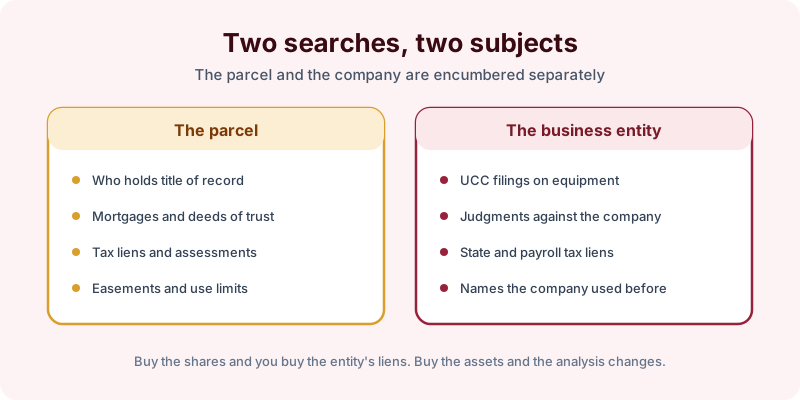
The land records answer questions about the parcel: who holds title, what mortgages and deeds of trust are open, whether taxes are current, what easements and use limitations apply. UCC and judgment searches answer questions about the company: filings against equipment and inventory, judgments against the entity, state and payroll tax liens.
Deal structure decides how much the second column matters. In a share or membership interest purchase, the buyer acquires the entity and its existing obligations come along. In an asset purchase, the analysis is different, though successor liability is a real topic and one for the buyer’s counsel rather than for a title report.
One detail causes more missed filings than any other: the entity’s exact legal name, and any names it used before. A company that reorganized, changed states, or operated under an assumed name has filings indexed under each of those names. Give us the history and the search catches them. Give us only the current name and it may not.
Order with these four things in hand
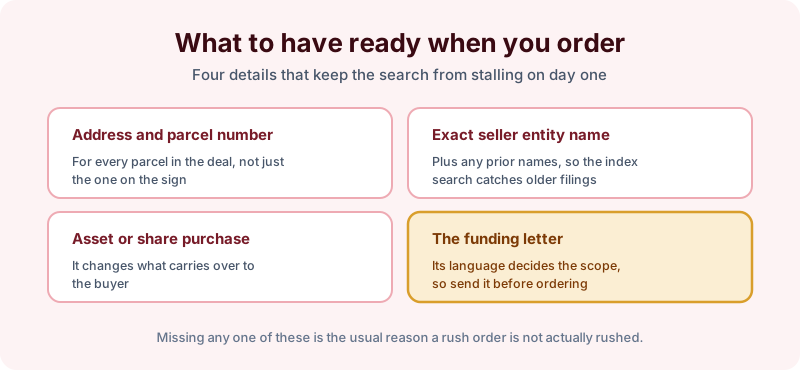
Have the address and parcel number for every parcel in the deal, not just the one on the sign. Have the seller entity’s exact name plus prior names. Know whether the structure is an asset or a share purchase. And send the funding letter, because its language decides the scope. Missing any one of these is the usual reason a rush order does not actually move quickly.
Worth flagging: a records search documents what has been recorded and indexed in the offices searched, as of the date it was run. It is not an inventory of everything that could affect a business, and recording practice varies from county to county. An empty result means nothing was found in what was searched, which is useful and is not the same as a guarantee.
Where the deal usually slows down
The recurring problems are ordinary. The seller’s mortgage payoff has to be arranged before the SBA can take the position the authorization requires. An old UCC filing was satisfied years ago and never terminated. The building turns out to be two parcels, one of them held in a different name. A judgment against the seller individually is on record and the parties disagree about whether it attaches. All of these are fixable with lead time and none of them are quick in closing week.
If the buyer plans to expand or renovate after the purchase, that changes the collateral picture too, which is worth raising while the scope is still being set.
The takeaway
On an acquisition, title work is scoped by the deal structure rather than by the property, so the ordering conversation has to happen before the order. Tell us whether real estate is included, give us the entity’s full naming history, and send the funding letter. Start the order online, or send us the funding letter if you want the scope matched to the requirement before anything is ordered.