

· AFX Research
SBA Environmental Requirements: Where the Title Records Fit
Why an environmental review and a title search answer different questions, how a cleanup lien can outrank a loan recorded years earlier, and what to order together.
Table of Contents
SBA lending on commercial real estate involves environmental review, and the level of review depends on the property type and what the lender’s policy requires. That work belongs to environmental professionals. What comes up regularly on these files is a narrower question that sits squarely in the title lane: what has actually been recorded against the parcel, and does any of it get ahead of the loan.
Two reviews, one parcel
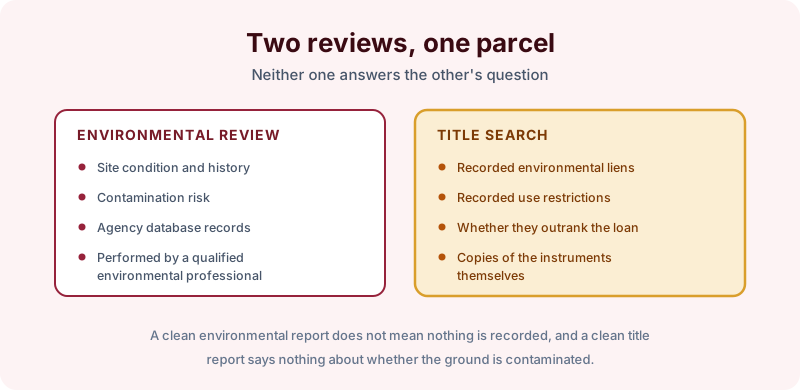
An environmental review looks at the site: its history, its condition, agency database records, and the risk that contamination is present. A title search looks at the index: what instruments have been filed against this parcel, when, and by whom.
Those overlap less than people assume. A clean environmental report does not establish that nothing is recorded, because a use restriction from a cleanup closed in 2004 is a records item and may not surface in a site assessment. And a clean title report says nothing whatsoever about whether the ground is contaminated, because contamination does not record itself. Both are useful, neither substitutes, and the failure mode is a file that ordered one and assumed it covered both.
The lien that ignores the date stamp
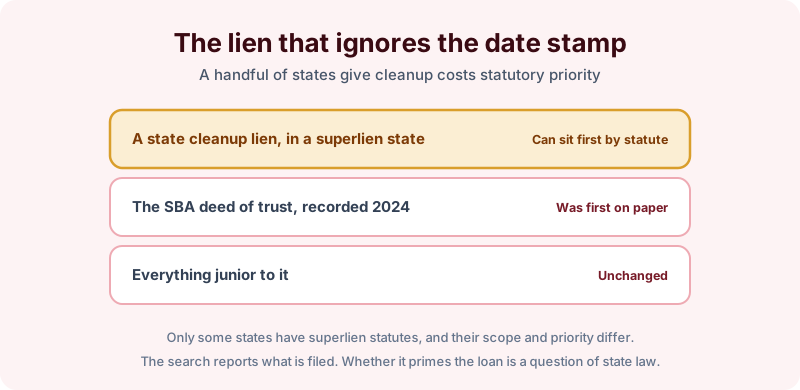
This is the part that matters most for collateral value. Lien position normally follows the recording date, and environmental cleanup liens are one of the exceptions.
A number of states have superlien statutes giving a state’s recovery of cleanup costs priority over previously recorded liens on the affected property. Where one applies, a cleanup lien can sit ahead of a deed of trust recorded years earlier. Only some states have such statutes, their scope and priority vary, and whether a specific lien primes a specific loan is a legal question rather than something an abstractor determines. What the search does is report the lien, its date, and the recording data, which is the input that question needs.
Even outside superlien states, an ordinary recorded cleanup lien behaves like other liens and has to be dealt with in the usual ways: paid, released, or accounted for in the position analysis.
Use restrictions can conflict with the business
Recorded restrictions are the quieter issue and they can be more consequential than a lien, because a lien has a number and a restriction has a prohibition.
An environmental covenant may bar residential use, restrict excavation depth, prohibit groundwater wells, or require an owner to maintain a vapor mitigation system and report on it annually. Any of those can collide with the operation the loan is financing. A borrower planning to put in a loading dock on a parcel whose covenant caps excavation depth has a problem that no amount of collateral value solves, and it is much cheaper to find in underwriting than after funding.
These obligations run with the land, which means the borrower inherits them regardless of who created the condition. That is exactly why the instruments matter more than a summary of them.
What to order together
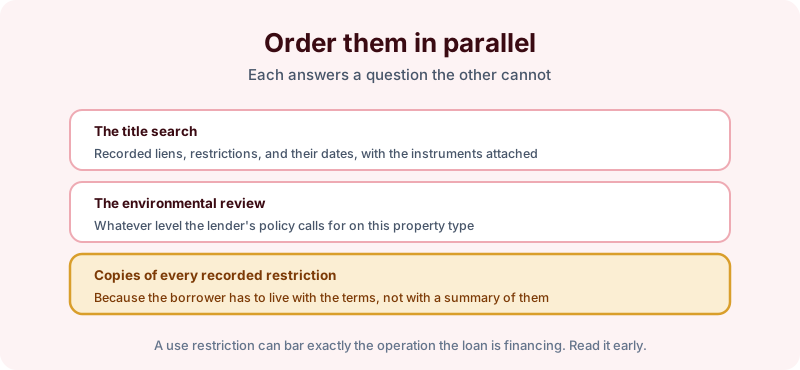
Run them in parallel rather than in sequence, since neither depends on the other’s result and both take time. Order the title search covering recorded liens, restrictions, and their dates with copies attached. Order whatever environmental review the lender’s policy calls for. And specifically ask for copies of every recorded restriction, not just a list, because the borrower has to operate under the terms.
Where the collateral includes several parcels, each is searched separately, and a restriction recorded against one does not appear in a search of another. On industrial and former-industrial property that difference does real work.
The reporting line
A title search reports what was found of record for the parcel and term searched, on the date searched. It does not establish that a property is uncontaminated, it does not determine whether a recorded lien is valid or enforceable, and it does not decide priority. Those belong to the environmental professional, to counsel, and ultimately to the lender’s credit decision. The abstractor’s contribution is the instruments and their dates, which is a smaller claim and a more reliable one.
The takeaway
Treat the environmental review and the title search as two separate questions, watch for cleanup liens that can outrank a loan by statute rather than by date, and get copies of every recorded restriction before the borrower commits to a build-out. Start the order online, or send us the funding letter and the property details and we will tell you what the records side covers before anything is ordered.