

· AFX Research
Multiple Collateral Properties on One SBA Loan: Ordering the Search
Why each parcel is its own search, how the funding letter sets scope parcel by parcel, what to send at intake, and where multi-property files quietly lose days.
Table of Contents
Plenty of SBA files involve one property. The ones that go sideways usually involve three. A borrower pledges the operating real estate, the lender adds the owner’s residence as additional collateral, and somewhere in the file there is a vacant lot bought two years ago that nobody mentions until underwriting asks. Each of those is a separate parcel, in a separate index, and often in a separate county, and the loan does not close until the last one comes back. Choosing the right search term is the first decision; this is the one right after it.
One loan, three searches
There is no such thing as a single search that sweeps up several properties at once. Land records are organized by county, and within a county by parcel and by name. A search is performed against a specific parcel in a specific recorder’s office, so three parcels in three counties is three searches, no matter how they are billed or bundled.
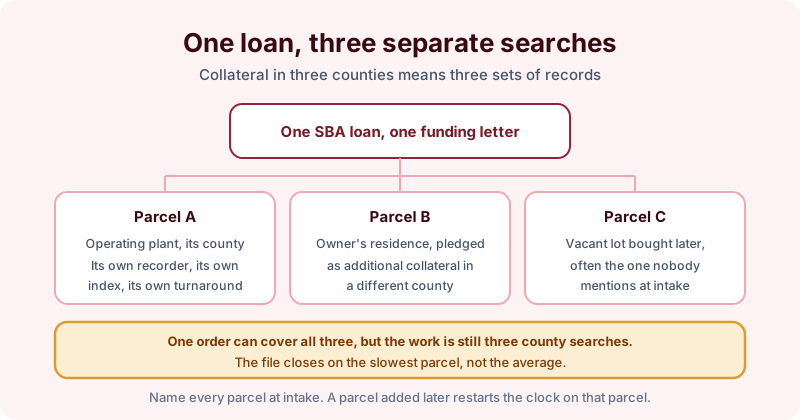
You can order them together, and you should. But the work underneath is still parcel by parcel, which has one consequence worth planning around: the package is only as fast as its slowest county.
Scope is decided per parcel
The instinct is to pick one search term and apply it across the file. That is safe, and it is usually wrong in one direction or the other. It either overbuys on the simple parcels or underbuys on the complicated one.
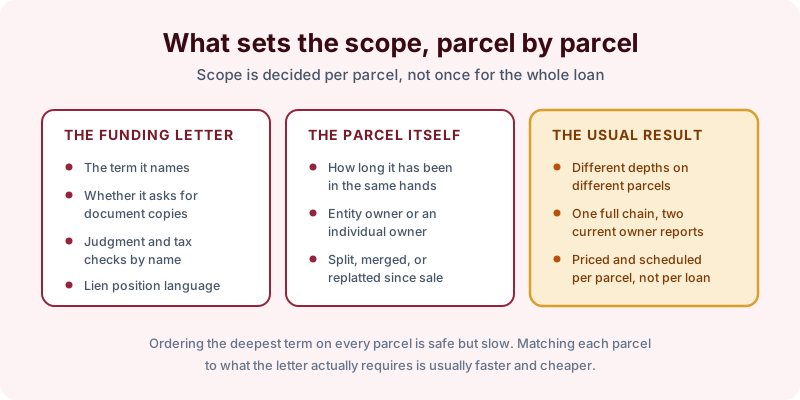
Two things set the scope. The first is what the funding letter actually requires, which sometimes speaks to the primary collateral in detail and treats the additional collateral in a sentence. The second is the parcel itself. A commercial building held by the same LLC since 2004 reads very differently from a lot that was split off a larger tract, replatted, and conveyed twice.
The common outcome on a real file is mixed depth: a full chain of title on the operating property, current owner reports on the two additional parcels. That is a scoping decision, not a corner cut, and it is worth putting in writing to the lender so nobody discovers the difference during review.
What entity ownership does to the search
Multi-property files are where entity ownership starts to matter, because the parcels frequently are not all held by the same party. The building belongs to a real estate holding LLC, the residence belongs to the owner and spouse individually, and the vacant lot is still in the name of a predecessor entity that was supposed to be dissolved.
Each of those is a different name to search, and names have to be searched as they appear of record, including the variants. An LLC recorded once with the comma before “LLC” and once without will not always return on a single query, and a judgment docketed against the individual owner does not surface in a search run only against the entity. Send the exact names along with the parcels. Where the collateral is a leased location rather than owned real estate, leasehold collateral has its own rules.
Where these files lose time
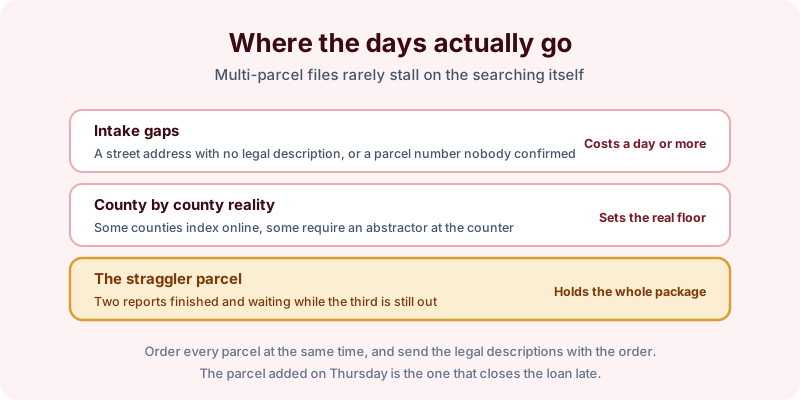
Almost never in the searching. The losses are at the edges. A parcel identified by street address alone, with no legal description or confirmed parcel number, has to be pinned down before anyone can search it. A county that still requires an abstractor at the counter sets a floor that no amount of urgency moves. And the parcel that arrives on Thursday, after the others were ordered Monday, becomes the one that holds the funding package.
Order every parcel at once, send the legal descriptions with the order, and treat a late addition as what it is: a new clock on that parcel, not a small amendment to an existing one. If something surfaces on any of them, the usual fixes and their timelines apply per parcel too.
The takeaway
Count the parcels before you scope the file, match each one to what the letter requires rather than to each other, and get the legal descriptions in at intake. Start the order online, or send us the funding letter and the parcel list and we will tell you what each property needs before anything is ordered.