

· AFX Research
What Water and Irrigation Rights Mean for SBA Collateral
On irrigated ground the water right can be worth more than the dirt, and it is mostly recorded somewhere other than the county. What the search covers and what it cannot.
Table of Contents
An SBA loan is secured by a farm, a nursery, a vineyard, or a food processing site, and the appraisal assumes the land is irrigated. That assumption rests on a water right, and a water right is not always part of the land. In much of the western United States it is separate property that can be sold, leased, reserved, or forfeited independently of the ground it has been watering for decades. Confirming it is a different exercise from a rural acreage title search, and only part of it happens in the county.
Half the record is in the county and half is not
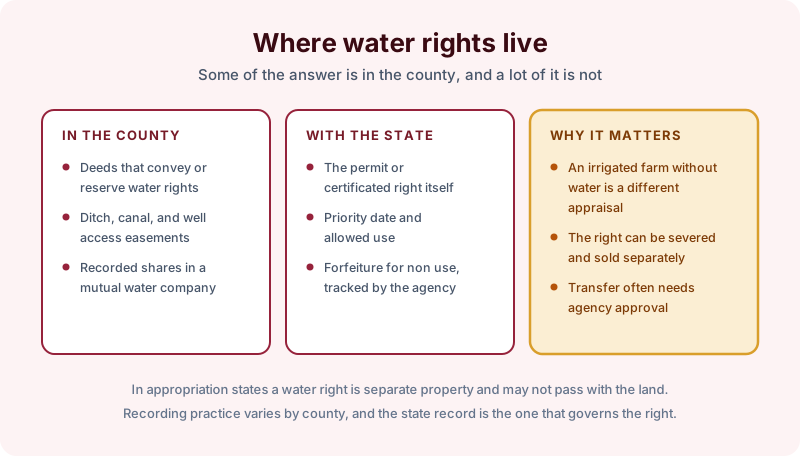
The county holds the conveyance history. Deeds that carried a water right along with the land, deeds that reserved it, ditch and canal easements, well access rights, and recorded shares in a mutual water company all sit in the recorder’s index and turn up in an ordinary search.
The state holds the right itself. In appropriation states the permit or certificate, the priority date that decides who gets water in a short year, the allowed place and type of use, and any forfeiture proceeding for non use are administered by a state engineer or water resources agency. None of that reaches the recorder, and the state record is the one that governs.
So a clean county search tells you what was conveyed and reserved. It does not tell you the right is currently in good standing, and those are genuinely different statements. Riparian states work differently again, tying the right to ownership of land touching the water rather than to a permit, which is why the first question on any irrigated file is which system the state runs. Our note on what an SBA title search cannot find covers the same boundary in general terms.
What to check on irrigated ground
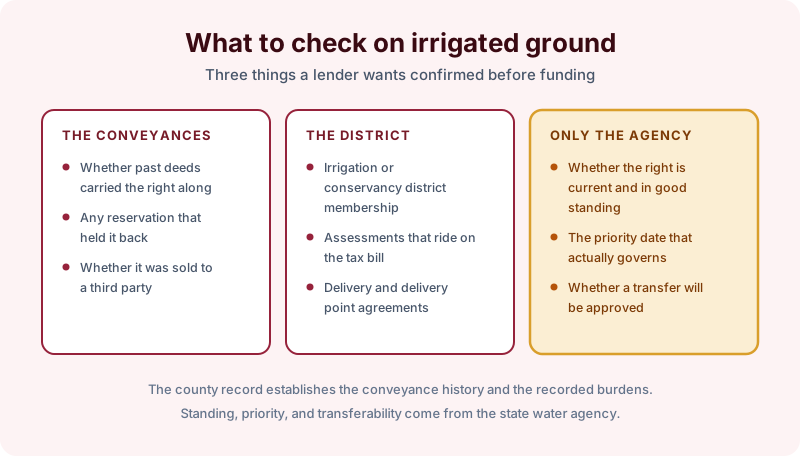
Start with the conveyances. Read whether past deeds carried the right along, whether any reserved it, and whether a prior owner sold it to a third party. A reservation buried in a 1961 deed is exactly the kind of thing a short search term will never reach, which is one more reason to set the term by the question rather than by the price.
Then look at the district. Irrigation and conservancy district membership brings assessments that commonly ride on the property tax bill, alongside delivery agreements and defined delivery points. Those assessments behave like the ones covered in delinquent property taxes on an SBA title search, in that they attach to the parcel rather than to the borrower.
Then ask the agency the questions only the agency can answer. Is the right current and in good standing, what priority date actually governs, and would a transfer be approved. An abstractor cannot answer any of the three, and a report that implies otherwise is overreaching.
Whether your lien reaches the water
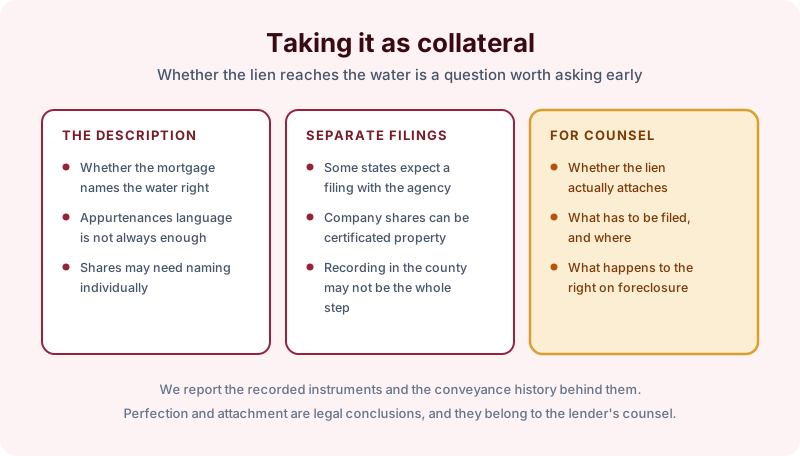
This is the part that catches lenders who have only done dryland deals. A mortgage that describes the real property and relies on general appurtenances language may or may not reach a water right that state law treats as separate property. Where the right is held as shares in a mutual water company, those shares can be certificated personal property and may need naming individually.
Some states also expect a filing with the water agency rather than, or in addition to, recording in the county. Whether the lien attaches, what has to be filed and where, and what becomes of the right on foreclosure are all legal conclusions. We give counsel the recorded conveyance history and the instruments behind it, and counsel takes it from there. Recording practice varies by county as well, so where a water conveyance was indexed is a local fact rather than a general rule.
The takeaway
On irrigated collateral the water is frequently the value, and it is documented in two places that do not talk to each other. Search the county for the conveyance history and the recorded burdens, go to the state agency for standing and priority, and have counsel confirm the lien actually reaches the right before closing. Start the order online, or send us the legal description and the county and we will tell you what a search of that scope would and would not cover before anything is ordered.