

· AFX Research
What an SBA Title Search Cannot Find, and Why It Matters
The four gaps every records search leaves on an SBA file, how to close them with cheap steps outside the county, and where the funding letter asks for something else.
Table of Contents
A clean title report feels like an answer, and on an SBA file it is only part of one. A records search reports what somebody filed in a public office. Anything real that nobody filed, and anything filed after the searcher looked, sits outside it by design. Knowing where those edges are is what keeps a funding condition from turning into a post closing problem, and it pairs with our note on what the funding letter requires.
The three gaps in every search
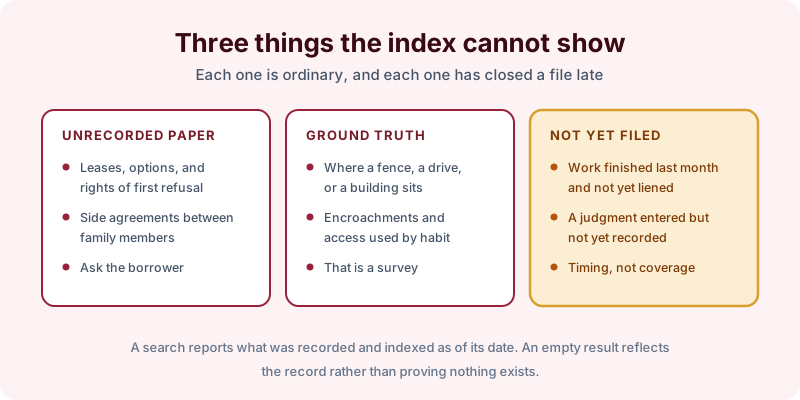
Unrecorded paper. Leases, options, rights of first refusal, and handshake arrangements between family members are enforceable between the parties and frequently never recorded. On owner occupied commercial collateral, an unrecorded lease to a related company is close to routine, which is why assignment of rents work starts with asking the borrower rather than with the index.
Ground truth. The record describes parcels in words. Where the fence actually runs, whether the building crosses a line, and whether the driveway uses a neighbor’s ground by habit are survey questions, and the same limitation applies to the access and easement questions that come up on rural collateral.
Timing. Work finished last month may not be liened yet, and a judgment entered in court may not have reached the land records. Neither is a coverage failure. Both are a reason the date on the report matters more than lenders usually treat it as mattering.
What a search is not, even when it is perfect
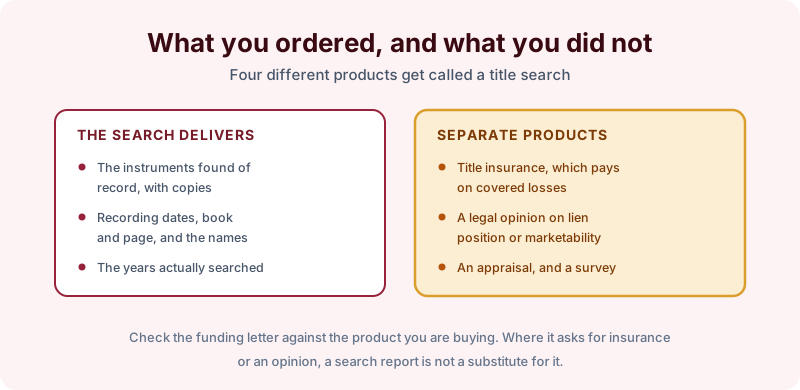
Four products get loosely called a title search, and a funding condition sometimes means one of the others. A search delivers the instruments found of record with copies, recording dates, book and page, the names searched, and the years covered. It is research, and it is the raw material for everything else.
Title insurance is a policy that pays on covered losses. A legal opinion on lien position or marketability is counsel’s work product. An appraisal values the collateral and a survey locates it. Where the funding letter asks for insurance or an opinion, a search report is not a substitute, and our comparison of a title report versus title insurance sets out which requirement is asking for which.
Where this bites on SBA files specifically
Two patterns account for most of the trouble.
The first is the gap between approval and funding. A report is accurate as of its own date, and on an SBA file weeks or months routinely pass while conditions are cleared. A borrower under pressure in that window can pick up a tax delinquency or a judgment, which is the entire argument for a pre closing update rather than reliance on the original report.
The second is scope that was set too narrowly at the start. A search covers the counties and names it was given. If a guarantor was left off the order, or a parcel in an adjoining county was never mentioned, the report is complete and the file is not. Adding a name later means a second trip to the county and a week nobody planned for.
Closing the gaps
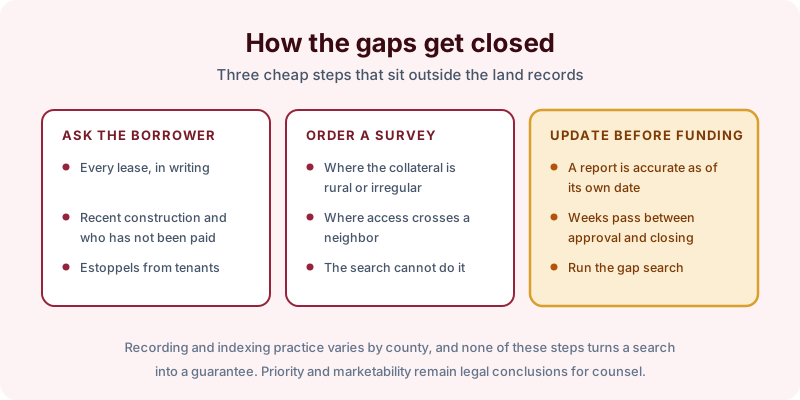
Ask the borrower for every lease in writing and for any recent construction and unpaid contractors, and get tenant estoppels where rents matter. Order a survey where the collateral is rural, irregular, or dependent on access across a neighbor. Then update the search close to funding so the file reflects the record on the day the loan closes.
None of that turns a search into a guarantee. A search reports what was recorded and indexed in the county searched, as of its date. Recording and indexing practice varies by county, an empty result reflects the record rather than proving nothing exists, and priority and marketability remain legal conclusions for counsel in that state.
The takeaway
Treat the report as a precise answer to a narrow question, then close the rest with three cheap steps: ask the borrower, survey where it matters, and update before funding. Start the order online, or send us the funding letter if you want the scope matched to the requirement before anything is ordered.