

· AFX Research
Rural Acreage as SBA Collateral: Access, Splits, Minerals
Rural collateral raises three questions a suburban parcel never does. What the record can settle about access, descriptions, and severed interests, and what it cannot.
Table of Contents
A borrower pledges forty acres with a shop building on it, and the file that would have closed in a week on a commercial lot takes three. The reasons are consistent, they are structural rather than accidental, and they show up on almost every rural collateral file: access, descriptions, and interests somebody carved out of the land generations ago. Knowing which questions to ask at the front end is most of the fix, and our note on access and easements covers the first one in more depth.
Three questions rural acreage raises
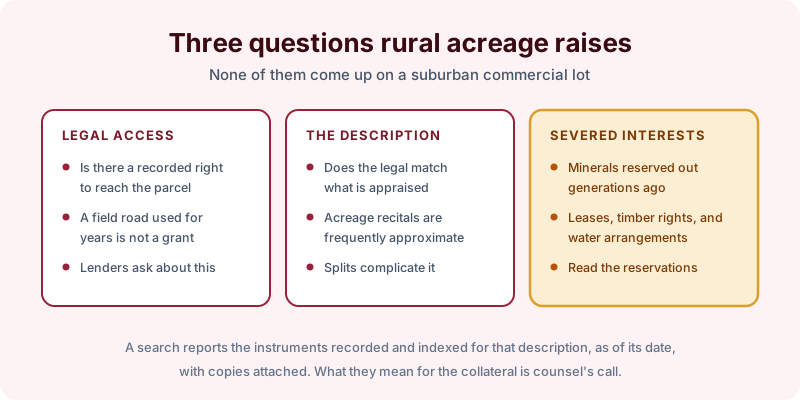
Is there legal access. A field road the family has driven for thirty years is not a recorded right, and a parcel reachable only across a neighbor’s ground may have no easement behind it at all. This affects the value of the collateral and it is a question lenders are right to ask early.
Does the description match the collateral. Rural deeds recite acreage as approximate, and the appraisal, the tax roll, and the deed frequently disagree. Which acreage the mortgage encumbers is the deed’s answer, not the appraiser’s.
Was anything severed. Minerals reserved out in a deed from 1946, a long term hunting or grazing lease, timber rights, or a water arrangement can all sit on the same ground the loan is secured by. None of them stop a loan, and all of them belong in the file rather than in a surprise later.
Why the description slows the file
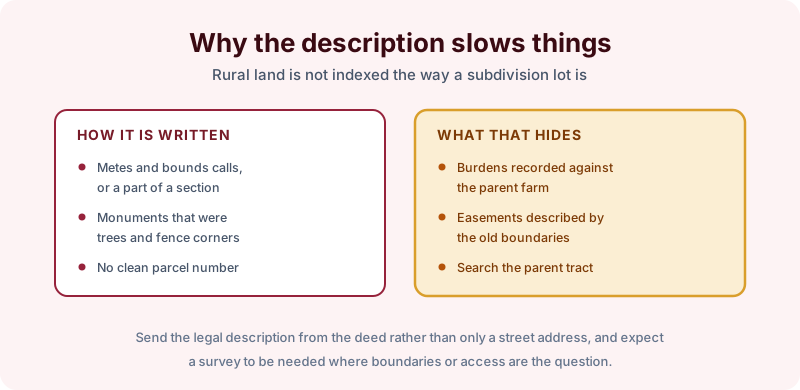
Rural land is described by metes and bounds calls, or as a fractional part of a section under the public land survey, rather than by a subdivision lot number. Older calls reference monuments that were trees, fence corners, and neighbors’ names, and none of that maps cleanly onto a parcel identification number in a county index.
The consequence matters. Where the collateral was split out of a larger farm, easements and restrictions recorded against the parent tract may burden it without ever indexing to the current description. A search run only against today’s parcel number can come back clean and still miss the utility easement crossing the middle of the building site, which is the same problem behind many title problems that delay SBA loans.
What comes with the ground
A few items turn up often enough on rural files to be worth listing. Agricultural program participation and conservation arrangements can carry recorded restrictions on how land is used. Drainage districts and irrigation entities may hold assessments or easements. Where the parcel touches a river or a lake, boundaries can be less fixed than a legal description implies. And on former farmstead ground, fuel tanks and chemical storage are ordinary history rather than exotic, which is why the environmental policy side of the file deserves its own attention.
Scoping the search
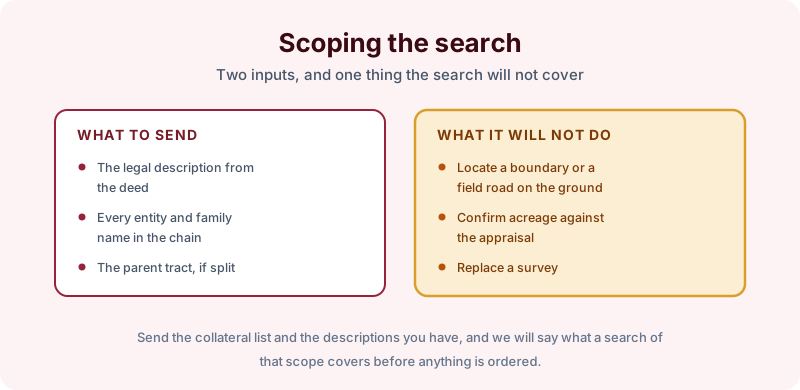
Send the legal description from the deed rather than only a street address, since on rural collateral the address may be a mailbox at the end of a road. Name every entity and family member in the chain, because farm ground moves through trusts, partnerships, and siblings without leaving the family. And ask for the parent tract where a split happened.
Then set expectations correctly. A search reports the instruments recorded and indexed for that description, as of its date, with copies attached so the wording can be read. It does not locate a boundary or a field road on the ground, it does not reconcile acreage against the appraisal, and it is not a survey. Recording and indexing practice varies by county, and an empty result reflects the record rather than proving no claim exists. Whether a reservation or an access arrangement impairs the collateral is a legal conclusion for counsel in that state.
The takeaway
Ask three questions before the file is in motion: is access recorded, does the description match what is being appraised, and what was severed out along the way. Each one is answerable from the record, and each one is cheaper to answer now. Start the order online, or send us the funding letter and the legal description if you want the scope matched to the requirement before anything is ordered.