

· AFX Research
Air Rights and Vertical Subdivision of SBA Collateral, What to Check
A restaurant on the ground floor of a building owned by four parties is a volume rather than a lot. What creates the split, what stays shared, and what to read before closing.
Table of Contents
A borrower buys the ground floor of a mixed use building and the appraisal reads normally. What is actually being pledged is a defined volume of space that depends on a structure somebody else owns, maintains and insures. That is a workable piece of collateral and it is not an ordinary lot, and the difference sits in documents that are recorded but rarely read in full. It is adjacent to condominium and mixed use collateral, taken one step further.
Dividing a building upward
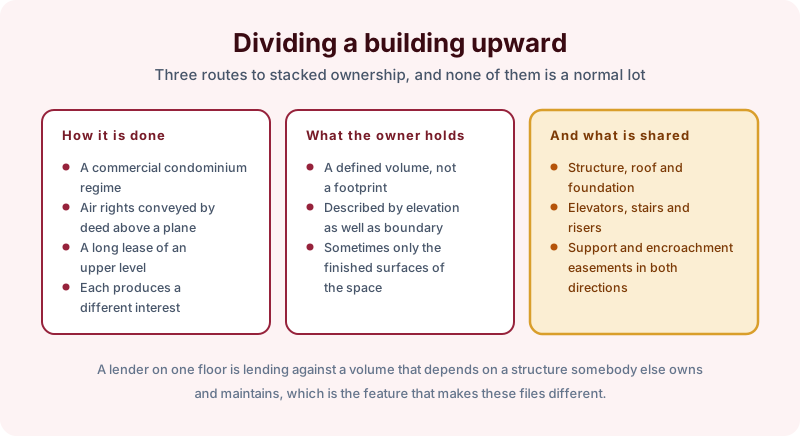
Three routes produce stacked ownership and they are not interchangeable. A commercial condominium regime, which divides the building into units under a recorded declaration. Air rights conveyed by deed above a stated plane, which is how a tower gets built over a rail yard or a parking deck. And a long lease of an upper level, which looks similar and creates a leasehold rather than a fee.
What the owner holds in each case is a volume rather than a footprint. The description carries elevations as well as horizontal boundaries, and in some regimes the owner holds only the finished surfaces of the space with the structure belonging to everybody.
What stays shared is the part that decides the risk. Structure, roof and foundation. Elevators, stairs, risers and the systems running through them. Support and encroachment easements running in both directions, because the upper owner depends on the lower one for support and the lower one has pipes in the upper one’s ceiling.
Finding it in the record
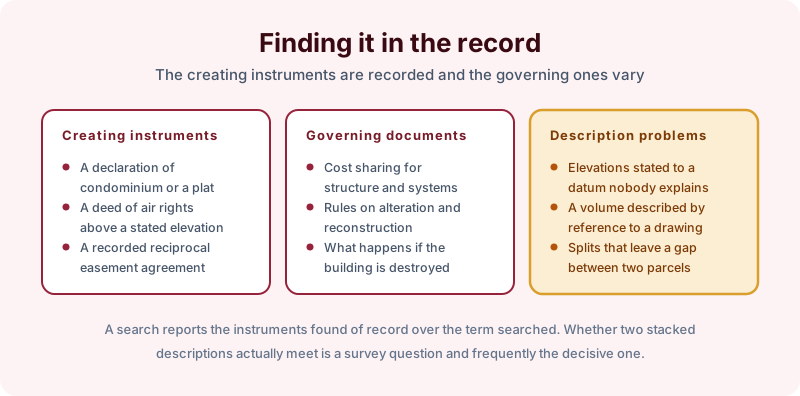
The creating instruments are recorded and a search will reach them. A declaration of condominium and its plat, a deed of air rights above a stated elevation, or a recorded reciprocal easement agreement setting out who may do what to whom.
The governing documents matter as much and vary more. Cost sharing for the structure and the systems, rules on alteration and reconstruction, and the clause nobody reads until they need it, which is what happens if the building is destroyed and one owner wants to rebuild while another does not.
Description problems are the technical risk here and they are common. Elevations stated to a datum the instrument never explains. A volume described by reference to a drawing that may or may not be attached. And splits that leave a gap between two stacked parcels, so a horizontal slice of the building belongs to nobody. Whether two descriptions actually meet is a survey question rather than a records one, and it is frequently the decisive question, as in legal description problems on SBA collateral.
What to do before closing
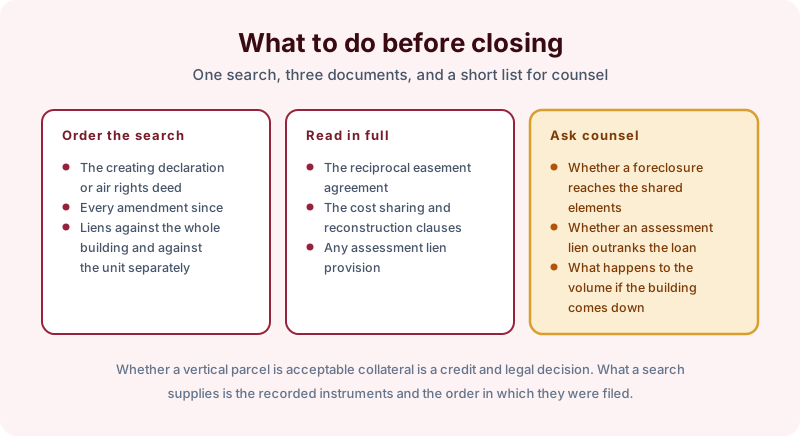
Order the search against the creating declaration or air rights deed, every amendment since, and liens indexed against both the whole building and the individual unit, because those are different searches and both matter.
Read three documents in full. The reciprocal easement agreement, the cost sharing and reconstruction clauses, and any assessment lien provision, since an association or a building manager with lien rights sits ahead of or behind the loan depending on the state and the wording, which is the same analysis as HOA and POA liens on SBA collateral.
Then hand the legal questions over. Whether a foreclosure of the unit reaches any interest in the shared elements, whether an assessment lien outranks the SBA lien, and what becomes of a volume of air if the building supporting it comes down. Those are for counsel in that state, and they are worth answering before closing rather than at liquidation.
The takeaway
A vertical parcel is collateral with a dependency, and the dependency is written into documents that are recorded and long. Order the search against both the building and the unit, get the declaration and the reciprocal easement agreement in full rather than summarized, and pair the search with a survey that confirms the descriptions actually close. Start the order online, or send us the address and the funding letter and we will tell you what a search of that scope would and would not cover before anything is ordered.