

· AFX Research
Legal Description Problems on SBA Collateral: What to Check
A mortgage that describes the wrong parcel, or three tracts out of four, is a lien on something other than the collateral. What the record shows, and when to survey.
Table of Contents
Most title problems on an SBA file are about competing claims. Description problems are about something more basic: whether the mortgage attaches to the land everybody assumed it did. These are quiet defects, because a mortgage with a bad description records exactly as smoothly as one with a good description, the commitment issues, the loan funds, and nothing surfaces until somebody has a reason to look closely. That reason is usually liquidation, five years later. The scoping habits in our note on SBA title search requirements catch most of it if applied at underwriting.
Three documents, one has to win
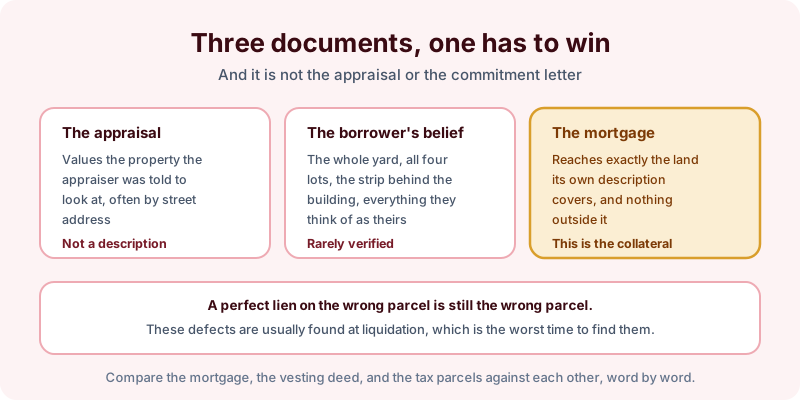
The appraisal values the property the appraiser was sent to look at, generally identified by street address. The borrower believes they pledged everything they think of as theirs, which usually includes the parking area and the strip behind the building. The mortgage reaches exactly the land its own description covers.
Only the third one is the collateral. A perfect lien on the wrong parcel is still the wrong parcel, and no amount of file documentation fixes that after the fact. The practical step is to compare the mortgage, the vesting deed, and the tax parcels against each other word by word rather than in substance, because a dropped call or a transposed bearing is invisible to a reader checking whether two descriptions look similar.
The defects that recur
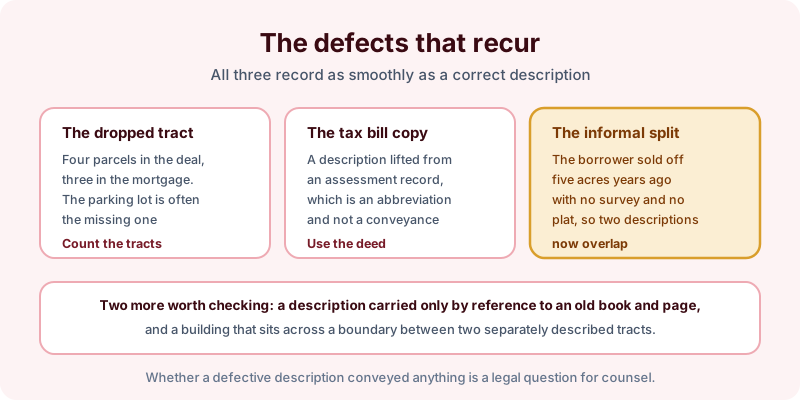
The dropped tract. Four parcels in the transaction, three in the mortgage, and the missing one is frequently the parking lot. Count the tracts the deal intends to cover, then count the tracts the description actually covers. This single check catches more than any other.
The tax bill copy. Descriptions lifted from an assessment record are abbreviations maintained for billing, not conveyancing language, and mortgages prepared that way are a steady source of new defects.
The informal split. A borrower sold five acres off the back of a tract years ago with no survey and no plat, and the two descriptions now overlap or leave a gap. This is common on rural and industrial property, and it is the version that most often needs a court to fix. The related mechanics are in our note on partial releases and lot splits.
Two more are worth checking. A description carried only by reference to an old book and page, where the operative language sits several documents back. And a building that sits across a boundary between two separately described tracts, so part of the structure secures the loan and part does not.
When to stop searching and survey
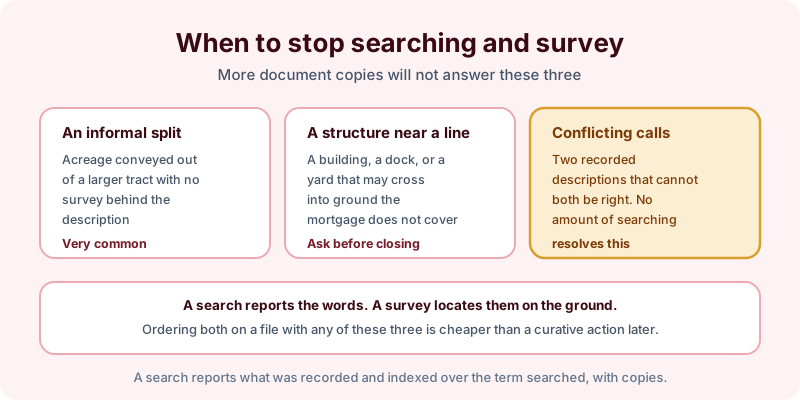
Three situations are not solvable with more document copies. An informal split with no survey behind it. A structure that may cross a line. And two recorded descriptions that cannot both be right.
A search reports the words. A survey locates them on the ground. On a file showing any of those three, ordering both is materially cheaper than a curative action after default. Where the collateral spans several properties, treat each description as its own job, the approach our note on multiple collateral properties sets out.
What the search will and will not settle
The search reports what was recorded and indexed for the parcels and names given, as of its date, with copies: the vesting deed, the mortgage, prior conveyances in the chain, any plat, and any corrective deed or scrivener’s affidavit already on record. Finding a curative document tells you the defect was known before.
It cannot locate a boundary, resolve a conflict between two descriptions, or determine what a court would hold a deed conveyed. It cannot see an unrecorded agreement between neighbors about where a line runs. Recording and indexing practice varies by county, and indexing by parcel is far from universal, which matters on exactly these files.
The takeaway
Compare the mortgage description against the vesting deed and the tax parcels before the commitment goes out, count the tracts, and order a survey where there was a split, a straddle, or a conflict. Our business expansion page covers the searches these deals usually need. Start the order online, or send us the funding letter if you want the scope matched to the requirement before anything is ordered.