

· AFX Research
Car Wash and Detail Site SBA Collateral, What the Search Covers
A small purpose-built parcel, tunnel equipment somebody else financed, and a dependence on sewer capacity that no title search will ever report.
Table of Contents
A car wash is a small parcel with expensive machinery bolted into it and a water problem. The real estate is modest, the equipment carries most of the value and was usually financed by the vendor rather than the lender, and the whole operation depends on a sewer allocation held by a utility. A lender who forecloses and finds the tunnel removed has collateral consisting of a concrete pad and a long canopy. The structure is close to restaurant and food service collateral, with plumbing in place of a kitchen.
What a car wash involves
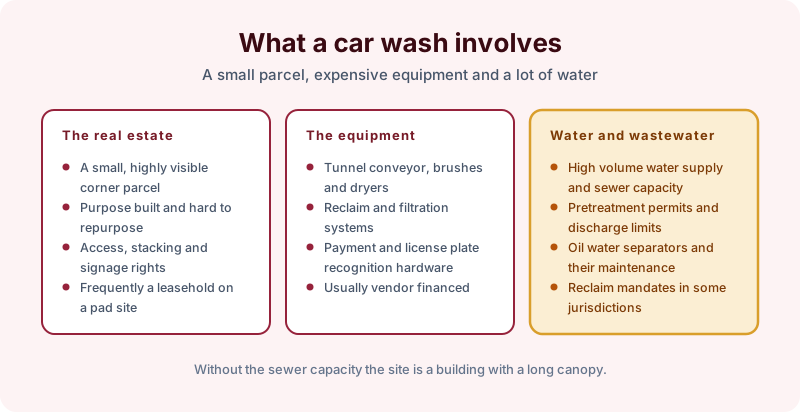
The real estate is a small, highly visible corner parcel, purpose built and genuinely hard to repurpose. Access, stacking and signage rights matter more than square footage, because a wash with nowhere to queue is a wash nobody uses. A great many sit on pad sites under a lease rather than in fee.
Stacking deserves a sentence of its own, because it is the constraint that distinguishes a viable site from an unviable one and it is frequently a recorded right rather than a feature of the lot. Where the queue runs across an adjoining parcel in a retail center, the entitlement to do so comes from a reciprocal easement agreement, and a wash that loses its stacking easement loses its throughput regardless of how good the equipment is.
The equipment is the asset. Tunnel conveyor, brushes and dryers. Reclaim and filtration systems. Payment terminals and plate recognition hardware. Nearly all of it vendor financed.
Water and wastewater decide whether the site can operate at all. High volume supply and sewer capacity have to be allocated. Pretreatment permits set discharge limits. Oil water separators need maintaining and documenting. Several jurisdictions mandate water reclaim above a stated volume. None of that is a title matter and all of it is a condition of operating.
Where the records sit
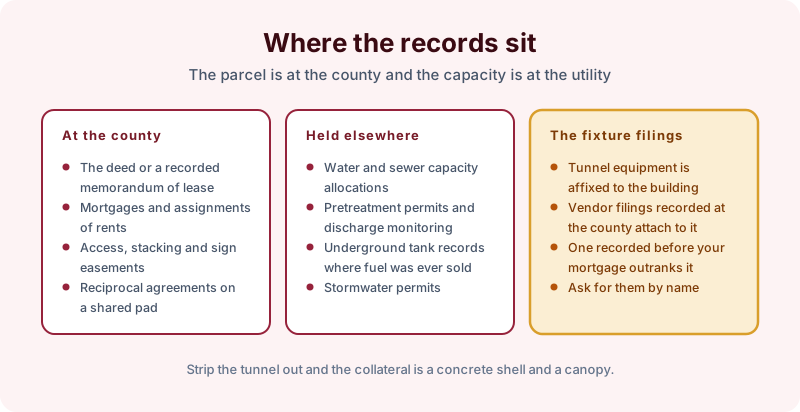
At the county you will find the deed or a recorded memorandum of lease, the mortgages and assignments of rents, the access, stacking and sign easements, and any reciprocal agreement where the wash sits on a shared pad.
Held elsewhere is everything operational. Water and sewer capacity allocations. Pretreatment permits and discharge monitoring. Underground tank records where fuel was ever sold on the site. Stormwater permits.
The fixture filings deserve the same attention they get on a restaurant. Tunnel equipment is affixed to the building, a vendor perfecting by recording a fixture filing at the county attaches to the real property, and one recorded before your mortgage can outrank it. Ask for them by name, because a standard search may not reach them, as set out in UCC searches versus title searches.
The former fuel site question
A substantial share of car washes occupy ground that used to sell gasoline, and some still do.
Where that is the case, the environmental history is a separate inquiry. Underground tank registration, removal and closure records sit with the state agency, not the county, and a clean county search says nothing about what is under the pad. Where public money funded an investigation, a recorded environmental lien or use limitation may exist, and a search will find that. Where it did not, nothing will appear. The analysis is the one in SBA environmental policy and title records.
Scoping the search
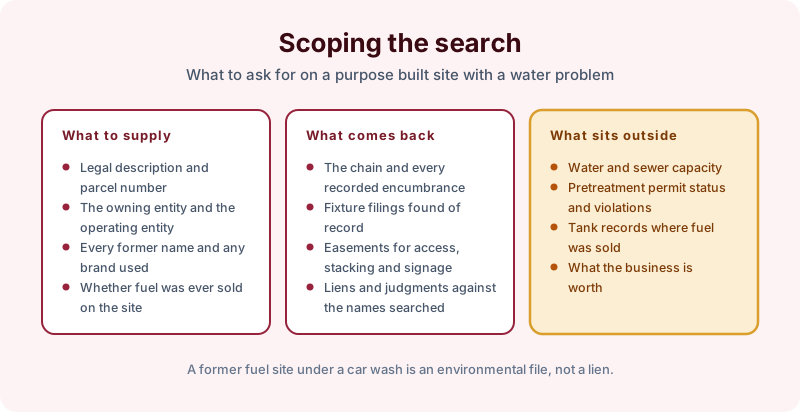
Give us the legal description and parcel number, the owning entity and the operating entity, every former name and any brand used, and whether fuel was ever sold on the site. What comes back is the chain and every recorded encumbrance, the fixture filings found of record, the easements for access, stacking and signage, and the liens and judgments against the names searched.
What sits outside is water and sewer capacity, pretreatment permit status and violations, tank records where fuel was sold, and what the business is worth.
The takeaway
The parcel is small, the equipment belongs to somebody else until it is paid for, and the operating permission sits with a utility. Search the fixture filings specifically and ask the utility about capacity before underwriting the revenue. Start the order online, or send us the address and the entity names and we will tell you what a search of that scope would and would not cover before anything is ordered.