

· AFX Research
Restaurant and Food Service SBA Collateral, What to Check
The kitchen is worth more than the room it sits in, the liquor license is personal property, and a foreclosure can leave a lender holding neither of them.
Table of Contents
A borrower buys a going restaurant with an SBA 7(a) loan. The appraisal values it as an operating business, the collateral schedule lists a leasehold and equipment, and the real estate on its own is a shell with a dining room. Most of the value sits in a build out that somebody else financed and a license that does not travel with the land. A lender who forecloses and finds the hoods removed and the liquor license transferred elsewhere has learned that the hard way. This is the hospitality version of the problem in special purpose property collateral.
What a restaurant deal includes
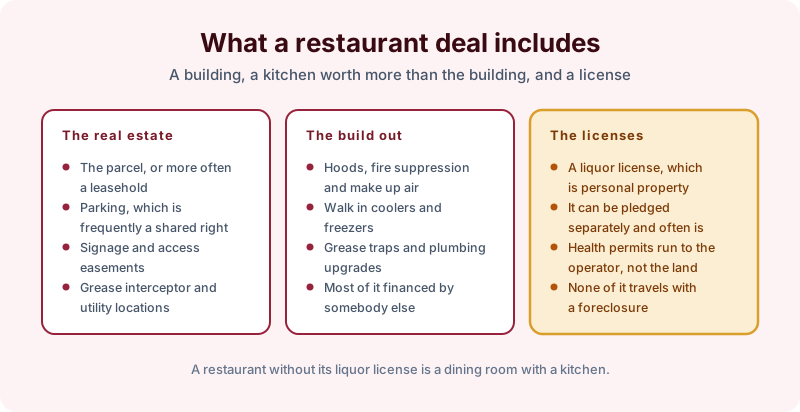
The real estate is often a leasehold rather than a fee, and the parts that matter are frequently shared. Parking allocated under a reciprocal agreement. Signage rights on somebody else’s frontage. The grease interceptor, which sits where the plumbing required rather than where the parcel line runs.
The build out is where the money went. Hoods, fire suppression and make up air. Walk in coolers and freezers. Grease traps and the plumbing upgrades that serve them. On a mid-sized restaurant that package can exceed the value of the space it occupies, and a great deal of it was financed by an equipment lender rather than by the mortgage lender.
The licenses are the part that never transfers automatically. A liquor license is personal property in most states, can be pledged separately from the real estate and frequently has been, and may be worth a substantial sum on its own. Health permits run to the operator. None of it passes through a foreclosure of the real property.
Where the filings sit
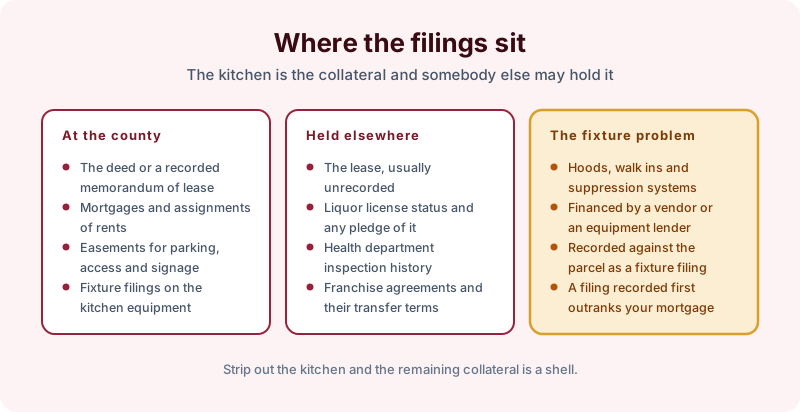
At the county you will find the deed or a recorded memorandum of lease, the mortgages and assignments of rents, the easements for parking, access and signage, and the fixture filings on the kitchen equipment.
Held elsewhere is the lease itself, usually unrecorded, the liquor license status and any pledge of it, the health department inspection history, and any franchise agreement with its transfer conditions.
The fixture filings are the item worth insisting on. Hoods, walk ins and suppression systems are affixed to the building, and when an equipment lender perfects by recording a fixture filing at the county rather than an ordinary UCC filing with the state, that filing attaches to the real property. One recorded before your mortgage can outrank it. The mechanism is the one in UCC searches versus title searches, and on a restaurant it reaches the collateral that actually matters.
Why a leasehold changes the whole analysis
Because most restaurants rent, and the lease is then the primary collateral document. The term should comfortably exceed the loan, assignment should be permitted or consented to in writing, and a landlord lien waiver should be in hand before closing rather than negotiated afterward. Where a memorandum was recorded a search finds it, and the full lease still has to be read, which is the position set out in leasehold collateral.
Scoping the search
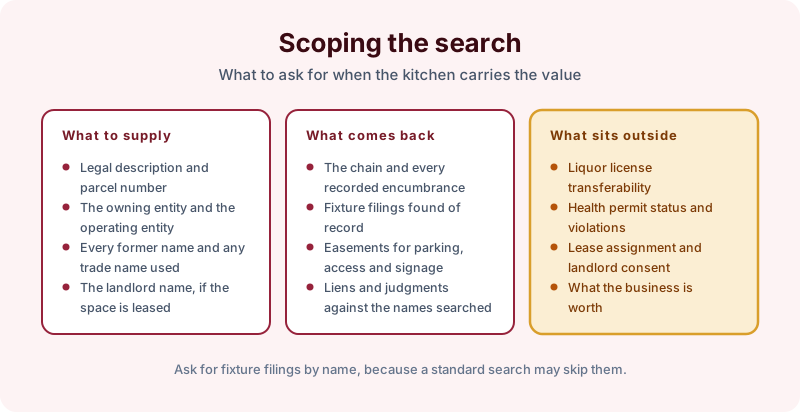
Supply the legal description and parcel number, the owning entity and the operating entity, every former name and any trade name used, and the landlord name where the space is leased. What comes back is the chain and every recorded encumbrance, the fixture filings found of record, the easements for parking, access and signage, and the liens and judgments against the names searched.
What sits outside is liquor license transferability, health permit status and violations, lease assignment and landlord consent, and what the business is worth. Ask for fixture filings by name, because a standard search may not reach them.
The takeaway
On a restaurant the collateral is a shell, a kitchen that may belong to an equipment lender, and a license that is personal property. Search the record for the fixture filings specifically, and settle the license and the lease before anybody funds. Start the order online, or send us the address and the entity names and we will tell you what a search of that scope would and would not cover before anything is ordered.