

· AFX Research
Code Enforcement and Municipal Liens on SBA Collateral Property
Fines, abatement costs, and utility balances behave differently from mortgages and judgments. Which ones reach the recorder, which do not, and what to order.
Table of Contents
Municipal liens are the item that surprises an SBA file late. A mortgage is negotiated, a judgment is litigated, and either way somebody knew about it. A code enforcement lien arrives because a tenant left a dumpster in the side lot for eleven months and the fines accrued daily while the notices went to an address the borrower moved out of in 2019. The amounts are often small in principle and large in fact, and they sit ahead of the lender more often than people expect. This is a close relative of the problem in our note on delinquent property taxes, with one important difference: not all of it is recorded.
Three kinds of municipal charge
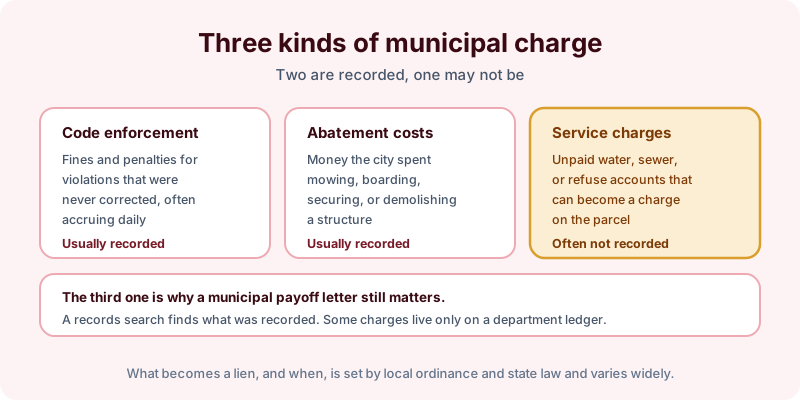
Code enforcement liens secure fines and penalties for violations that were never corrected. Zoning, occupancy, signage, parking, junk and debris, unpermitted work. Where fines accrue per day, the balance is a function of how long the file sat rather than how serious the violation was.
Abatement and demolition costs are money the municipality actually spent: mowing, boarding, securing, cleaning, or in the extreme case tearing a structure down. Those costs get charged back to the parcel.
Service charges are the third category and the awkward one. Unpaid water, sewer, or refuse accounts can become a charge against the property in many places without anything being filed in the recorder’s index at all. The balance lives on a utility department ledger.
That third category is the reason a municipal lien letter belongs alongside the title search rather than instead of it.
How a violation becomes a lien
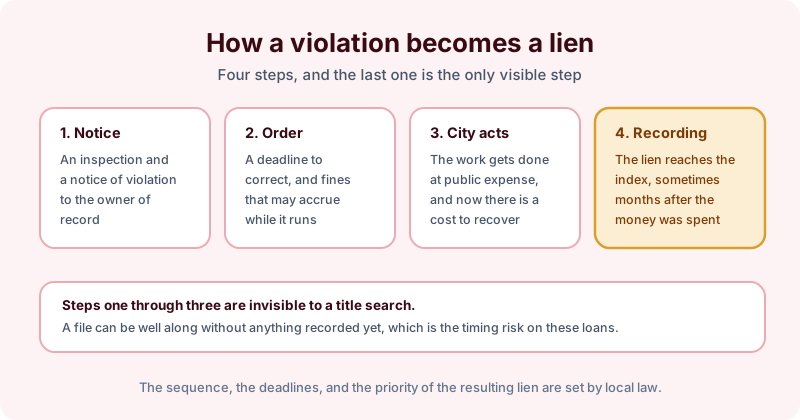
The sequence runs in four steps. An inspection produces a notice of violation to the owner of record. An order follows with a deadline, and fines may accrue while it runs. If nothing is corrected, the municipality does the work at public expense. Then, and only then, the resulting claim gets recorded.
Steps one through three are invisible to a title search. A file can be well along, with real money already spent, and nothing in the index yet. That timing gap is the practical risk on these loans, and it is why a clean report on a property with a visible maintenance problem should prompt a question rather than a checkmark. Recording deadlines, priority, and what becomes a lien at all are set by local ordinance and state law and vary widely.
Where these show up in the file
Two patterns account for most of them. The first is a property that sat vacant between tenants, which is where mowing, boarding, and nuisance charges cluster. The second is unpermitted work, where a prior owner finished a mezzanine or added a drive-through lane without a permit, and the open file transfers with the parcel even though the fine was assessed against somebody else.
Special purpose buildings draw more of this than plain warehouse space, for the reasons in our note on special purpose property, because more of what they do is regulated.
Scoping the search
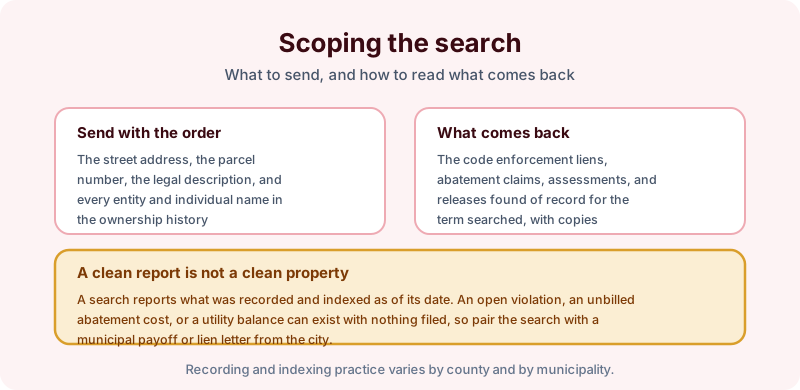
Send the street address, the parcel number, the legal description, and every entity and individual name in the ownership history, since some of these are indexed against a person rather than the land. The report returns the code enforcement liens, abatement claims, assessments, and releases found of record over the term searched, with copies, which is what a payoff conversation runs on. Where the funding letter sets the depth, the requirement governs.
Read the result correctly. A search reports what was recorded and indexed as of its date. An open violation, an unbilled abatement cost, or a utility balance can exist with nothing filed, and recording practice varies by county and by municipality. Whether one of these outranks the lender’s mortgage is a legal question, and it interacts with the analysis in our note on lien position.
The takeaway
Order the search, and request a municipal lien letter from the city as well, because the two cover different ground. Start the order online, or send us the funding letter if you want the scope matched to the requirement before anything is ordered.