

· AFX Research
Special Purpose Collateral on an SBA Loan: Title Questions
Gas stations, car washes, hotels, and restaurants carry recorded restrictions that decide whether the next operator can run the same business. What to search, and how deep.
Table of Contents
SBA lending sees more special purpose real estate than conventional commercial lending does, because SBA programs finance the owner operator. A car wash, a self storage facility, a restaurant building, a former service station: each was built for one use, and each is worth substantially less standing dark. That makes the recorded restrictions on the parcel a collateral question rather than a paperwork one, and it changes what you should ask a title search to cover. Our note on choosing the right search covers the products; this is about the wrinkles this property type adds.
What makes it special purpose
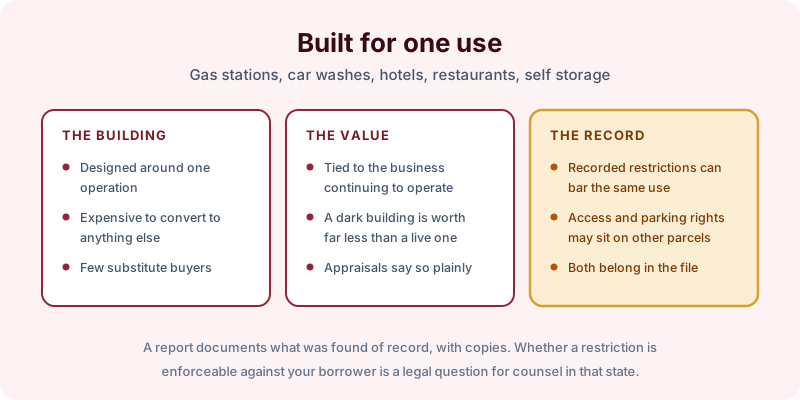
Three features travel together. The building was designed around one operation and is expensive to convert. The value depends on that operation continuing, which every appraisal on this property type will say directly. And the record frequently contains something that limits which businesses can occupy it.
The third is the one that gets left out of the file. An appraiser reasons about the market for a car wash; the land records tell you whether a car wash is permitted there at all by instruments nobody has read in twenty years.
It matters most in the scenario the file exists to survive. If the business stops paying, the lender’s recovery depends on someone else operating the same kind of property or converting it. A recorded restriction that rules out the obvious replacement use narrows that pool before anyone gets to the market analysis.
Restrictions that decide the next use
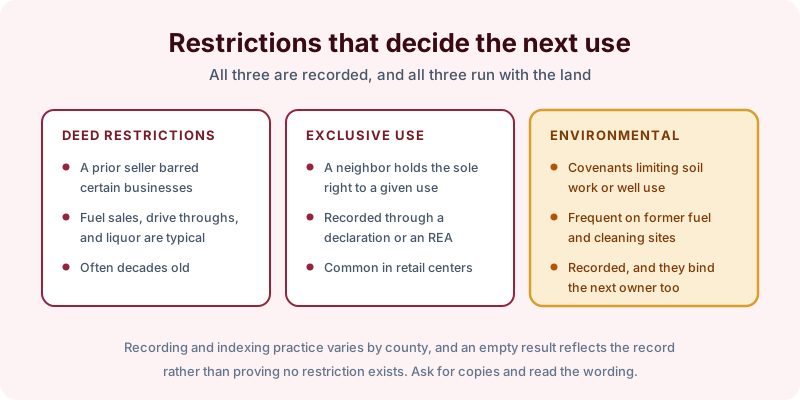
Deed restrictions. A prior seller may have barred a category of business on the parcel. Fuel sales, drive throughs, and alcohol are the common ones, and a restriction recorded in 1974 binds today’s owner if it is valid and still in force.
Exclusive use rights. In and around retail centers, a recorded declaration or reciprocal easement agreement can give one occupant the sole right to a use, which shows up as a limit on everyone else. These also carry the parking and access rights the site depends on, and those are recorded too.
Environmental covenants. Former fuel, cleaning, and repair sites are often closed with restrictions on soil disturbance or groundwater use recorded against the land. They bind future owners, they can complicate any future construction, and on some sites they carry ongoing obligations. Whether a given restriction is enforceable against your borrower is a legal question for counsel in that state. What a search does is find the instrument and supply the copy.
Scope the search for the whole site
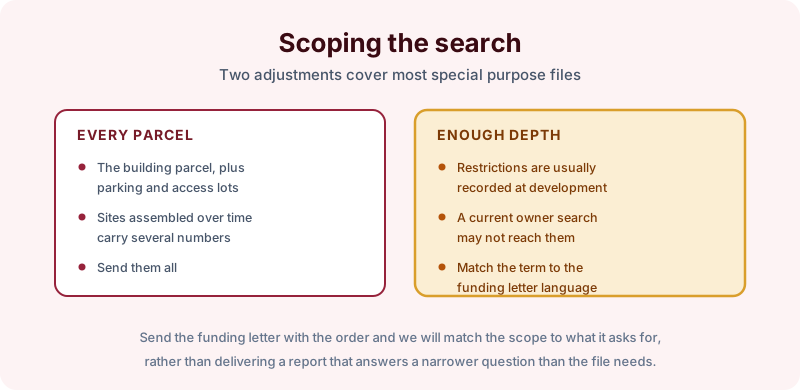
Two adjustments cover most of these files.
Send every parcel. Special purpose sites are assembled over time, so the pad, the parking, and the access drive can carry separate parcel numbers, sometimes with different ownership history. A search of the building parcel alone can miss the instrument that makes the driveway work, which is the same trap covered in our note on access and easements and on multiple collateral properties.
Ask for enough depth. Use restrictions are usually recorded when a site is first developed, not when it last changed hands, so a current owner search can come back clean and still miss the covenant that matters. Match the term to what the funding letter asks for, and send the letter with the order so the scope is set once.
One more item belongs on the list for a former fuel site. An environmental lien recorded by a state agency can outrank a later mortgage in a number of states, which is a priority question rather than a use question, and our note on what outranks your lien covers where it lands in the stack.
A report documents what was found of record in the county searched, as of its date, with copies attached. Recording and indexing practice varies by county, and an empty result reflects the record rather than proving no restriction exists.
The takeaway
On special purpose collateral the recorded restrictions are part of the collateral analysis, not an afterthought. Search every parcel that makes the site work, go back far enough to reach the development era instruments, and get copies so counsel can read the actual wording. Start the order online, or send us the funding letter if you want the scope matched to the requirement before anything is ordered.