

· AFX Research
Entity Name Changes and Mergers: The SBA Title Search Chain
A borrower that converted, merged, or renamed leaves a gap in the chain and liens indexed under a name nobody searched. What to send with the order, and why.
Table of Contents
The deed names Acme Fabricating, LLC. The borrower on the note is Acme Industries, Inc. Everybody in the deal knows those are the same business, and the county record does not, because the record only knows what somebody filed. Entity history is the most common reason an otherwise routine SBA search comes back with a chain question, and it is also the easiest one to prevent, since the fix happens at intake rather than in the report. Where collateral is held by an entity at all, the scoping questions in our note on SBA title search requirements apply first.
Three events, one confused deed
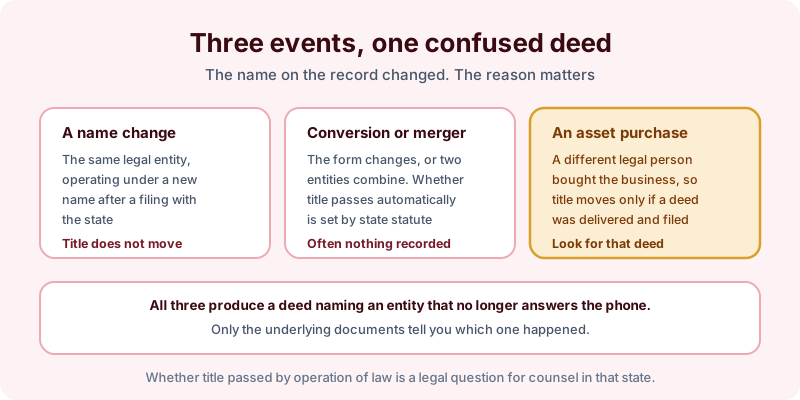
A name change leaves the same legal entity in place under a different name. Title does not move, and typically nothing is recorded at the county unless someone chose to record the state certificate.
A conversion or a merger changes the form of the entity or combines it with another. Whether title passes automatically is set by the statute of the state involved, and it is a legal question rather than a records one. Practically, these often leave nothing at all in the land records.
An asset purchase is the one people misread. A different legal person bought the business, so title moves only if a deed was actually delivered and recorded. Buyers of small businesses frequently assume the real estate came along with everything else, and sometimes the deed was never prepared.
All three produce the same symptom, a deed in favor of an entity that no longer answers the phone, and only the underlying documents distinguish them.
The index is alphabetical
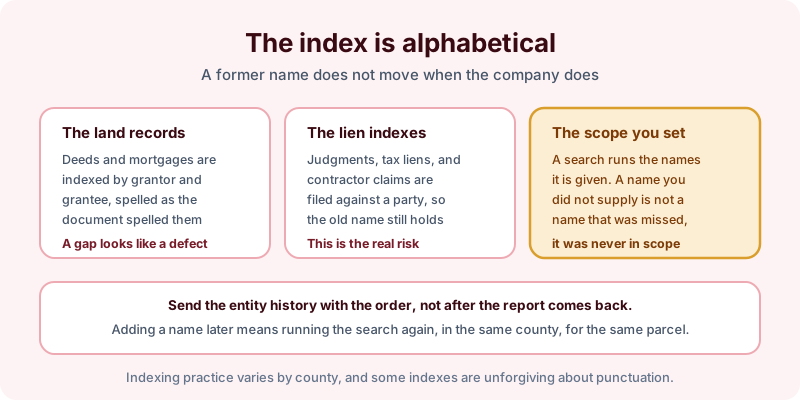
The chain gap is the visible problem. A deed into the old name with no deed out reads as a break, and an examiner will treat it as an exception until documentation is supplied.
The invisible problem is worse. Judgments, tax liens, and contractor claims are filed against a party by name, and a filing against the predecessor stays indexed under the predecessor. A search run only on the current name returns a clean result while a docketed judgment sits one page away under a name nobody asked about. The same principle drives the separate index described in our note on UCC searches versus title searches.
That is a scoping issue rather than a search failure. A search runs the names it is given, and a name that was never supplied was never in scope.
Send this with the order
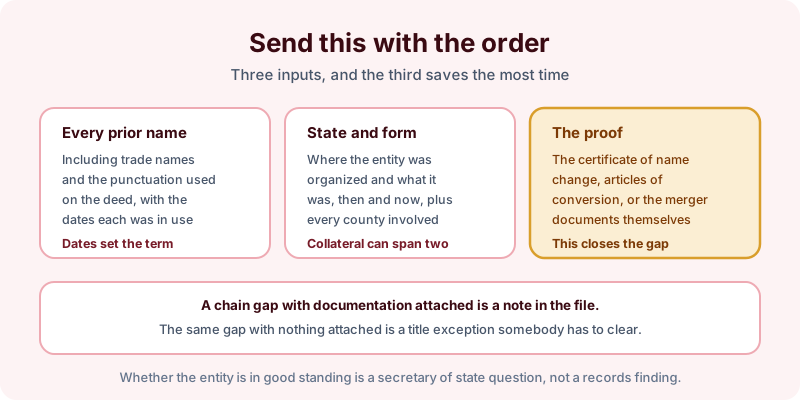
Three inputs cover almost every case. Every prior name, including trade names and the exact punctuation used on the deed, with the dates each was in use, because those dates set the term to search. The state and the form, then and now, along with every county where collateral sits, since expansion deals routinely put parcels in two counties. And copies of the paperwork: the certificate of name change, the articles of conversion, or the merger documents.
A chain gap with documentation attached is a note in the file. The same gap with nothing attached is an exception somebody has to clear on a closing schedule. Entity-held collateral in general carries the same evidentiary burden described in our note on collateral held in a trust or estate.
What the search will and will not settle
The search reports what was recorded and indexed for the parcels and the names given, as of its date, with copies. Given the full name history it will show liens filed under any of them, and it will show whether a deed into the current entity was ever recorded.
It cannot determine whether title passed by operation of law, whether the person who signed a mortgage had authority to sign it, or whether the entity is in good standing, which is a secretary of state question. Recording and indexing practice varies by county, and some indexes are strict about punctuation and abbreviations, so a name supplied in one form may not surface a filing made in another.
The takeaway
Ask the borrower for the entity history before you order, not after the report raises a question, and send the prior names with dates plus the documents that prove the change. Our business expansion page covers the searches these deals usually need. Start the order online, or send us the funding letter if you want the scope matched to the requirement before anything is ordered.