

· AFX Research
Forfeiture and Seizure in the Chain of SBA Collateral, What to Read
A government deed in the chain means a case file nobody has read. How forfeiture reaches back to the conduct rather than the filing, and what the county record will show.
Table of Contents
Occasionally a chain runs through the United States or a state agency as grantor, with a recital referring to a case number. That is a forfeiture, and it behaves unlike any other transfer in the chain because the doctrine behind it can reach backward past several recorded instruments. It belongs in the same category as quiet title actions in the chain, which is to say a signal to read the court file rather than the deed.
How forfeiture enters a chain
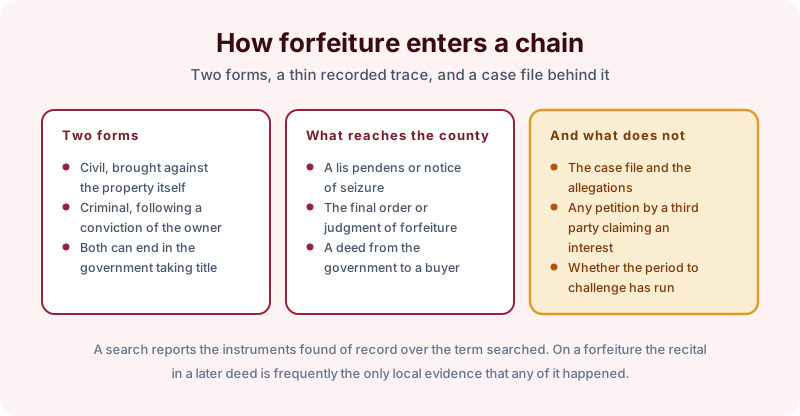
Two forms produce the same result. Civil forfeiture is brought against the property itself, which is why these cases carry names like United States versus a described parcel. Criminal forfeiture follows a conviction and reaches property connected to the offense. Either can end with the government holding title and selling it on.
What reaches the county is thin. A lis pendens or notice of seizure filed when the action starts. The final order or judgment of forfeiture, where somebody records it. And the deed from the government to whoever bought it.
What does not reach the county is nearly everything else. The case file and what was alleged, any petition by a third party claiming an interest, and whether the period for challenging the forfeiture has actually run. On these files the recital in a later deed is frequently the only local evidence that any of it happened, which makes reading the deed in full rather than the index line the whole exercise.
Why the dates matter so much
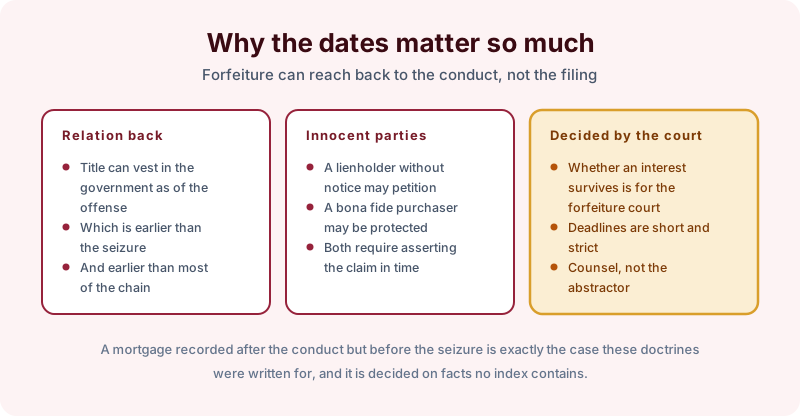
Here is the feature that makes this different from a foreclosure or a tax sale.
Under the relation back doctrine, title can be treated as vesting in the government as of the date of the conduct giving rise to the forfeiture, not the date of the seizure or the order. The conduct is usually earlier, sometimes years earlier, and that means instruments recorded in between sit inside a window the forfeiture reaches.
A lender who recorded a mortgage after the conduct but before the seizure is precisely the case the protective doctrines exist for. An innocent lienholder without notice may petition to have their interest recognized, and a bona fide purchaser may be protected, but both routes require asserting the claim within deadlines that are short and strictly applied.
Whether any interest survived is decided by the forfeiture court on facts no index contains. That is counsel’s question, and on a live matter it is an urgent one because of those deadlines.
Reading the chain around it
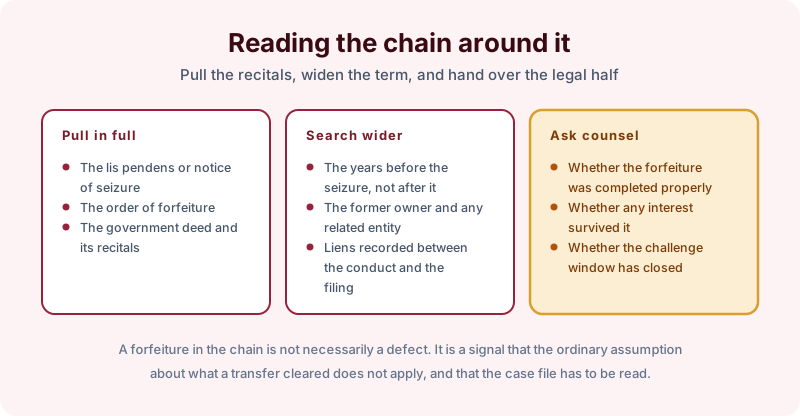
Pull three documents in full. The lis pendens or notice of seizure, the order of forfeiture if anybody recorded it, and the government deed with its recitals, which is where the case number and the authority usually appear.
Search wider than the transfer. The years before the seizure rather than after it, since the relation back period is what matters. The former owner and any related entity, because property connected to an offense is frequently held through one. And liens recorded between the conduct and the filing, which is the category that gets extinguished or preserved depending on the petition. Where the former owner was an entity, run its predecessors too, as in entity name changes and mergers.
Then ask counsel whether the forfeiture was completed properly, whether any interest survived it, and whether the window to challenge has closed. Those answers decide whether the title is as clean as the government deed suggests. The pattern mirrors prior foreclosure in the chain, with a longer reach backward.
The takeaway
A forfeiture in the chain is not automatically a defect and it is never a place to start reading from. Take the term back past the seizure to cover the relation back period, get the deed and its recitals in full, and pull the case file when a number appears. A search establishes what was recorded and when; whether it held is a legal conclusion. Start the order online, or send us the funding letter if you want the scope matched to the requirement before anything is ordered.