

· AFX Research
Partial Releases and Lot Splits on SBA Collateral Parcels
Releasing part of a mortgaged parcel is a records exercise with two failure modes: a bad description, and collateral left without access. What to check first.
Table of Contents
A borrower wants to sell the back three acres, carve out a pad site, or split off a house that came with the commercial parcel. The loan stays in place and only part of the collateral leaves. That is a partial release, and it is a different transaction from the full release of collateral even though the paperwork looks similar. The risk sits in two places, and both are visible in the county record before anything is signed.
What a partial release does
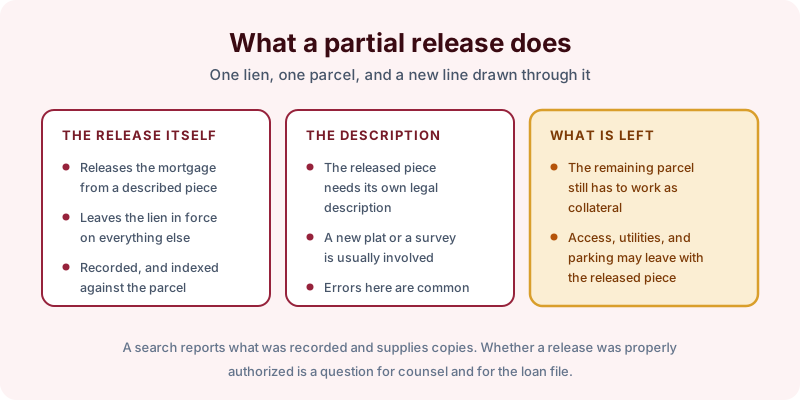
The release itself takes the mortgage off a described piece of ground and leaves it in force on everything else. It is recorded, indexed against the parcel, and read by every examiner who comes later.
The description is where the work is. The released piece needs its own legal description, which usually means a new plat or a survey, and the remainder needs one too. A description that does not close, overlaps the piece being kept, or fails to match the plat that was actually recorded is the most common defect in these files.
What is left is the underwriting question. The remaining parcel still has to function as security, and a split can quietly remove the things that make it work.
The checks a split requires
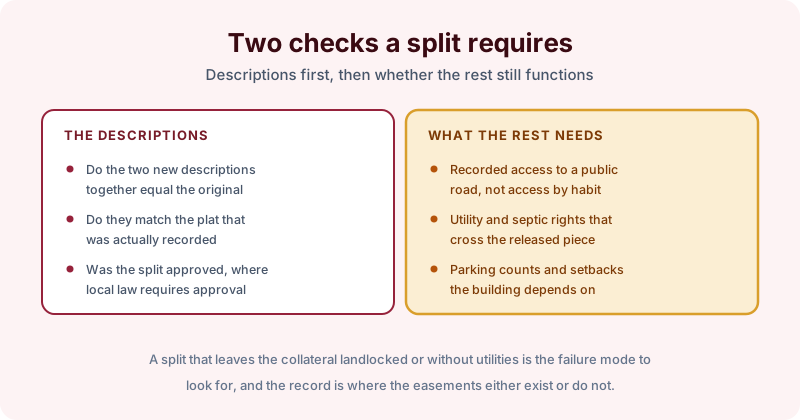
Start with the descriptions. Do the two new descriptions together account for the original parcel? Do they match the plat of record rather than a draft? Was the division approved where local subdivision law requires approval, since an unapproved split can be unrecordable or unbuildable.
Then confirm what the remainder keeps. Recorded access to a public road, not access that has simply been used for years, which is the point our note on access and easements on SBA collateral makes at length. Utility, water, and septic rights where the lines cross the released piece. Parking counts, setbacks, and drainage the building depends on. A release that leaves the collateral landlocked or without utilities is the failure mode worth spending an hour to avoid, and where new easements are needed, the release and the easement should be recorded together.
One more item belongs in this review. If the piece being sold carries the well, the sign, or the loading access, the appraisal of the remainder is not the appraisal in the file.
There is also an SBA specific layer worth confirming with the lender’s own file rather than with the record. A partial release usually requires the agency’s consent or has to satisfy the conditions in the authorization, and the proceeds of the sale may have to be applied to the loan rather than released to the borrower. None of that appears in the county index, and none of it is the abstractor’s call, but it decides whether the release should be drafted at all.
Ordering around a release
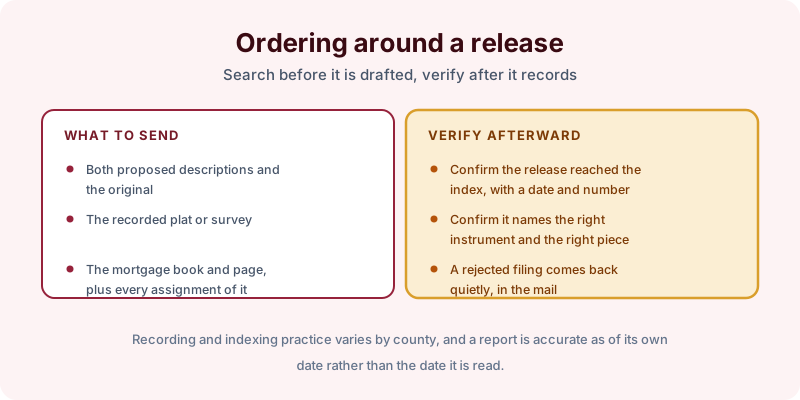
Search twice. Before the release is drafted, send both proposed descriptions along with the original, the recorded plat or survey, and the mortgage book and page with every assignment of it, since the party signing the release should trace to the current holder. Junior liens matter here too, because a judgment or a mechanics lien recorded against the whole parcel does not disappear when part of it is released.
After recording, verify. Confirm the release reached the index with a date and instrument number, and that it names the right instrument and the right piece of ground. Filings get rejected for a defective description or an unpaid fee and come back quietly in the mail, which is exactly the situation a pre-closing title update is designed to catch. A report is accurate as of its own date rather than the date it is read, recording and indexing practice varies by county, and whether a release was properly authorized is a question for counsel and for the loan file rather than for the abstractor.
The takeaway
Treat a partial release as two questions rather than one: is the description right, and does the collateral still work without the piece that is leaving. Both are answerable from the record before the release is signed. Start the order online, or send us the funding letter if you want the scope matched to the requirement before anything is ordered.