

· AFX Research
Party Walls and Shared Structures on SBA Collateral Title
Attached buildings share a wall, a roofline, and a set of obligations. What the record shows about a party wall, what only a survey catches, and what a lender takes on.
Table of Contents
An SBA borrower buys a storefront in an older downtown block. The building touches its neighbors on both sides, and the appraisal treats it as a single freestanding asset. It is not one. The wall between two attached buildings is usually owned in part by each side, carries duties in both directions, and can bring a repair bill, an access right, and an argument along with it. The question is close to the one raised by access and easements on SBA collateral, except that here the shared thing is holding the roof up.
What a shared wall actually divides
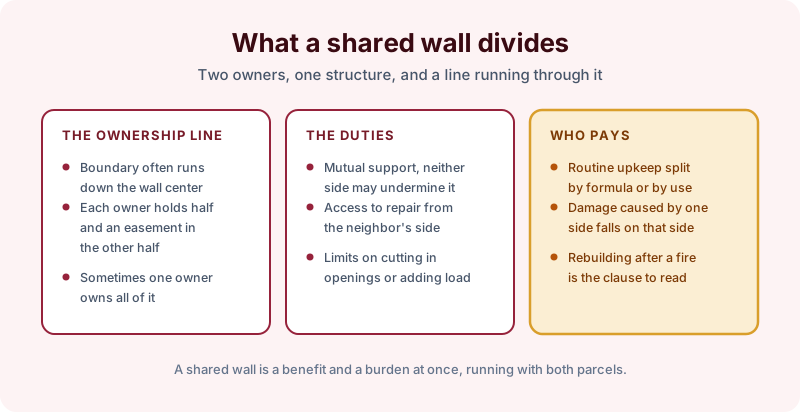
The common arrangement puts the boundary line down the middle of the wall. Each owner holds their half outright and holds an easement of support in the other half, which is what stops either side from demolishing their piece and letting the neighbor’s ceiling drop. Other arrangements exist. One parcel sometimes owns the whole wall with the neighbor holding only a right to lean on it, and in a few places the entire structure sits on one lot with an encroachment the other side has tolerated for decades.
The duties run in both directions. Neither owner may undermine the wall, each generally has a right to come onto the other’s side to make repairs, and cutting new openings, hanging heavy loads, or adding a story is usually restricted or barred outright.
The clause worth reading first is the one about money. Routine upkeep is often split by a formula or by which side uses more of the wall, damage caused by one owner falls on that owner, and rebuilding after a fire or a collapse is where these agreements either work or fall apart. A borrower who assumes the neighbor will pay half of a structural repair can be wrong about that in an expensive way.
Where the arrangement lives in the record
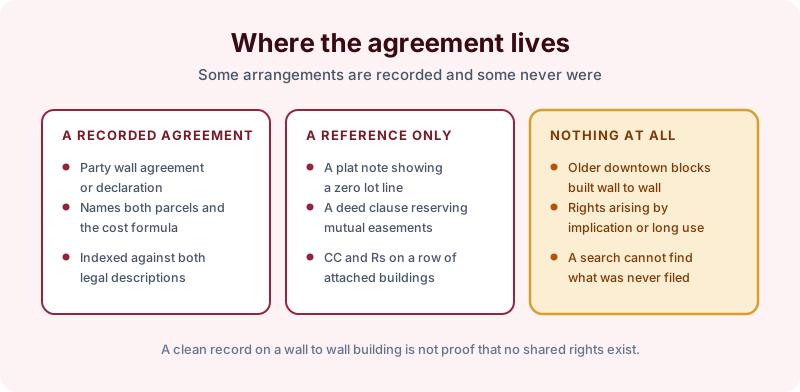
Sometimes there is a proper recorded party wall agreement naming both parcels, setting the cost formula, and indexed against both legal descriptions. That is the best case and it is the easiest to find.
More often the arrangement appears only as a reference. A plat note showing a zero lot line, a clause in a fifty year old deed reserving mutual easements, or a set of covenants over a row of attached units. Those turn up in a chain of title search rather than in a name search, which is one reason the search term matters on this kind of collateral.
And sometimes nothing was ever filed. Downtown blocks built wall to wall before anyone drafted such documents can carry support rights that arose by implication or by long use, and no records search finds an instrument that does not exist. That limit belongs in the report, not in a footnote. It is the same caution that applies in boundary disputes and adverse claims on SBA collateral, where the record is a starting point rather than a complete answer.
Diligence on an attached building
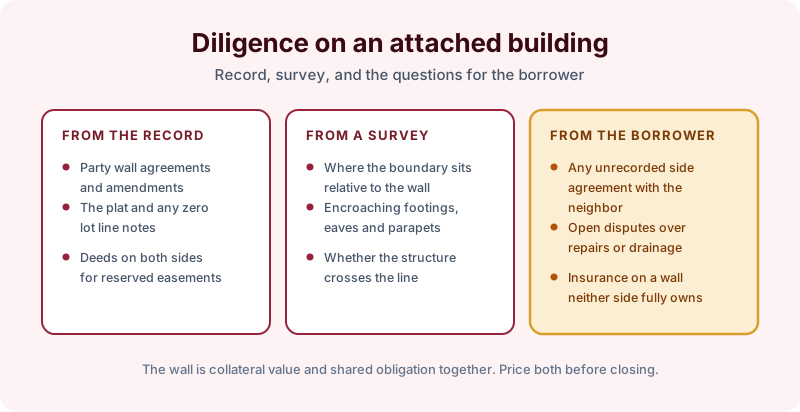
Pull any party wall agreement and its amendments, the plat with its zero lot line notes, and the deeds on both sides for reserved easements. Recording and indexing practice varies by county, so where these sit differs from place to place, and our report names the indexes reviewed rather than implying one national filing place.
Then get a survey if the file does not already have one. The record can tell you an agreement exists. Only a survey tells you where the boundary sits relative to the wall, whether footings, eaves, or a parapet cross the line, and whether the building the borrower is pledging is entirely on the parcel being pledged. On a business acquisition that detail decides what the collateral actually contains.
Finally, ask the borrower directly about side agreements with the neighbor, open disputes over repairs or roof drainage, and how the wall is insured. None of that is recorded, and a lender who learns it after closing learns it during a claim.
The takeaway
An attached building is collateral plus an obligation to the property next door. Pull the party wall agreement or establish that none was recorded, read the cost and rebuilding clauses, get a survey that shows where the line runs through the structure, and ask the borrower what was agreed on a handshake. Start the order online, or send us the address and the funding letter and we will tell you what a search of that scope would and would not cover before anything is ordered.