

· AFX Research
Post Closing Title Curative on SBA Loans, and What to Track
An item is not cured when the payoff clears, it is cured when the release records. Why curative lists stall after funding, and the four checks that actually close one.
Every SBA closing produces a short list of things that were supposed to happen afterward. A prior mortgage released, a judgment satisfied, a corrective deed recorded, an assignment finally filed. The list is written carefully at the table and then, in a great many files, nobody looks at it again. The pre closing half of this is covered in the SBA pre-closing title update; this is what happens once the money has gone out.
What is still open at funding
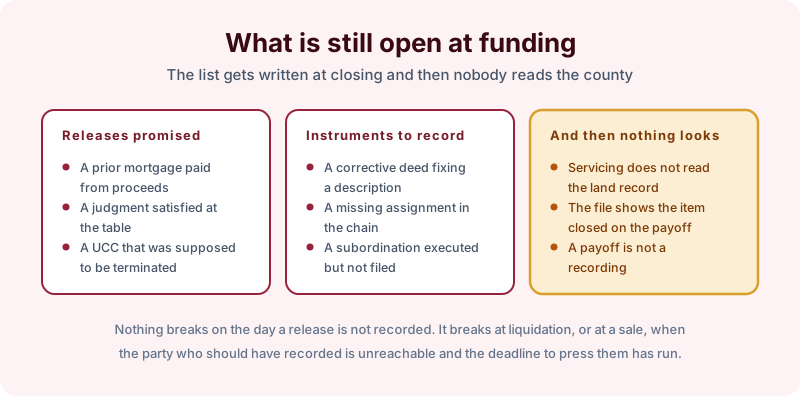
Most open items fall into two groups. Releases that somebody promised, which is the larger group by volume. A prior mortgage paid from proceeds, a judgment satisfied at the table, a UCC that was meant to be terminated. And instruments that still have to be recorded. A corrective deed fixing a legal description, a missing assignment, a subordination that was executed and never filed.
What both groups have in common is that the cure is a recording event. The obligation is not discharged in your loan file. It is discharged in a county’s index, by somebody who has now been paid and has no further reason to hurry.
Then the structural problem. Nothing in ordinary servicing reads the land record again. The file shows the item closed because the payoff cleared, and a payoff is not a recording. That distinction is the whole subject.
Why they stall
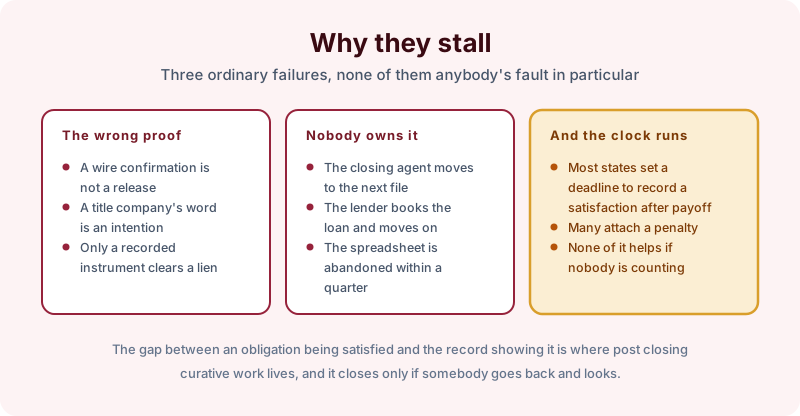
Three ordinary failures, and none of them is anybody’s fault in particular.
The wrong proof gets accepted. A wire confirmation, a payoff letter and a title company’s assurance are all evidence that somebody intends to record something. Only a recorded instrument clears a lien from the record.
Nobody owns the follow up. The closing agent moves to the next file, the lender books the loan, and the tracking spreadsheet is abandoned inside a quarter because the person maintaining it changed roles.
There is also a category that stalls because the cure needs somebody else’s signature. A corrective deed requires the original grantor, a missing assignment requires the assignor, and both of those parties have already closed their file. Entity changes make it worse, since the company that has to sign may have merged or dissolved, which is the problem set out in dissolved entities in the chain.
And the clock runs. Most states set a statutory deadline for recording a satisfaction after payoff, commonly somewhere between thirty and ninety days, and many attach a penalty for missing it. None of that helps if nobody is counting, and the leverage disappears with the deadline.
Closing the item properly
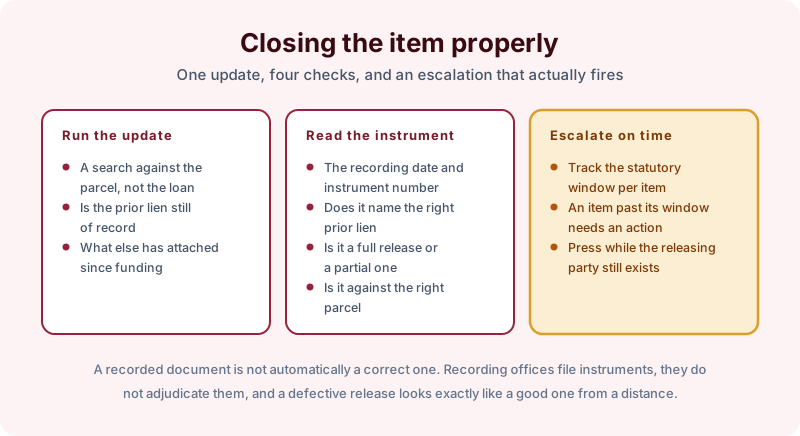
Run the update against the parcel rather than against the loan, because searches run against ground and the loan number means nothing at the recorder. Ask two questions. Is the prior lien still of record, and what else has attached since funding, since a file sitting open for eight months has had eight months of exposure.
Then read the instrument rather than the index line. The recording date and instrument number, whether it names the right prior lien, whether it is a full release or a partial one, and whether it is recorded against the right parcel. A release naming the wrong instrument or filed against the neighbor’s lot looks like completion from a distance. Recording offices file documents, they do not adjudicate them.
And escalate on time. Track the statutory window per item and make an item that passes it generate an action rather than an older timestamp. Pressing a lender to record a satisfaction is straightforward while that lender still exists. It is considerably harder after a merger, and close to impossible after a liquidation. The same logic runs through title problems that delay SBA loans, except that here the delay is discovered years later.
The takeaway
Close curative items against the county record, not against a payoff confirmation. Assign the follow up to somebody by name, set the statutory window as a date rather than a hope, and re-read the parcel before the file is considered clean. An unreleased prior lien costs nothing until the day it costs a liquidation or a sale. Start the order online, or send us the funding letter if you want the scope matched to the requirement before anything is ordered.