

· AFX Research
Recorded Development Agreements on SBA Collateral, What to Check
A deal struck with a city to get an entitlement is recorded against the land and binds whoever owns it next. What it obligates, what secures it, and what to read.
Table of Contents
A borrower buys a building in a newer commercial park and the loan is straightforward until somebody reads the exceptions. The parcel came out of a development agreement signed with the city eleven years ago, under which the original developer promised to build a connector road, a detention basin and a stretch of sidewalk. Two of the three were finished. The obligation for the third did not stay with the developer, because it was recorded against the land, and the land is now the collateral. This is close in spirit to special assessment districts, with a negotiated agreement in place of a standing district.
What the agreement binds
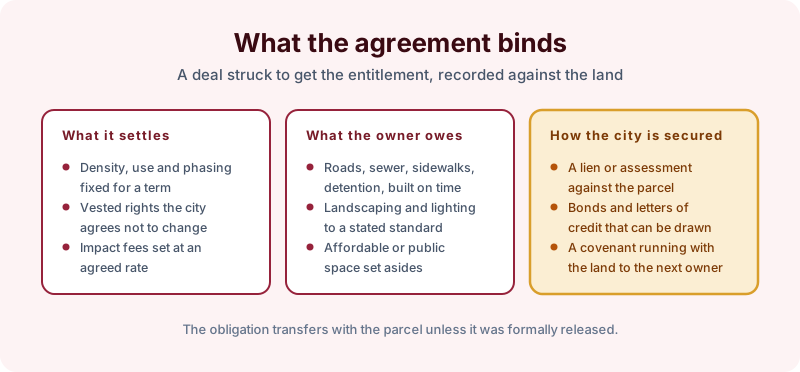
A development agreement is a trade. The municipality fixes density, use and phasing for a term of years and agrees not to change the rules underneath the project, which is the vested right the developer wanted. Impact fees are usually set at an agreed rate for the same period.
In exchange the owner takes on construction obligations. Roads, sewer and water extensions, sidewalks, detention and stormwater facilities, landscaping and lighting to a stated standard, and on residential or mixed projects sometimes a set aside for affordable units or public space. Each carries a deadline.
The security is what makes this a title matter. Municipalities protect themselves with an assessment or lien right against the parcel, with performance bonds or letters of credit that can be drawn, and above all with a covenant that runs with the land. The obligation travels to the next owner unless a release was recorded, and a release is exactly the document nobody remembers to file.
Finding it in the record
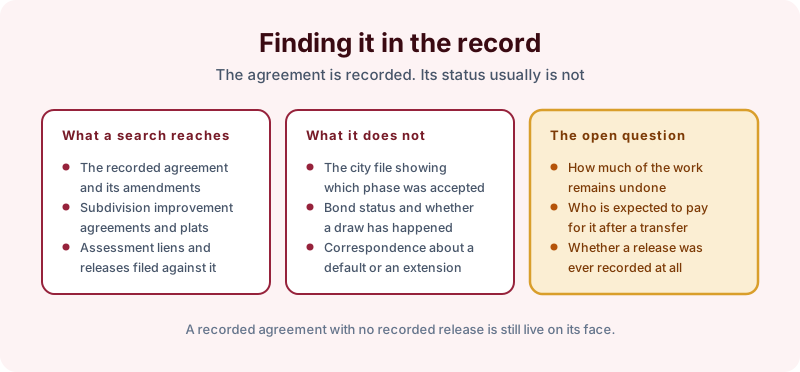
A search reaches the agreement itself, its amendments, any subdivision improvement agreement recorded alongside it, the plats, and any assessment lien or recorded release filed against the parcel. That is a solid picture of what was promised.
What it cannot reach is the municipal file that says what happened afterward. Which phase was inspected and accepted, whether the bond was released or drawn, whether an extension was granted, whether the city has sent a default notice. None of that is in the land records.
So the search answers one question cleanly and leaves the other open. A recorded agreement with no recorded release is still live on its face, and how much of the work remains undone is a question for the city rather than for the abstractor. The same split applies in post closing title curative work, where what is recorded and what is actually finished are different facts.
Why a lender should care about a promise to build a sidewalk
Because the unfinished obligation is priced against the collateral, not against the person who made it. If the city calls the work and the borrower cannot fund it, the assessment attaches to the parcel, and on most municipal schemes it attaches ahead of a private mortgage. A modest sidewalk obligation becomes a senior lien on the collateral securing the loan.
There is also a use risk. Where the agreement fixes phasing, a borrower whose plans have changed may find the permitted use narrower than the appraisal assumed, which is a smaller version of the problem in legal description problems on collateral.
Scoping the search
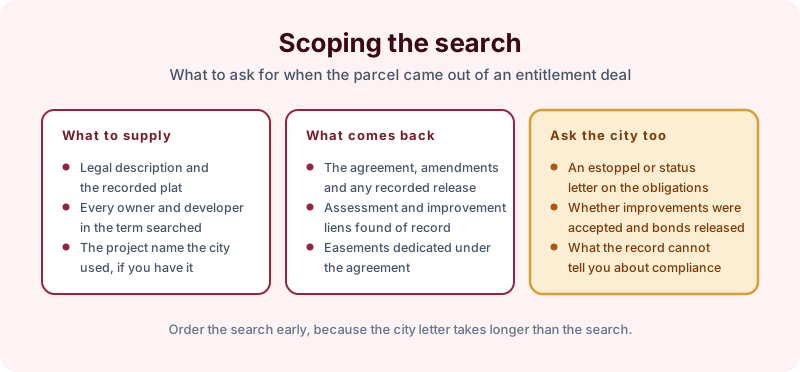
Give the abstractor the legal description, the recorded plat, and every owner and developer name across the term searched. Add the project name the city used if the borrower knows it, because agreements are frequently indexed under a project entity rather than a current owner.
Then ask the city separately for a status or estoppel letter covering the obligations, the acceptance of improvements, and the bonds. That letter takes longer to obtain than the title search does, which is the practical reason to order both early.
The takeaway
A development agreement is a promise recorded against dirt. It survives the developer, it binds your borrower, and its unfinished portion can outrank your lien. The record will tell you the agreement exists and what it says. The city tells you how much of it is still owed. Start the order online, or send us the address and the plat and we will tell you what the search would cover before anything is ordered.