

· AFX Research
Liquidation and Workout: Title Research on SBA Collateral
What the record looks like years after closing, which searches a liquidation file needs, and why the original title report is the wrong document to rely on.
Table of Contents
A loan that is being worked out or liquidated raises a different title question than a loan being closed. At closing, you are confirming a position you are about to take. In liquidation, you are confirming a position you took years ago and finding out what happened around it since. The closing file cannot answer that, because it was accurate on the day it was written and the parcel has had a life since then. Our note on lien position is the starting point, and this is what changes when the loan goes bad.
Three questions a workout file has to answer
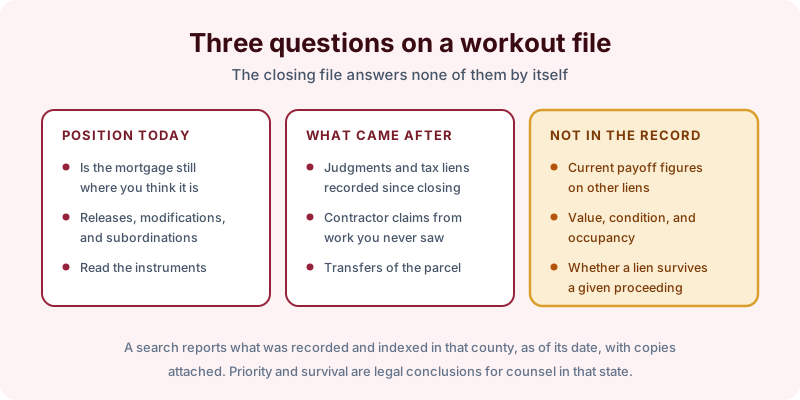
Where does the mortgage stand today. Pull the instrument, then pull everything filed against it: modifications, partial releases, subordinations, and assignments. A subordination agreement signed during a refinance three years ago may have moved a position nobody in the workout group knew about.
What was recorded after closing. This is where the surprises live, and they arrive in a predictable order on a struggling business: delinquent property taxes, judgments against the borrower or a guarantor, a contractor’s claim from work done during better times, and occasionally a deed transferring the parcel to a relative or a new entity.
What the record cannot tell you. Current payoff amounts on senior liens, the condition of the property, who is occupying it, and whether a given lien survives a particular proceeding. Those come from payoff demands, an inspection, an appraisal, and counsel.
What tends to change, and what usually holds
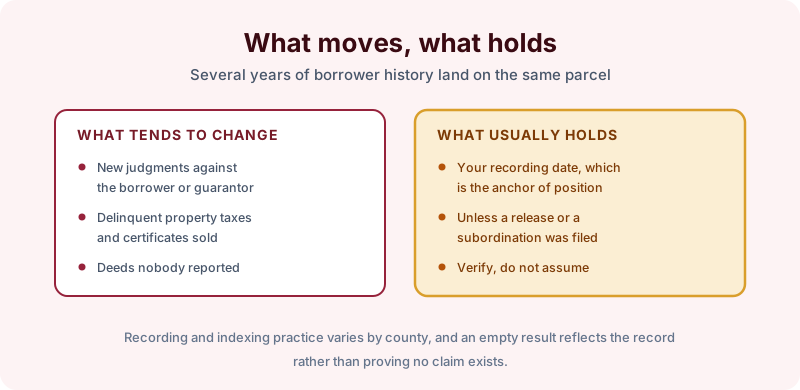
The stable fact is your recording date. Position is anchored to it, and nothing about a borrower’s later trouble moves it backward. What can move it is paperwork your own institution signed, which is why the release and subordination search matters as much as the lien search.
Everything else is fluid. Delinquent taxes accrue, and in states that sell tax certificates a third party may now hold a claim ahead of every mortgage on the parcel. Judgment creditors record where they can find assets. Mechanic’s liens carry relation-back rules in many states, so a claim filed after your mortgage may assert a priority date earlier than its filing, a wrinkle covered in our note on construction loans.
When collateral has moved
Transfers show up more often than lenders expect on distressed files. A borrower deeds the property into a family trust, an LLC, or a spouse’s name, sometimes as ordinary estate planning done at a bad moment and sometimes not. The deed does not remove your mortgage, but it changes the names that have to be searched going forward, and it can change who must be served in a foreclosure. Where the parcel now sits in an entity or an estate, our note on collateral held in a trust or an estate covers the additional name lists.
The same applies where a release of collateral was granted earlier in the loan’s life. Confirm what was actually released, in the recorded instrument, rather than in the correspondence about it.
Scoping the search
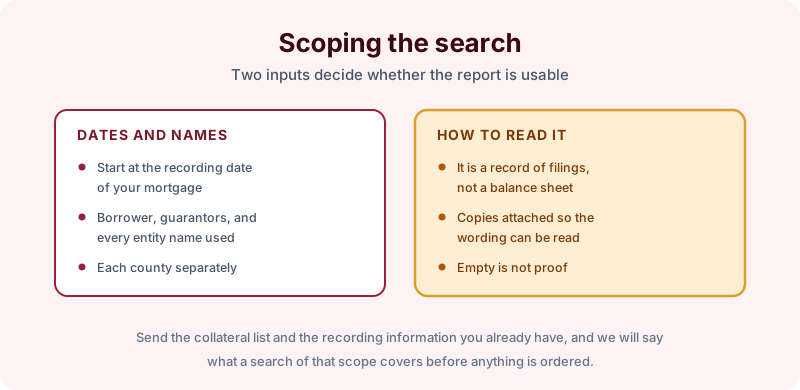
Start the search at the recording date of your mortgage and bring it current. Include the borrower, every guarantor, and every entity name the operation has used, and treat each county separately where collateral sits in more than one, as our note on multiple collateral properties sets out.
Read the result for what it is. It reports the instruments recorded and indexed in that county as of its date, with copies attached so the wording can be read rather than paraphrased. Recording and indexing practice varies by county, and an empty result reflects the record rather than proving no claim exists. Whether a lien has priority, and whether it survives the proceeding you are contemplating, are legal conclusions for counsel in that state.
The takeaway
Order a current search before you commit to a liquidation strategy, not after, and search the names as well as the parcel. The recording dates you get back are what the whole strategy rests on. Start the order online, or send us the collateral list and the recording information if you want the scope matched to the file before anything is ordered.