

· AFX Research
SBA Collateral in a Flood Zone, and What the Record Shows
Flood risk is a federal mapping decision and not an encumbrance, so a clean search says nothing about it. What does get recorded, and what to ask for separately.
Table of Contents
A flood determination comes back showing the collateral in a special flood hazard area, and the file suddenly has an insurance requirement, a premium nobody budgeted and a valuation question. None of that appears in a title search, because flood risk is a federal mapping decision rather than an interest in land. What does appear, and what people routinely miss, is the set of recorded instruments that a flood history leaves behind on a property that has been through one.
What a flood zone does
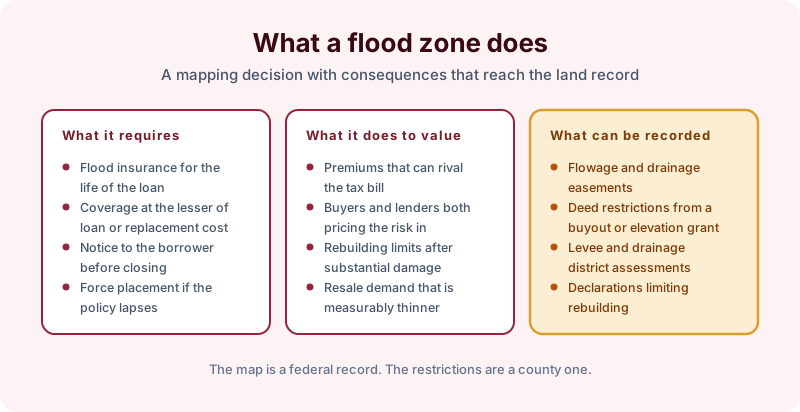
The designation carries a statutory requirement. Flood insurance for the life of the loan, coverage at the lesser of the loan balance or the replacement cost, notice to the borrower before closing, and force placement by the lender if the policy lapses.
It also moves the numbers. Premiums on commercial property in a mapped zone can rival the tax bill. Buyers and lenders both price the exposure in, and after substantial damage, rebuilding may be limited by local ordinance in ways that have nothing to do with what the borrower wants to do. Resale demand is measurably thinner, which puts the same pressure on the appraisal described in waterfront and riparian collateral.
What can be recorded is the part a search actually reaches. Flowage and drainage easements. Deed restrictions imposed as a condition of a federally funded buyout or elevation grant. Levee and drainage district assessments. Declarations limiting rebuilding or requiring a structure to stay elevated. Each of those is a real encumbrance and each survives a sale.
Where the records live
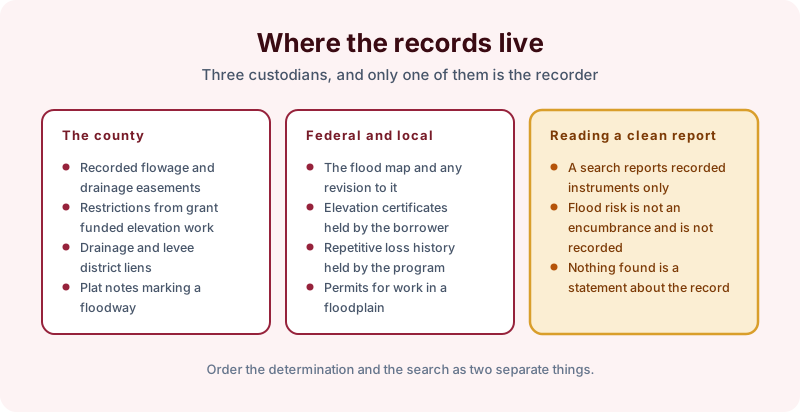
The county holds the recorded side, which is the easements, the grant restrictions, the district liens and the plat notes marking a floodway. A search finds all of it.
The federal and local side holds everything else. The flood map and any letter of map revision. The elevation certificate, which is usually with the borrower or nowhere. Repetitive loss history, which the program holds and does not publish. Permits for work in a floodplain, which sit with the local floodplain administrator.
That gap has to be read honestly. A records search reports what was recorded and indexed in the county over the term searched. Flood risk is not an encumbrance, nothing about it is recorded, and a report that finds nothing is making a statement about the record rather than about the property. This is the same limit described in what an SBA title search cannot find.
The instrument most often missed
Grant funded elevation and buyout programs almost always record something, and it is almost always overlooked.
Where federal or state money paid to elevate a structure, the grant typically comes with a recorded restriction requiring the elevation to be maintained and prohibiting certain modifications. Where a parcel went through a buyout, the deed restriction is usually permanent and severe, frequently limiting the land to open space with no habitable structure ever again. A borrower who bought cheap acreage next to a river may hold land that cannot lawfully be built on, and the restriction is sitting in the chain.
This behaves very much like wetlands and mitigation banking restrictions, arriving through a different program.
Scoping the search
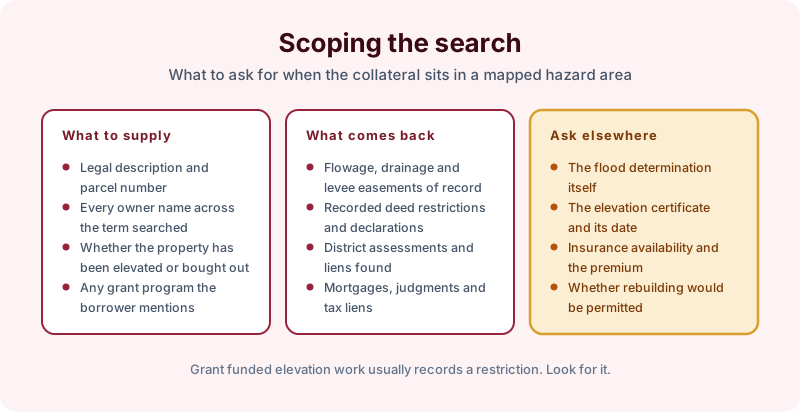
Give us the legal description and parcel number, every owner name across the term searched, whether the property has ever been elevated or bought out, and any grant program the borrower mentions. What comes back is the flowage, drainage and levee easements of record, the recorded deed restrictions and declarations, the district assessments and liens found, and the mortgages, judgments and tax liens.
Ask elsewhere for the flood determination itself, the elevation certificate and its date, the insurance availability and premium, and whether rebuilding would be permitted after a loss. Those belong to the determination vendor, an engineer and the floodplain administrator.
The takeaway
Flood risk and flood restrictions are two different things, and only one of them is in the land record. Order the determination and the title search as separate steps, and read the chain specifically for grant restrictions, because a buyout covenant can make collateral unbuildable without any of the usual warning signs. Start the order online, or send us the address and the parcel number and we will tell you what a search of that scope would and would not cover before anything is ordered.