

· AFX Research
Wetlands and Mitigation Banking on SBA Collateral, What to Check
A permit condition from a project finished years ago can sit on the land forever. What gets recorded, what stays with the regulator, and what to read before closing.
Table of Contents
A borrower is expanding a facility onto the back half of a site that has been in use for twenty years. The appraisal counts the acreage, the site plan fits, and nobody mentions that six acres of it were placed under a conservation restriction in 2009 as the price of a fill permit for the front half. The restriction is permanent, it runs with the land, and it removes exactly the ground the loan is meant to build on. This is a close relative of historic preservation easements on collateral, arriving from the environmental side.
What a wetland filing creates
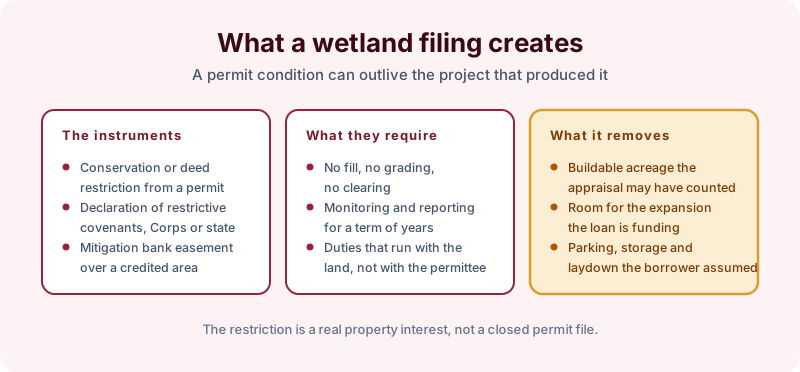
The instruments have a few standard shapes. A conservation easement or deed restriction granted as a condition of a federal or state fill permit. A declaration of restrictive covenants recorded in favor of the Corps of Engineers or a state environmental agency. Or, where a site was used to generate credits rather than consume them, a mitigation bank conservation easement covering the credited acreage.
What they require is consistent. No fill, no grading, no clearing, usually no mowing outside a stated season. Monitoring and reporting obligations for a defined term, sometimes decades. And critically, the duties run with the land rather than with the person who obtained the permit, so they survive every subsequent sale.
What the borrower loses is usually the part nobody priced. Buildable acreage the appraisal may have counted, room for the expansion being financed, and the parking, storage and laydown area the plan assumed was available.
Where the filings appear
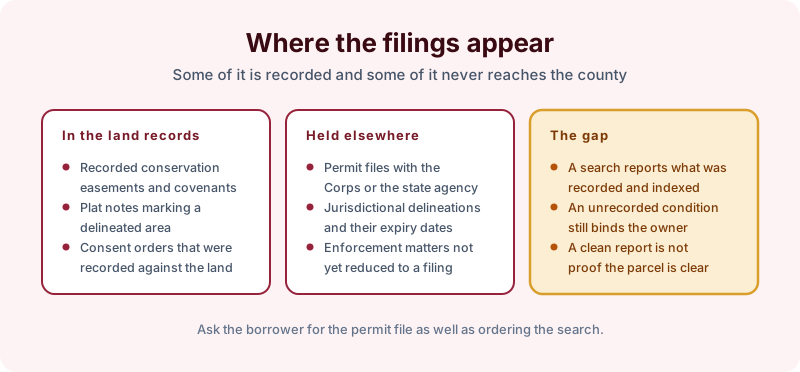
Much of it is recorded and a search will find it. Conservation easements, restrictive covenant declarations, plat notes marking a delineated area, and consent orders that somebody took the trouble to record against the land.
A good deal of it is not. The permit file itself sits with the Corps or the state agency. Jurisdictional delineations, which have expiry dates, are held in that file rather than in the county. An enforcement matter that has not yet produced a recorded instrument leaves no trace in the land records at all.
That gap is worth stating plainly, because it is the same limit that applies to what an SBA title search cannot find generally. A search reports what was recorded and indexed. An unrecorded permit condition still binds the owner, and a clean report is not proof the parcel carries no environmental burden.
Why this reaches the lender rather than the borrower alone
Two features make this an underwriting problem rather than a site problem. The first is that the restriction is senior to the loan in practical terms, because it is a property interest, not a debt, and a foreclosure does not extinguish it. A lender taking the collateral takes the burden with it.
The second is valuation. Restricted acreage does not support the use the appraisal assumed, and if the restricted portion is large the collateral is worth materially less than the number in the file. That is the same mechanism described in how zoning and use restrictions affect collateral, with a stricter instrument behind it.
Scoping the search
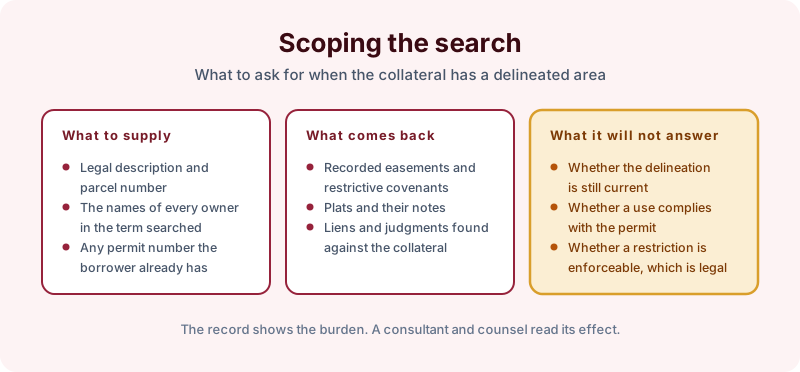
Supply the legal description, the parcel number, the names of every owner across the term searched, and any permit number the borrower already holds. What comes back is the recorded picture, which is recorded easements and covenants, plats and their notes, and liens or judgments found against the collateral.
What it will not answer is whether the delineation is still current, whether a proposed use complies with the permit, or whether a given restriction is enforceable. Those belong to an environmental consultant and to counsel.
The takeaway
A wetland restriction is a real property interest created by a permit, and it outlives the project, the permittee and usually everyone who remembers it. Ordering the search early gives you time to pull the permit file alongside it, which is where the other half of the answer lives. Start the order online, or send us the address and the parcel number and we will tell you what a search of that scope would and would not cover before anything is ordered.