

· AFX Research
SBA Collateral on Tribal and Restricted Land: Where Title Sits
Title to trust and restricted land is held in a federal records system rather than the county. What a records search can and cannot deliver on these files.
Table of Contents
A lender orders a title search on collateral inside a reservation boundary and the report comes back with nothing on it. The instinct is to treat that as good news, and it is the opposite: for trust and restricted parcels, the county recorder was never the office holding the title record. This is the clearest example in our work of a question that looks like a search problem and is actually a routing problem, and it belongs with the honest limits set out in our note on what an SBA title search cannot find.
Three kinds of land, one map
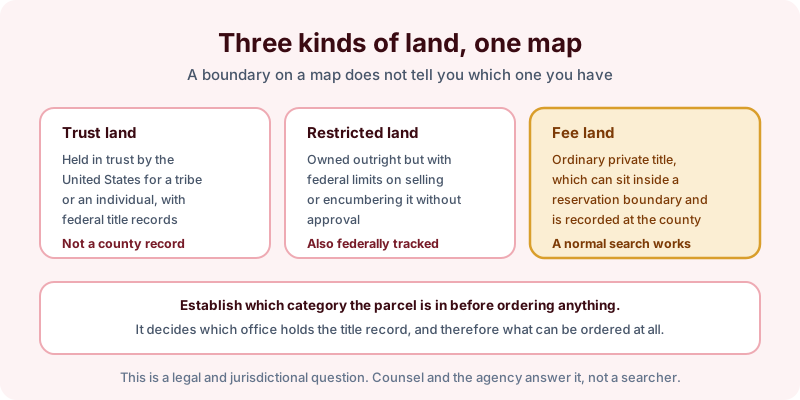
Trust land is held in trust by the United States for a tribe or for an individual, and its title records are federal.
Restricted land is owned outright but carries federal limits on selling or encumbering it without approval, and it is tracked federally as well.
Fee land is ordinary private title. It can sit inside a reservation boundary, and a normal county search works on it exactly as it would anywhere else.
The practical point is that a boundary on a map tells you nothing about which category a given parcel falls into, and the category decides which office holds the record. Establish that first, because it determines what can be ordered at all. Which category applies is a legal and jurisdictional question for counsel and the agency rather than something a searcher determines.
The title record is federal
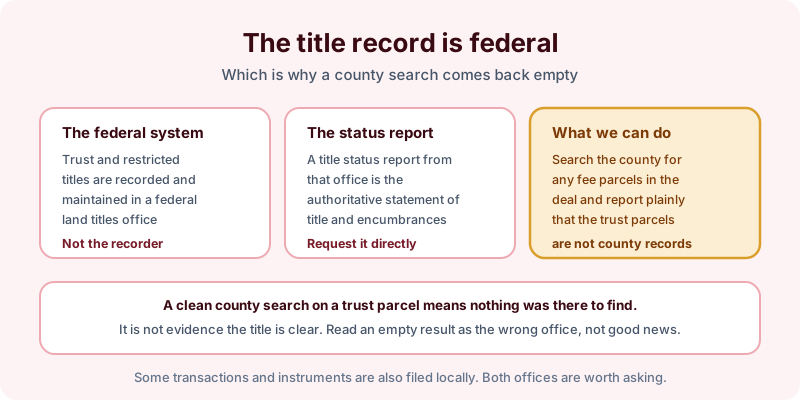
For trust and restricted parcels, titles and encumbrances are recorded and maintained in a federal land titles office, and the authoritative statement of title is a status report from that office rather than an abstract from a county. That report is requested through the appropriate federal channel, and it is the document an underwriter will ultimately want.
What we can do on these files is search the county for any fee parcels in the transaction, and state plainly in the report that the trust or restricted parcels are not county records. That matters because the alternative is a clean looking report that gets read as clearance. An empty result here means the wrong office was searched, not that the title is clear.
Some instruments and transactions do get filed locally as well, so both offices are worth asking about rather than assuming one is complete.
What the file usually looks like
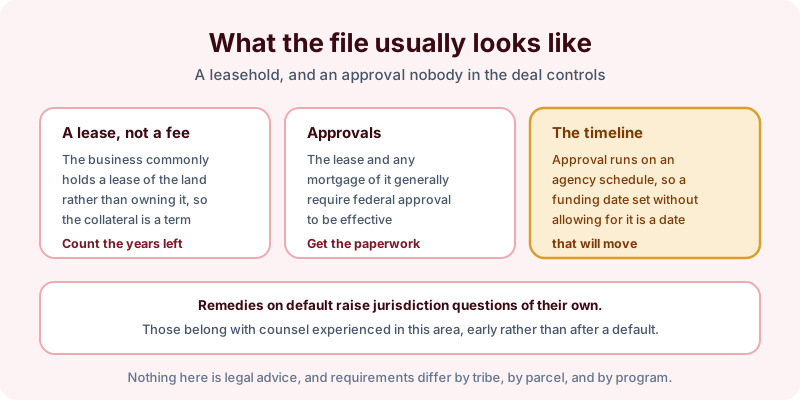
In practice the business commonly holds a lease of the land rather than owning it, which means the collateral is a term of years and the analysis resembles our note on leasehold collateral: count the years actually remaining against the amortization, and read the default and cure provisions.
The lease and any mortgage of it generally require federal approval to be effective, and that approval runs on an agency schedule. A funding date set without allowing for it is a date that will move. Remedies on default raise jurisdiction questions of their own, and those belong with counsel experienced in this area early rather than after a default. Requirements differ by tribe, by parcel, and by program, and nothing here is legal advice.
What the search will and will not settle
On fee parcels the search reports what was recorded and indexed for the parcels and names given, as of its date, with copies, exactly as it would anywhere else, and that is genuinely useful where a transaction mixes fee and trust ground.
On trust or restricted parcels it cannot report the title, the encumbrances, or the approvals, because those records are held federally. It cannot determine a parcel’s status, and it cannot substitute for a federal status report. Recording and indexing practice varies by county, which is a secondary issue here compared with the primary one of which office holds the record. The general scoping questions are in our note on SBA title search requirements.
The takeaway
Establish each parcel’s status before ordering, request the federal status report for anything in trust or restricted, and use a county search for the fee ground in the deal rather than for all of it. Our disaster assistance page covers files where land status frequently varies across a single borrower. Start the order online, or send us the funding letter if you want the scope matched to the requirement before anything is ordered.