

· AFX Research
Self Storage Facility SBA Collateral, What the Search Covers
Several parcels assembled over time, a converted building with a prior use, and a tenant roll that turns over monthly. What the record reaches and what it misses.
Table of Contents
A borrower buys a self storage facility with 340 units on what the listing calls a single site. The site is three parcels acquired in 1998, 2004 and 2011, one of which was a produce warehouse until the conversion, and the income comes from month to month agreements that bind nobody beyond thirty days. The real estate is straightforward to search and the business sitting on it is nearly invisible in the record, which is a workable position provided the lender knows which is which.
What a storage site pledges
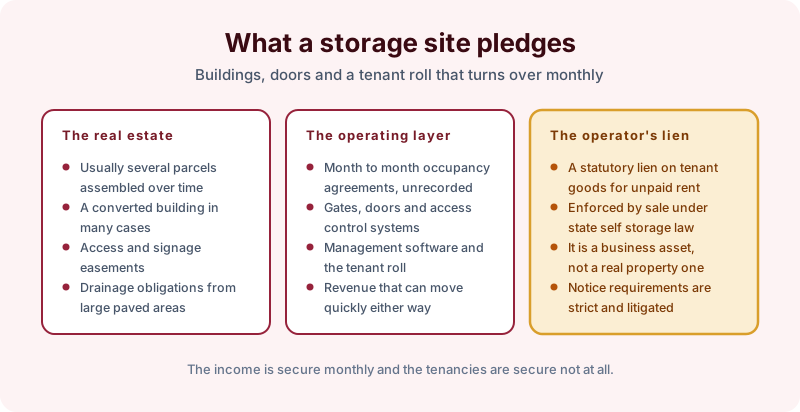
The real estate is usually several parcels assembled over time, frequently including a converted building, with access and signage easements and drainage obligations generated by large paved and roofed areas.
The operating layer is where the income lives and almost none of it is recorded. Month to month occupancy agreements. Gates, doors and access control systems. Management software and the tenant roll. Revenue that can move quickly in either direction because nothing holds a tenant in place, which is the opposite of the position in recorded leases on collateral.
The operator’s lien is the asset people forget to ask about. State self storage statutes give the operator a lien on tenant goods for unpaid rent, enforceable by sale under strict notice requirements that are litigated regularly. That is a business asset rather than a real property one, it does not pass with a foreclosure of the land, and a lender should know whether the borrower’s lien sale practice has ever produced a claim.
Where the filings sit
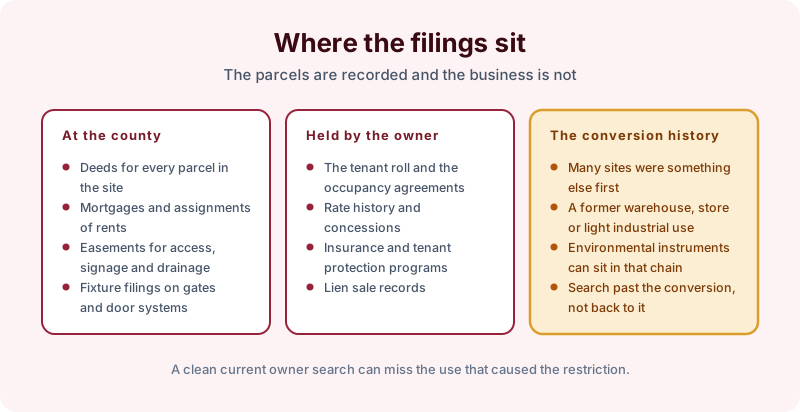
At the county you will find deeds for every parcel in the site, the mortgages and assignments of rents, the easements for access, signage and drainage, and fixture filings on gates and door systems.
Held by the owner is the tenant roll and the occupancy agreements, the rate history and concessions, the insurance and tenant protection programs, and the lien sale records.
The conversion history is the item worth searching for specifically. A great many of these sites were something else first, and a former warehouse, retail box or light industrial building can carry recorded environmental instruments in the part of the chain a current owner search never reaches. Search past the conversion rather than back to it, which is the same scoping decision described in what an SBA title search cannot find.
Why the parcel count matters more than it sounds
Because one search covers one parcel, and a site assembled from three has three chains, three sets of encumbrances and three tax bills. A lender who orders on the address rather than the parcel list has bought a search of whichever parcel the address happens to sit on.
Assembled sites also frequently include a vacated alley or a strip of former right of way between the original lots, and those come with their own instruments. That is the territory of partial releases and lot splits, read in reverse.
Scoping the search
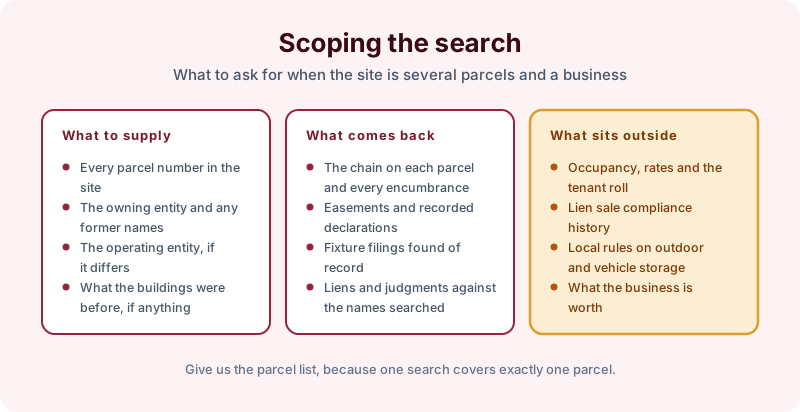
Supply every parcel number in the site, the owning entity with any former names, the operating entity where it differs, and what the buildings were before if they were anything. What comes back is the chain on each parcel and every encumbrance, the easements and recorded declarations, the fixture filings found of record, and the liens and judgments against the names searched.
What sits outside is occupancy, rates and the tenant roll, lien sale compliance history, local rules on outdoor and vehicle storage, and what the business is worth.
The takeaway
The real estate searches cleanly and the business does not appear at all, and the two things most likely to surprise a lender are the parcel count and the prior use of a converted building. Give us the parcel list and the conversion history, and the search will reach both. Start the order online, or send us the parcel numbers and the entity names and we will tell you what a search of that scope would and would not cover before anything is ordered.