

· AFX Research
Shared Well and Septic Agreements on SBA Collateral, What to Check
A rural property with no recorded right to its own water or waste disposal is a property that may not be usable. What gets recorded, and what never does.
Table of Contents
A borrower is buying a small manufacturing building on five acres outside town. Everything checks out until somebody asks where the water comes from, and the answer is a well on the neighboring parcel that the two owners have shared since 1988 on the strength of a conversation. There is no recorded easement, no written agreement and no reason the neighbor’s eventual buyer would be bound by any of it. The collateral is a building that may lose its water supply the next time the property next door changes hands. This sits close to access and easements on collateral, with utilities in place of a road.
What a shared system creates
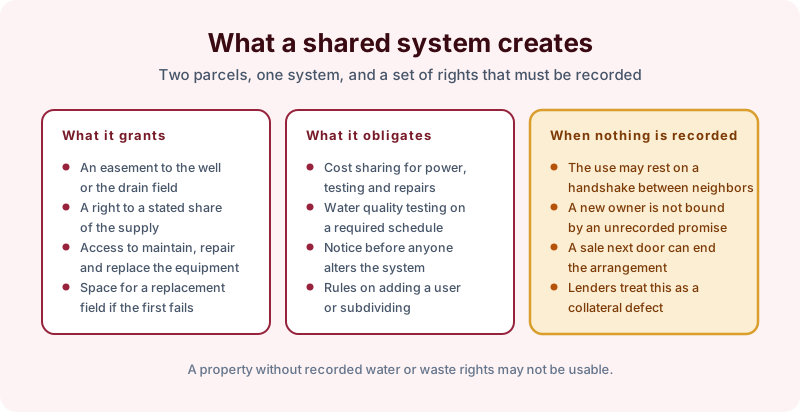
A properly documented arrangement grants several distinct things, and missing any one of them causes trouble later. An easement to the physical well or drain field. A right to a stated share of the supply rather than an undefined right to some water. Access to maintain, repair and replace the equipment, including the right to bring machinery across the other parcel. And on a septic system, space reserved for a replacement field, because the first one will eventually fail.
It also imposes obligations. Cost sharing for power, testing and repairs. Water quality testing on whatever schedule the state requires. Notice before either owner alters the system, and rules about whether a third user can be added or a parcel subdivided.
When none of that is recorded, the arrangement rests on a handshake. A new owner next door is not bound by a promise he never agreed to and could not have found, so a sale on the adjoining parcel can end the supply. Lenders treat this as a collateral defect for the straightforward reason that it is one.
Finding it in the record
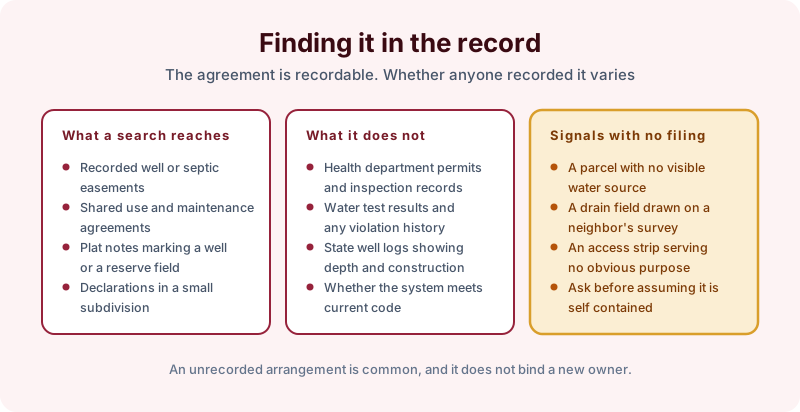
A search reaches the recorded side cleanly. Well and septic easements, shared use and maintenance agreements, plat notes marking a well location or a reserve field, and declarations in a small subdivision that set the whole thing up at once.
It does not reach the regulatory side. County health department permits and inspection records, water test results, violation history, and the state well log showing depth and construction all sit with agencies rather than with the recorder. Whether the system meets current code is not a land records question at all.
There are signals worth noticing when nothing is filed. A parcel with no visible water source. A drain field drawn on the neighbor’s survey rather than the borrower’s. A narrow access strip that serves no obvious purpose. Any of those is a reason to ask rather than to assume the property is self contained, and it is the same discipline that applies to unrecorded leases and possession.
Why this reaches the loan rather than the inspection
Two reasons. The first is that a water or waste right is a property interest, so its absence is a defect in the collateral rather than a condition of the building. An inspection will report that the well works today and will not report that the borrower has no right to keep using it.
The second is cost. Drilling a new well or engineering a new field on a small parcel can run into real money, and on a site with no suitable location it may not be possible at all. That converts a documentation gap into a question about whether the property has a use, which is the same valuation problem described in rural acreage collateral.
Scoping the search
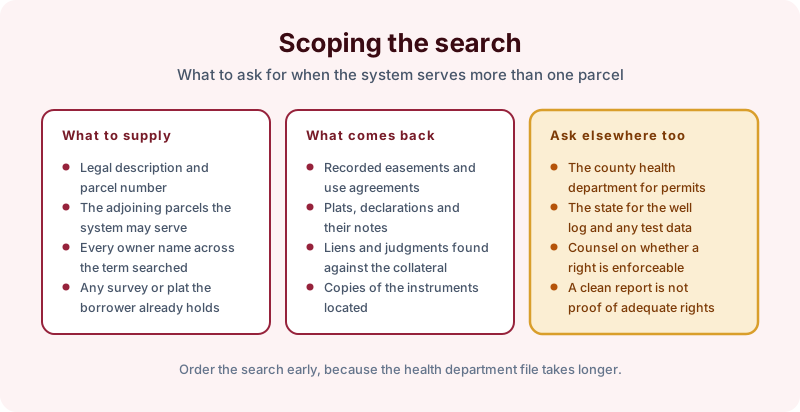
Supply the legal description and parcel number, the adjoining parcels the system may serve, every owner name across the term searched, and any survey or plat the borrower already holds. What comes back is the recorded easements and use agreements, the plats and declarations with their notes, the liens and judgments found against the collateral, and copies of the instruments located.
Ask the county health department for the permits and the state for the well log in the same week, because those files take longer to obtain than the search does. A clean report is not proof that adequate rights exist, and whether a given right is enforceable is a question for counsel.
The takeaway
On rural collateral the water and the waste disposal are as much a part of the property as the walls, and both can depend on a neighbor. If the right is recorded you can price it. If it is not, you are lending against a building that works by agreement rather than by right. Start the order online, or send us the address and the adjoining parcels and we will tell you what a search of that scope would and would not cover before anything is ordered.