

· AFX Research
Solar Leases on SBA Collateral: What the Title Search Finds
Rooftop and carport arrays on business property come in three ownership forms. Which ones leave a recorded trace, and what underwriting still has to get from the borrower.
Table of Contents
A borrower pledges a warehouse with a roof full of panels, and the appraisal treats them as an improvement. Then somebody asks who owns them. The answer determines whether a third party holds an interest in equipment bolted to the lender’s collateral, whether that interest is senior, and whether it can be assumed if the property is ever sold or liquidated. It also determines whether a title search will see anything at all. The pattern resembles recorded leases on SBA collateral, with a filing wrinkle of its own.
Three arrangements, one roof
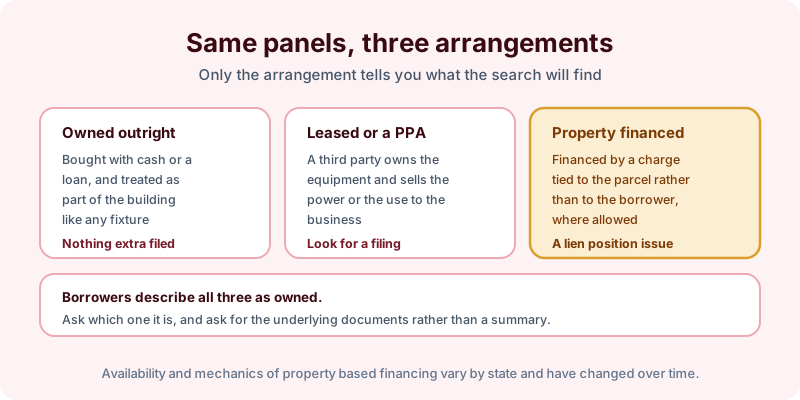
Owned outright is the simple case. The business bought the system with cash or a loan, and the equipment is treated as part of the building. Nothing extra gets filed, and a search reports nothing because there is nothing to report.
Leased, or under a power purchase agreement, means a third party owns the equipment and sells the business the use or the power. The agreement is a private contract, so it is usually not recorded in full, and the term commonly runs fifteen or twenty years.
Property based financing is the third form, where the installation is paid for through a charge tied to the parcel rather than to the borrower. Where those programs are used, the obligation can be recorded, can survive a sale, and in some jurisdictions carries unusual priority relative to a mortgage. Availability and mechanics vary by state and have changed over time, so this one gets confirmed locally rather than assumed.
Borrowers describe all three as owned. Asking which one it is, and asking for the documents, is the whole first step.
Where it shows up in a search
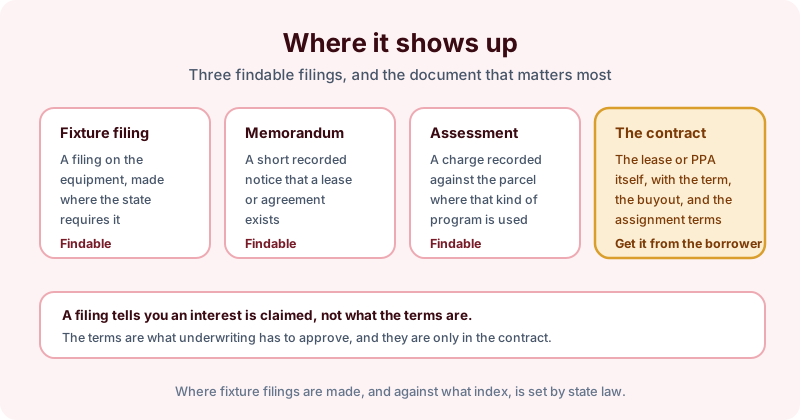
Three findable filings, and one document that is not. A fixture filing is how an equipment owner protects an interest in something attached to real property, and where the state requires it in the real property records, a search finds it. A memorandum is a short recorded notice that a lease or agreement exists. A recorded assessment appears where property based financing was used.
What is not in the record is the contract itself, and the contract holds everything underwriting cares about: the remaining term, the buyout price, the assignment and assumption provisions, whether the provider will subordinate, and what happens on a default by the business. A filing tells you an interest is claimed. It does not tell you the terms. The distinction between the equipment filing and the land record is the same one drawn in our note on UCC search versus title search.
Why the dates matter
Two follow up questions decide how much work this becomes. Whether the provider will sign a subordination or a consent, and whether the array sits on the collateral parcel or spills onto an adjoining one under a separate agreement. Carport and ground mount systems raise the second question more often than rooftop arrays do.
Recording dates set the sequence. An assessment or a memorandum recorded before the lender’s mortgage sits ahead of it in the record, and an arrangement entered into after closing without consent may breach a loan covenant. Either way, the report gives you the dates, which is what the lien position analysis in our note on lien position is built on.
What the report settles
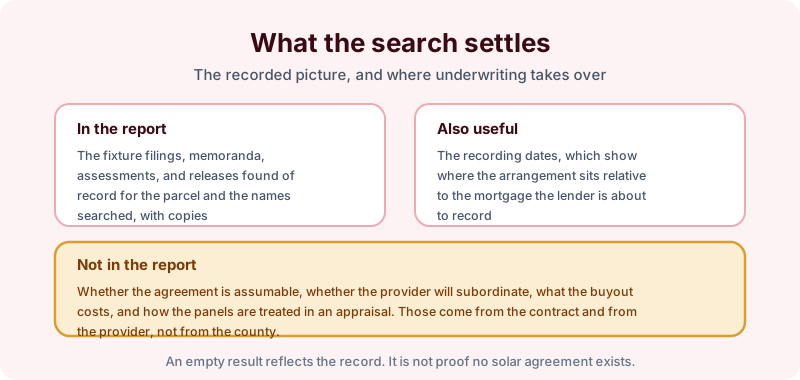
Send the address, the parcel number, and the exact entity and individual names, and mention the panels so the search covers the parcel for recorded assessments and any fixture filing indexed there. The report returns what was found of record over the term searched, with copies and dates attached.
Then read a clean result correctly. It means nothing was recorded, not that no solar agreement exists, and the practical follow up is a request to the borrower for the installation agreement and any transfer paperwork the provider requires. Recording and indexing practice varies by county.
The takeaway
Establish which of the three arrangements applies before the appraisal is relied on, and get the contract, because the search cannot supply the terms. Start the order online, or send us the funding letter if you want the scope matched to the requirement before anything is ordered.