

· AFX Research
Use Restrictions on SBA Collateral: Covenants and Zoning
A recorded covenant can prohibit the borrower's business on the property it secures. What a title search finds, what the city holds, and why both matter.
Table of Contents
An SBA loan is secured by real estate and repaid by a business operating on it, which makes one question unusually important on these files: is the borrower actually allowed to run that business there. Two separate rulebooks answer it, they are kept in two different offices, and a title search reaches only one of them. Missing that split is how a file gets to funding with an appraisal and a business plan that the land itself will not support. This sits alongside title problems that delay SBA loans as a condition that is cheap to check early.
Two rulebooks, two offices
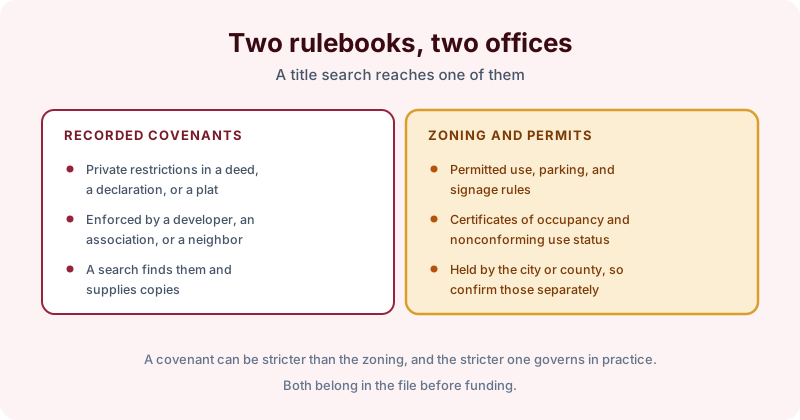
Recorded covenants are private restrictions living in a deed, a declaration, or a plat. They are enforced by whoever holds the benefit, commonly a developer, a property owners association, or a neighboring owner, and they show up in a title search with copies attached.
Zoning and permitting belong to the city or county. Permitted use, parking ratios, signage rules, certificates of occupancy, and legal nonconforming status are all municipal records that never reach the recorder, so they have to be confirmed separately.
The two are independent, and the stricter one governs in practice. A parcel zoned for general commercial use can still carry a 1996 covenant prohibiting automotive repair, and the covenant will be enforced by the association whether or not the city issues a permit.
The restrictions that actually bite
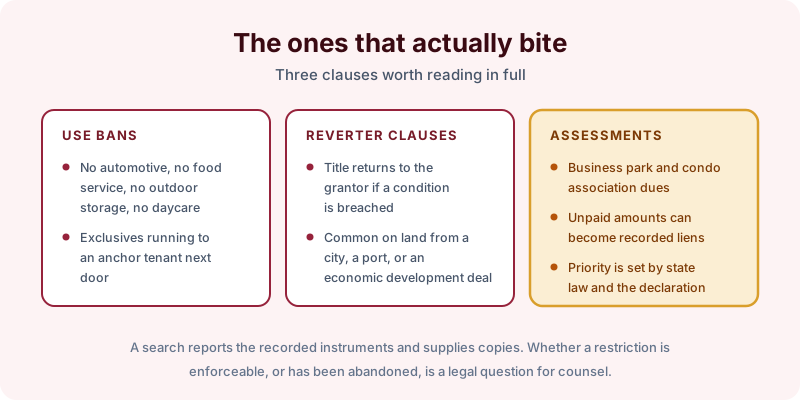
Use bans and exclusives are the first category. No automotive, no food service, no outdoor storage, no child care, along with exclusives running to an anchor tenant that bar a competing use on nearby lots. On a business acquisition, this is the clause that can make the collateral unusable for the borrower’s own operation, and it belongs in the same review our note on SBA business acquisition searches describes.
Reverter and right of reentry clauses are the second, and they are more common than lenders expect on land that came from a city, a port authority, or an economic development program. Title can return to the grantor if a condition is breached, which is a direct threat to the security rather than an inconvenience.
Assessments are the third. Business park and commercial condominium dues can become recorded liens when unpaid, with priority set by state law and by the declaration, which is the ground covered in condominium and mixed use collateral.
Two more recorded items belong in the same sweep because they constrain use in the same way. Conservation and agricultural easements limit what can be built and are frequently perpetual. And drainage, detention, and access easements crossing a commercial lot can eliminate the expansion room a growth projection assumes, which is worth knowing before an appraisal is relied on.
Scoping the search
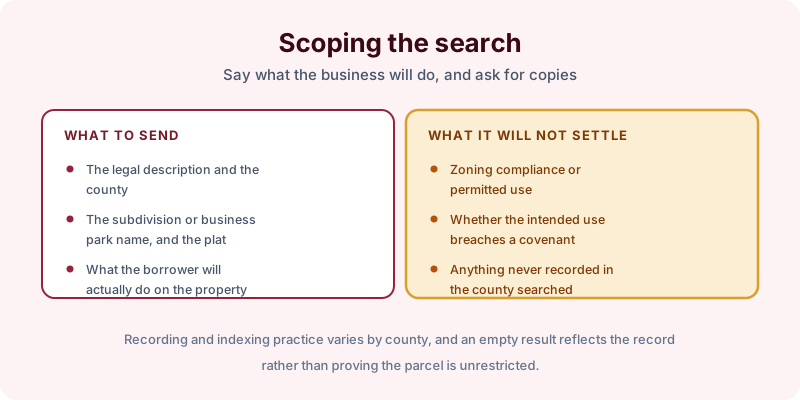
Send the legal description and county, the subdivision or business park name, the recorded plat, and one thing lenders often leave out: what the borrower will actually do on the property. Knowing the intended use lets the search return the documents that matter rather than a list, and it is the difference between a report and an answer.
Ask for copies rather than an index summary. A covenant is only readable in full, and declarations are commonly amended two or three times, so the whole stack has to be read in recording order.
What the search reports is the covenants, declarations, plats, and assessment liens found of record for that parcel over the term searched, with copies attached. What it does not settle is zoning compliance, whether the intended use breaches a covenant, or whether a restriction has lapsed or been abandoned. Those are legal and municipal questions. Recording and indexing practice varies by county, and an empty result reflects the record rather than proving the parcel is unrestricted.
The takeaway
Ask the use question early and answer it twice, once from the land records and once from the city. A covenant that prohibits the borrower’s business is a problem you want to find while the loan is still being structured. Start the order online, or send us the funding letter if you want the scope matched to the requirement before anything is ordered.