

· AFX Research
SBA Construction Loans: Title Work Before and During the Build
Why a build needs title work at three points instead of one, how relation-back priority puts a lender behind a lien filed months later, and which construction paper is recorded.
Table of Contents
Most SBA files have one title event: a search, then a closing, then the lien sits where the report said it would. A construction loan does not work that way. Money goes out in stages, work happens between the stages, and the record keeps moving the entire time. The pre-closing update matters on every file. On a build it stops being a nice practice and becomes the mechanism the whole loan depends on.
Three points, not one
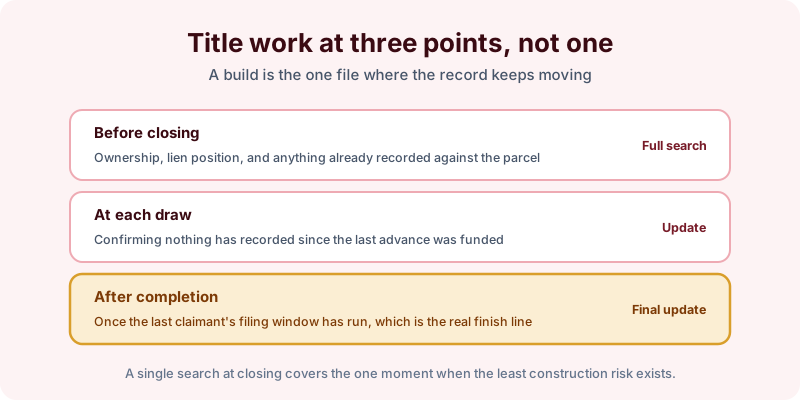
Before closing, a full search establishes ownership, lien position, and whatever is already recorded against the parcel. Standard work.
At each draw, an update confirms nothing has recorded since the last advance. This is where construction lending differs from everything else: the lender is advancing money repeatedly against collateral whose encumbrance picture changes between advances.
After completion, a final update run once the last claimant’s filing window has closed. That window, not the certificate of occupancy, is the real finish line for title purposes.
A single search at closing covers the one moment in the project when the least construction risk exists, which is a reasonable thing to do and not a sufficient one.
Relation-back is the whole problem
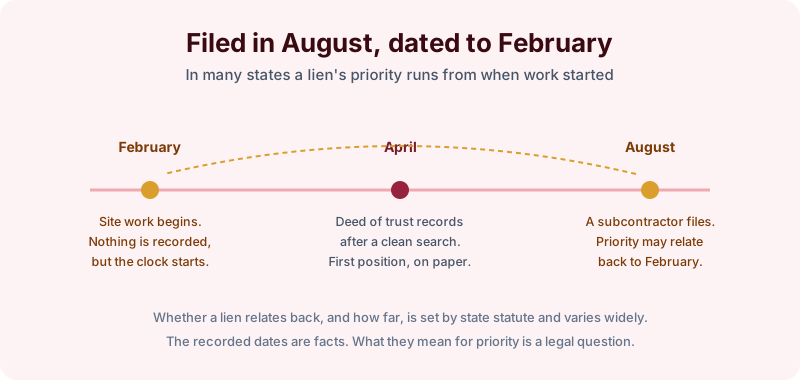
Here is the shape of it. Site work begins in February and nothing is recorded, but in many states a clock has started. The deed of trust records in April after a search that came back clean. In August a subcontractor who was never paid files a mechanic’s lien, and in a relation-back state that lien’s priority may date to February, ahead of the April recording.
Nothing was missed. The lien did not exist in April, and no search could have found it. That is why construction files are underwritten with indemnities, holdbacks, sworn statements, and lien waivers rather than on the strength of a search alone. Whether a lien relates back, and how far, is set by state statute and varies widely, so the recorded dates are the facts and the priority consequence is a legal question.
The practical effect on lien position is worth stating plainly to anyone reading the report: a first-position deed of trust on a property under construction is a different risk from a first-position deed of trust on a finished building.
Which construction paper is recorded
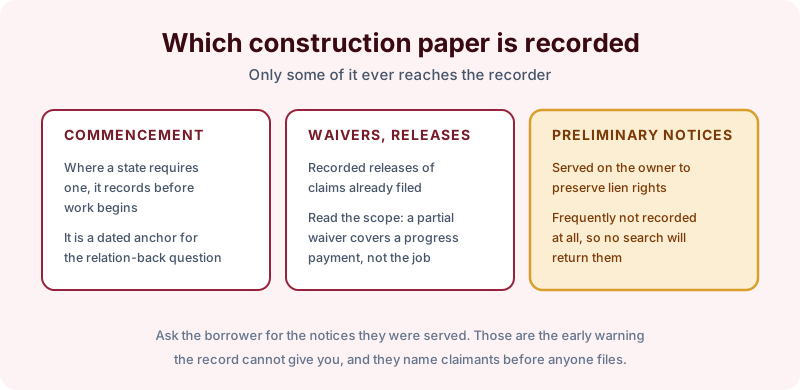
A notice of commencement is recorded before work begins where a state requires one, and it is the dated anchor the relation-back analysis runs on. When one exists, it tells you when the clock started rather than leaving it to be reconstructed.
Recorded waivers and releases show claims that were filed and resolved. Read the scope rather than the title: a partial waiver covers a progress payment, not the whole job, and a release describing one portion of the work leaves the rest live.
Preliminary notices are the gap. In many jurisdictions a claimant must serve one on the owner to preserve lien rights, and it is frequently served privately rather than recorded. No search returns them. Ask the borrower which notices they have received, because those name claimants before anyone files anything, and they are the early warning the record structurally cannot provide.
Scoping the updates
Updates run against the same parcel and the same names, covering from the last search date forward, which makes them fast. Two habits help. Run each one as close to the advance as the county’s turnaround allows, since an update run a week early reopens the gap it was meant to close. And run the final one after the statutory filing period has expired rather than at substantial completion, because the two are different dates and only one of them ends the exposure.
Where the build sits on one of several collateral parcels, each parcel is its own search and its own update. Where the funding letter speaks to construction specifically, that language governs the scope.
The takeaway
Budget for three or more title touches on a build, not one. Treat a clean search as accurate rather than protective, understand that a lien filed later can outrank a lien recorded earlier, and get the final update after the filing window closes. Start the order online, or send us the funding letter and the construction schedule and we will scope the searches and updates to the draw calendar before anything is ordered.