

· AFX Research
What an SBA Loan Assumption Needs the Title Search to Confirm
Why an assumption needs a fresh search rather than the original file, which names belong in the order, what tends to have posted in the gap, and what the report can settle.
Table of Contents
An assumption is one of the few SBA transactions where a complete title file already exists, and that is exactly what makes it risky. The deed of trust is recorded, the position was documented at the original closing, and the temptation is to treat that work as still good. It is still good as an answer to the question it was asked, on the day it was asked. An assumption asks a different question, about today, and the years in between are the part nobody has looked at. The same reasoning drives the pre-closing title update, compressed here into a much longer window.
What moves and what stays
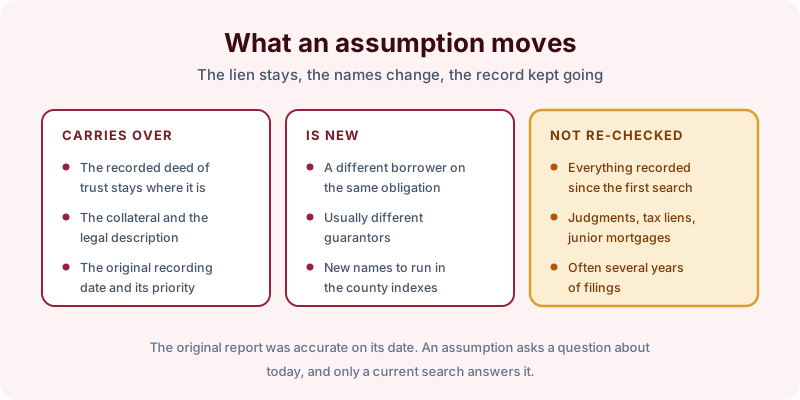
The security instrument does not move. It sits in the record where it was filed, with whatever priority its recording date earned, and an assumption does not re-record it or refresh its date. The collateral does not move either, unless the transaction is also carving out a parcel, which turns it into a different piece of work covered in our note on partial releases and lot splits.
What changes is who owes the money. A new borrowing entity steps onto an existing obligation, usually with new guarantors behind it. Those are names that have never been searched in this county, against this parcel, and they arrive with whatever their own record carries.
The years nobody has covered
Between the original closing and the assumption there is often three to seven years of recording. That period is the highest yield part of the search, and it produces the ordinary items rather than exotic ones.
Junior financing. A borrower who took a second position loan, a line secured by the real estate, or equipment financing that resulted in a fixture filing has changed the stack under the SBA lien without necessarily telling anyone.
Judgments and tax liens. Docketed against the operating entity or a guarantor during a hard stretch, which is frequently the same stretch that produced the decision to sell the business.
Assessments and municipal charges. Special assessments, water and sewer charges, and code enforcement liens accumulate quietly and are often not on any payoff statement. Our note on code enforcement and municipal liens covers where those live.
Names are the harder half
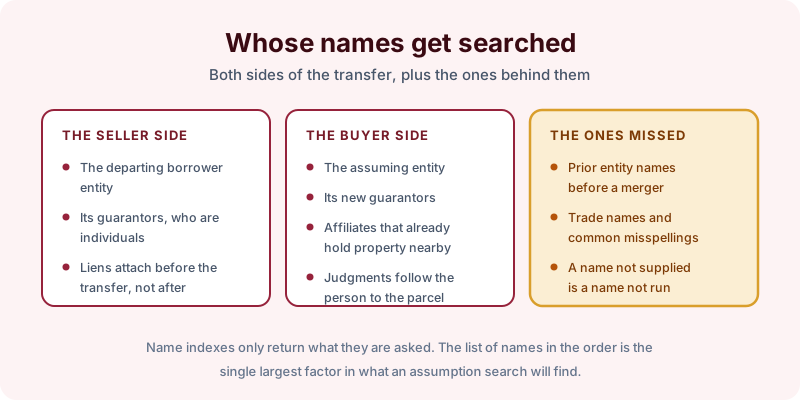
County name indexes return what they are asked and nothing more, so the name list in the order is the single biggest factor in what comes back. Both sides belong on it. The departing borrower and its guarantors, because liens that attached before the transfer stay attached to the property regardless of who signs next. The assuming borrower and its guarantors, because a judgment already docketed against a person attaches to real property that person acquires in that county.
Entity history is where these searches go thin. A business that changed names, converted from one entity form to another, or absorbed a predecessor carries a paper trail under names nobody thinks to supply, and the issue is the same one described in our note on entity name changes and mergers. Supplying the prior names costs nothing and is usually what separates a useful search from a clean-looking one.
What the report can and cannot settle
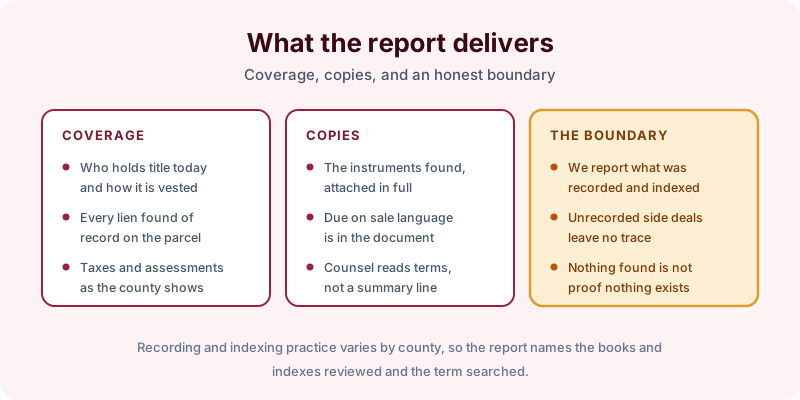
The report establishes who holds title of record right now, what is recorded against the parcel, where the SBA lien sits relative to everything else found, and what the tax status shows, with copies of the instruments attached. That last part matters more than usual here, because the terms that govern whether an assumption is even permitted, the due on sale language, sit inside the recorded deed of trust rather than in any index entry.
What it cannot do is prove a negative. A search reports what was recorded and indexed over the term searched. An unrecorded agreement between the parties, an option never filed, or a lien indexed under a name that was never run will not appear, and nothing found is not evidence that nothing exists. Whether the lender may consent to the assumption, and on what conditions, is a credit and legal decision that belongs with the lender and counsel rather than with the abstractor.
The takeaway
Treat an assumption as a new search on an old lien. Pull the record forward from the original search date to today, run both sides of the transfer plus any prior entity names, and read the recorded security instrument rather than the summary of it. Start the order online, or send us the original report and the names on both sides and we will scope the search to the window and the parties that actually need covering.