

· AFX Research
Refinancing Debt with an SBA 7(a) Loan: What the Report Shows
Why a refinance searches the borrower rather than a seller, the three kinds of item on a payoff list, and how to prove the lien position the funding letter asked for.
Table of Contents
A purchase file and a refinance file ask the abstractor for different things, even when the property is identical. On a purchase, the seller’s encumbrances get cleared at closing and the buyer starts from a known position. On a refinance nobody is leaving, which means everything the current owner has recorded against the property since they bought it is still sitting there. Choosing the search term is the first call; this is what changes once the transaction is a refinance.
The search looks backward, not forward
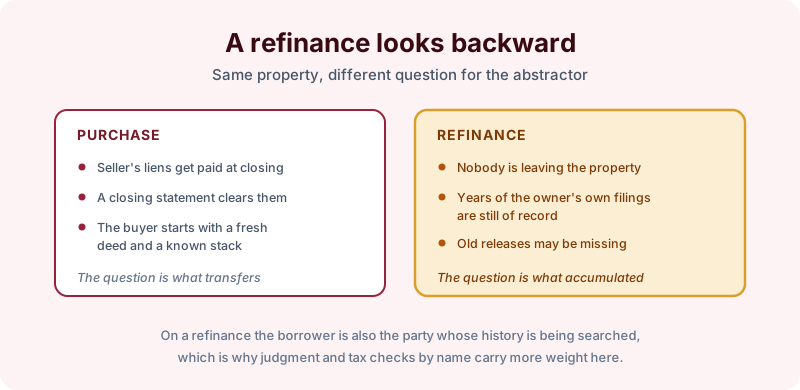
The practical difference shows up in the name searches. On a purchase, judgment and tax checks against the seller matter because those items have to clear before the deed passes. On a refinance, the borrower is the party whose history is being searched, and there is no closing at which someone else’s problems get resolved and go away. A judgment docketed against the operating entity four years ago is still docketed.
That is also why the ownership history is worth reading rather than skimming. A property refinanced twice already may carry two prior deeds of trust, and whether both were released is exactly the sort of thing a report answers and a recollection does not.
Three kinds of item on the payoff list
Once the report comes back, the open items sort into three groups, and only two of them involve money.
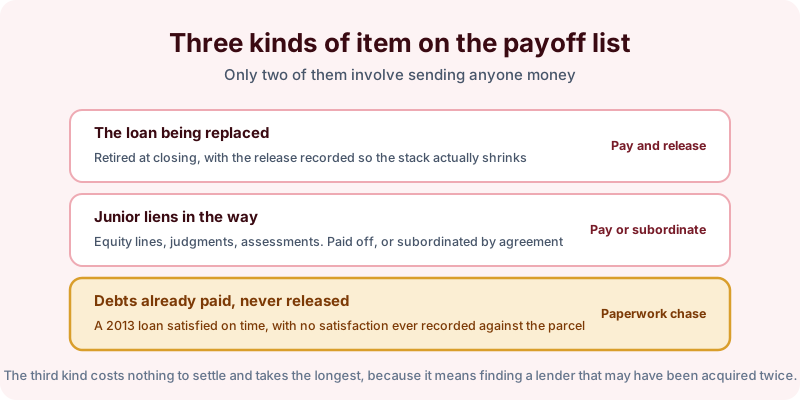
The loan being replaced. It gets retired at closing, and the release has to be recorded for the stack to actually shrink. A payoff without a recorded release leaves the record showing two loans where one debt exists.
Junior liens in the way. Equity lines, judgments, assessments. Each is either paid off or subordinated by recorded agreement, depending on what the lender will accept.
Debts already paid but never released. This is the group that surprises people. A loan satisfied on schedule in 2013, with no satisfaction ever recorded, reads on today’s report exactly like an open lien. Settling it costs nothing and takes the longest, because it means tracking down a lender that may have been acquired twice since. The general shape of that chase is covered in title problems that delay SBA loans.
Proving the position you promised
The funding letter almost never asks for an absence of liens. It asks for a place in line, and a refinance is a transaction whose entire purpose is to change that line.
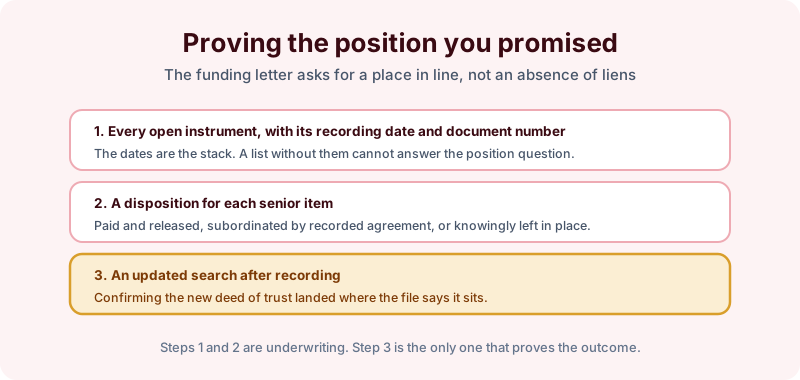
Three things get you there. First, every open instrument with its recording date and document number, because the dates are the stack and a list without them cannot answer the position question at all. Second, a stated disposition for each senior item: paid and released, subordinated, or knowingly left in place. Third, an updated search after the new deed of trust records, confirming it landed where the file says it sits.
The first two are underwriting work. Only the third actually proves the outcome, and it is the step most often skipped on refinance files because everyone assumes the recording went as planned. Usually it does. The updated search is what makes that an established fact rather than an assumption.
What to send at intake
Send the property address with a legal description, the exact entity name and any prior names, the existing loan information, and the funding letter. Where the refinance also involves additional collateral, each of those parcels is its own search in its own county.
One note on scope. Some funding letters treat a refinance of the lender’s own existing loan more lightly than a new acquisition, and some do the opposite because the collateral has been in the borrower’s hands long enough to accumulate filings. Read the letter rather than assuming either, and where the language is ambiguous, ask before ordering.
The takeaway
A refinance searches the borrower’s own accumulated record, sorts into paid, subordinated, and never-released, and finishes with an updated search proving the new lien recorded where it was supposed to. Start the order online, or send us the funding letter and the existing loan details and we will tell you what scope the refinance needs before anything is ordered.